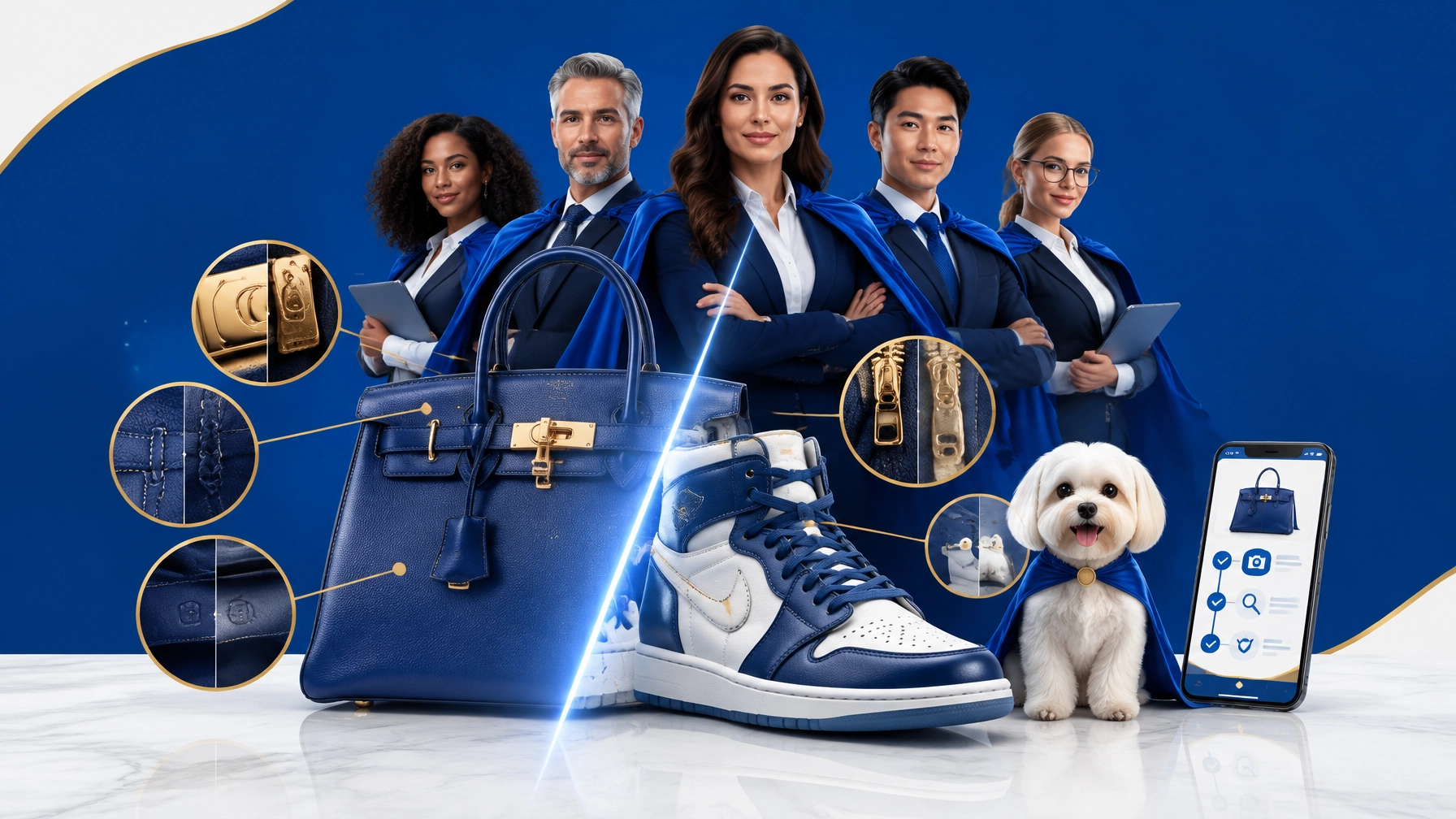
How many times a week does a customer ask, “Is this real?”
For resale stores, pawn shops, online thrifters, and sneaker sellers, that question is no longer answered by a quick glance at the logo or a familiar serial number.
In 2026, counterfeiters are working with better materials, better reference photos, better manufacturing equipment, and better digital tools. The result is a new generation of superfakes that can look convincing in listing photos, under store lighting, and even inside branded packaging.
That changes the standard.
“Looks perfect” is no longer a reliable authentication test.
The safer approach is layered: consistent intake photos, structured checkpoints, physical inspection, and third-party verification when the item or risk justifies it.

What makes 2026 superfakes different?
Older counterfeits often failed quickly. The leather felt wrong. The logo was uneven. The box looked cheap. The stitching was visibly inconsistent.
Today’s best counterfeits may include:
- Better leather and synthetic material sourcing
- More accurate hardware finishes
- Near-perfect date codes and serial formats
- Correct-looking fonts and spacing
- Improved stitching patterns and stitch counts
- Convincing dust bags, boxes, tags, and receipts
- Fake online listings built from authentic product photos
- AI-generated authenticity certificates and supporting documents
Some counterfeit operations study authentic items at a production level. They reproduce the details buyers traditionally use as shortcuts.
That is why broad visual confidence can be dangerous.
A bag can have the correct date-code format and still be fake. A sneaker can come with a convincing receipt and still have incorrect internal construction. A watch can include realistic packaging and papers that were created separately from the item.
As luxury brands adopt newer identifiers, including embedded chips and digital product records, counterfeiters are also adapting. A digital identifier can support an authentication decision, but it should not replace inspection of the physical item. Real tags can be copied, moved, or paired with a counterfeit product.
For more background on how technology is changing luxury authentication, see BCG’s discussion of the rise of superfakes.
“Looks perfect” is exactly the wrong test
A visual scan is useful for finding obvious problems. It is not enough for high-risk inventory.
Think of authentication in two layers:
Overwhelm-the-eyes red flags
These are details designed to make you feel confident quickly:
- A pristine box
- A clean dust bag
- A matching receipt
- A familiar date code
- A readable logo
- Perfect-looking listing photos
- A seller with a polished story
- An authenticity card or certificate
- A price that is just low enough to feel like a deal
These details may be real. They may also be carefully manufactured distractions.
Structural tells
Structural tells are harder to fake because they involve how the item was made, assembled, and finished:
- Hardware weight and balance
- Engraving depth, font shape, spacing, and alignment
- Interior stamping depth and pressure
- Heat-stamping clarity and edge definition
- Stitch tension, path, spacing, and count
- Zipper construction and the correct zipper brand
- Edge paint thickness and consistency
- Lining material and how it is attached
- Reinforcement points and seam construction
- Sneaker heel structure, density, and internal hollowness
- Shape retention under normal handling
The difference matters.
Packaging creates confidence. Structure creates evidence.
Where superfakes still slip up
No single detail proves an item is counterfeit. But some areas continue to reveal construction problems when inspected carefully.
1. Hardware weight and engravings
Counterfeit hardware may look right but feel wrong.
Check:
- Overall weight compared with known authentic examples
- Balance and movement of clasps, buckles, and pulls
- Engraving depth
- Letter shape and spacing
- Edge sharpness
- Plating consistency
- Alignment with the surrounding component
A copied engraving can match the general font while missing the depth, pressure, or finishing quality used by the original manufacturer.
2. Interior stamping
Interior stamps are not just about whether the wording is present.
Inspect:
- Depth of the stamp
- Heat and pressure marks
- Letter spacing
- Baseline alignment
- Edge crispness
- Placement within the panel
- How the leather responds around the stamp
A stamp that is too shallow, too deep, overly glossy, or unevenly pressed can indicate a mismatch even when the text itself is correct.
3. Zipper brands and zipper construction
Zippers are often overlooked because they seem interchangeable. They are not.
Look at:
- Zipper brand and pull design
- Teeth shape and spacing
- Tape quality
- Stitching around the zipper
- Pull movement
- Finish and weight
- Whether the zipper matches the item’s production period
A correct-looking bag with the wrong zipper hardware is a structural problem, not a minor cosmetic variation.
4. Heat-stamping and edge finishing
Heat-stamped logos can look acceptable in a seller’s photos but fail under angled light or magnification.
Watch for:
- Uneven pressure
- Blurred edges
- Excessive shine
- Inconsistent letter depth
- Misaligned branding
- Edge paint that is too thick, brittle, or uneven
The finish around the logo often tells you more than the logo itself.
5. Sneaker heel structure
Sneaker superfakes increasingly copy exterior panels and labels. Internal construction remains a common weak point.
Check for:
- Excessive hollowness
- Incorrect heel firmness
- Weak or uneven heel counter support
- Differences in shape retention
- Inconsistent foam density
- Incorrect alignment between upper, midsole, and heel
- A heel tab that collapses or bends differently than an authentic pair
Do not rely only on the box label, size tag, or QR code. Compare the shoe’s physical structure.

A practical anti-counterfeit process you can adopt this month
You do not need to rebuild your entire operation. Start with three changes.
1. Standardize your intake photos
Create one photo checklist for every high-risk item.
For handbags, capture:
- Front, back, sides, and base
- Interior and lining
- Logo and hardware
- Date code or serial area
- Interior stamp
- Zippers and zipper pulls
- Stitching and edge paint
- Included packaging and paperwork
- Any damage or modifications
For sneakers, capture:
- Both lateral and medial sides
- Toe box
- Heel tabs
- Outsoles
- Insoles
- Tongue labels
- Size tags
- Box label
- Stitching and midsole details
- Heel structure from multiple angles
Use the same lighting, background, distance, and image order whenever possible. Standardized photos make review faster and reduce missed details.

2. Add escalation checkpoints
Do not wait until a customer disputes the item.
Set a clear escalation rule:
- Checkpoint 1: Intake employee completes the photo checklist.
- Checkpoint 2: A second trained employee reviews the item.
- Checkpoint 3: High-value, high-risk, or uncertain items move to third-party verification.
- Checkpoint 4: Inventory is held until the report is complete.
- Checkpoint 5: Authentication evidence is saved with the item record.
Escalate automatically when:
- The purchase price seems unusually low
- The seller cannot explain provenance
- Packaging and item details do not match
- The item is a high-counterfeit brand or model
- The team disagrees
- One detail appears correct but another feels structurally wrong
- The item will be marketed as authenticated or guaranteed genuine
A simple rule helps: uncertainty is a checkpoint, not a pass.
3. Use third-party verification
Internal experience matters. Independent review adds another layer.
Authenticate Pro’s ACE approach means Authentication · Community · Experts. AI can assist with preliminary findings, but authentications move to human experts when expert review is needed. That escalation is central to reaching approximately 99% accuracy in the authentication conclusion.
The goal is not to replace your team. It is to give your team a documented process for the items where “probably real” is not good enough.
Authenticate Pro offers authentication options for resale businesses, including turnaround choices designed for routine inventory and time-sensitive listings. Review the membership options for resale stores or see current authentication pricing.
The cost of getting one item wrong
A counterfeit can cost more than the purchase price.
Potential consequences include:
- Chargebacks and payment disputes
- Refunds, return shipping, and lost selling time
- Counterfeit liability and legal exposure
- Marketplace warnings or account restrictions
- Platform bans
- Lost consignor trust
- Damaged customer relationships
- Negative reviews
- Reputation damage that affects every item in your store
Resale operators also face a difficult customer perception problem. One bad transaction can make buyers question the rest of your inventory.
That is why authentication is not only a product decision. It is a risk-control and reputation-protection decision.
A Clothes Mentor testimonial on the Authenticate Pro membership page describes the value clearly: professional authentication gave the store and its customers more confidence when selling high-dollar branded goods.
What to do when you are still unsure
Do not rely on a single serial number.
Do not accept a receipt as proof.
Do not let attractive packaging overrule construction evidence.
Do not list the item while waiting for a dispute to happen.
Instead:
- Photograph the item using your standard checklist.
- Separate it from approved inventory.
- Record the seller, date, purchase price, and item details.
- Ask for a second internal review.
- Escalate to a third-party authentication service.
- Keep the report with the item record.
- Disclose the authentication process clearly to the buyer.
For online sellers, the process is just as important. Include clear images, preserve the item’s condition, and keep authentication documentation available before a customer asks for it.
Stay ahead of the counterfeit curve
Superfakes are not scary because they are impossible to detect. They are scary because they are designed to pass a rushed inspection.
The answer is not to become suspicious of every luxury item. The answer is to stop treating surface appearance as the final test.
Use a repeatable intake process. Inspect structural details. Escalate uncertainty. Keep evidence. Use third-party verification for the items that carry the most risk.
If you need a second layer of confidence, you can authenticate an item online through Authenticate Pro. Upload clear photos, select the appropriate service, and let the review process help you make a better buying, selling, or listing decision.
Looks perfect? Take a closer look.
Leave a Reply