
How many times a week does a customer ask, “Is this real?”
For resale stores, pawn shops, online thrifters, and social-commerce sellers, the question is more than a buying objection. It is a risk-management question.
Most sellers do not set out to sell counterfeit merchandise. They inspect the item. They compare photos. They check tags, stamps, serial numbers, stitching, hardware, and packaging. They believe they did their homework.
Then one questionable item gets listed.
A customer buys it. A dispute follows. The seller discovers the item may not be authentic.
That does not automatically make the seller dishonest. An accidental counterfeit is a liability issue, not a character issue. But the costs can spread quickly when the seller lacks a documented process.
The answer is not to guess harder. The answer is to build a repeatable intake, documentation, and escalation process.
The first cost: refunds and chargebacks
The most immediate financial impact is usually simple:
- The customer requests a refund.
- The marketplace opens a dispute.
- The payment processor reverses the transaction.
- The seller pays return shipping, processing fees, or other costs.
- The inventory may no longer be sellable.
A counterfeit complaint may be treated as “item not as described,” fraud, or counterfeit merchandise, depending on the marketplace and payment provider.
A chargeback can also create additional administrative work. You may need to submit:
- Listing screenshots
- Product photos
- Proof of delivery
- Supplier invoices
- Authentication records
- Buyer communications
- Return documentation
If the evidence is incomplete, the seller may lose the dispute even when the mistake was made in good faith.
The direct loss is not only the sale price. It may also include:
- Original acquisition cost
- Refund amount
- Shipping expenses
- Marketplace fees
- Chargeback fees
- Staff time
- Lost opportunity to sell legitimate inventory
A single item can become an expensive transaction before the seller has even finished investigating it.
The second cost: platform restrictions and suspensions
Marketplaces protect buyers and their own trust systems. When a counterfeit complaint is filed, the platform may:
- Remove the listing
- Freeze related funds
- Request invoices or provenance
- Restrict new listings
- Suspend the seller account
- Permanently remove the seller from the platform
Platforms generally focus on the transaction and the customer outcome. They may not know that the seller believed the item was genuine.
This is why documented procedures matter. A seller who can show consistent intake records, clear photos, supplier information, and third-party authentication has a stronger explanation than a seller who can only say, “I thought it was real.”
For social-commerce sellers, the impact can be even faster. A complaint, video, or comment can spread before the seller has time to respond. A TikTok shop, Instagram account, or online storefront may lose visibility and customer confidence while the issue is still under review.
The third cost: brand notices and legal exposure
A brand owner may send a takedown notice or request information about a listing. In some cases, the notice may concern trademark infringement, unauthorized use of brand assets, or suspected counterfeit merchandise.
The legal consequences depend on the facts, the volume of goods, the jurisdiction, the seller’s conduct, and the applicable platform and brand policies. Civil claims can involve damages, injunctions, legal fees, or demands to stop selling particular products.
Criminal consequences are generally associated with more serious, intentional, or large-scale conduct. Still, a resale business should not ignore a notice simply because the item was acquired from someone else.
If you receive a brand complaint or legal notice:
- Preserve the notice and all related records.
- Pause sales of the item or related batch.
- Do not delete listings, messages, or supplier information.
- Review the specific allegation carefully.
- Respond through the required platform or legal process.
- Contact qualified legal counsel when the matter is substantial or unclear.
This article is general information, not legal advice. Legal obligations vary by location and situation.
For broader background on online counterfeit enforcement, review the International Trademark Association’s resources on counterfeits and the World Intellectual Property Organization’s enforcement resources.
The fourth cost: losing money at the source
The customer refund is only one part of the loss.
What happens if the counterfeit came from a supplier, bulk lot, estate purchase, or private seller?
You may also lose:
- The original purchase price
- Transportation or sourcing expenses
- Time spent inspecting the lot
- Revenue expected from related items
- The ability to recover funds from the source
A questionable item should trigger a review of the surrounding inventory. If one item from a supplier is counterfeit, other items from the same purchase may deserve additional scrutiny.
Create a supplier file that includes:
- Seller name and contact information
- Purchase date
- Invoice or receipt
- Payment confirmation
- Photos of the lot at acquisition
- Notes about representations made by the supplier
- Item identifiers and serial numbers, when available
This documentation may not guarantee recovery. It does give you a clearer record of what happened and what action may be available.
The fifth cost: a chargeback of customer trust
Trust is the asset behind every resale transaction.
A customer who receives a counterfeit may not only stop buying that item. They may question every branded product in your store.
One complaint can lead to:
- A negative review
- Refund demands from other customers
- Social-media criticism
- Reduced repeat purchases
- Lower conversion rates
- More customer questions and authentication requests
In a review-driven market, customers often judge your response as much as the original mistake.
A direct, documented response is better than defensiveness:
“We identified an authenticity concern, paused the listing, and are reviewing the item and related inventory. We will work with you through the appropriate refund or resolution process.”
Do not accuse the customer. Do not make unsupported claims. Do not promise a legal outcome. Show that you have a process.
A Clothes Mentor Reno testimonial on Authenticate Pro’s membership page describes the benefit of giving customers confidence when purchasing high-value branded goods. That confidence is not created by a slogan. It is created by consistent controls.
The sixth cost: staff time
Counterfeit issues consume attention at every level.
Someone must:
- Locate the transaction
- Review the listing
- Contact the customer
- Find supplier records
- Search other inventory
- Respond to the marketplace
- Handle the refund
- Update internal notes
- Decide what happens next
For a small store, that may be the owner. For a larger resale operation, it may involve several employees and locations.
The cost is harder to see because it does not always appear as a line item. But hours spent fixing one avoidable problem are hours not spent buying, listing, selling, training, or serving customers.
A written process reduces repeated decisions. Staff should know when to:
- Accept an item
- Hold an item
- Request more information
- Photograph evidence
- Escalate to a human expert
- Reject an item
- Remove related inventory from sale
The seventh cost: insurance and claims questions
Insurance coverage is not automatic. Policies may treat counterfeit inventory, intentional acts, negligence, customer disputes, and intellectual-property claims differently.
If a claim or complaint occurs, preserve:
- The purchase record
- Intake notes
- Product photos
- Authentication reports
- Customer communications
- Platform correspondence
- Refund or return records
Then review your policy and speak with your insurance professional. Do not assume a general business policy covers every counterfeit-related loss, legal expense, or inventory claim.
The fix: replace guessing with a documented workflow
The strongest protection is a process that starts before the item is listed.
1. Document intake
At acquisition, record:
- Source
- Date
- Price paid
- Brand and model
- Condition
- Included accessories
- Serial numbers or date codes
- Any provenance or purchase history
Do this for high-risk and high-value items first. Then expand the process across categories.
2. Take evidence photos
Photograph the item before cleaning, altering, or attaching anything. Capture:
- Front, back, and sides
- Logos and branding
- Interior tags
- Hardware and stitching
- Serial numbers or date codes
- Packaging and accessories
- Condition issues
- Unique marks or flaws
Keep the original files. Do not rely only on compressed marketplace images.
3. Build a provenance file
Keep the item’s supporting records together. A basic file should connect the item to:
- The seller or supplier
- The purchase transaction
- The item photographs
- The authentication result
- The listing
- The final buyer and shipment
This creates an evidence trail if a customer, platform, insurer, or brand owner asks questions later.
4. Escalate uncertainty to trained human experts
This is the step many sellers skip.
Online guides and seller experience can help identify obvious warning signs. They should not replace expert review when the item is valuable, unusual, modified, incomplete, or difficult to assess.
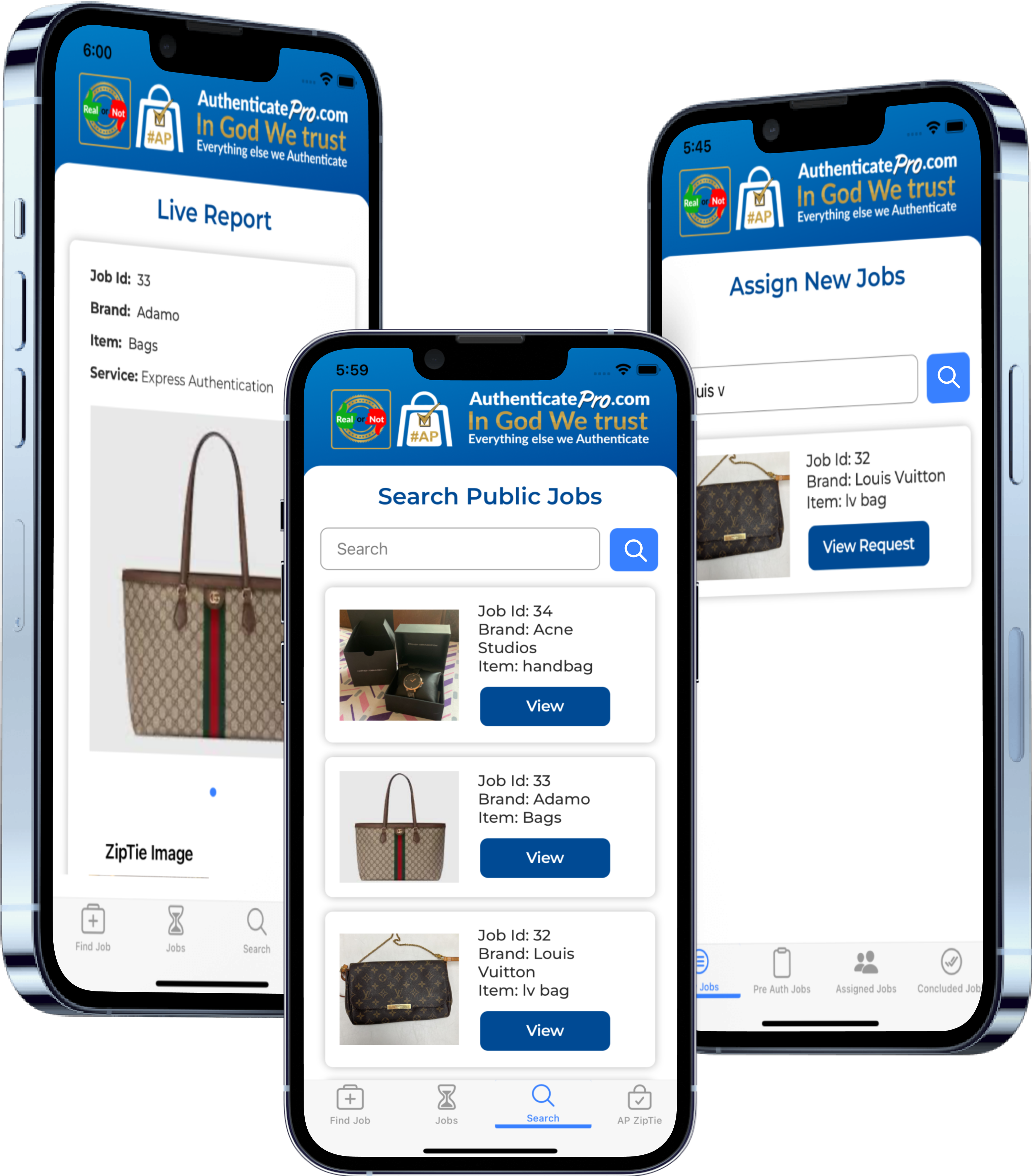
Authenticate Pro’s workflow uses technology for submission and review, while uncertain authentications move to trained human experts. The company reports approximately 99% accuracy based on its authentication conclusions.
That escalation matters. A preliminary signal is not the same as a final decision. If the item remains uncertain, hold it instead of guessing.
5. Keep the item connected to its report
Authenticate Pro’s materials describe a unique AP Ziptie and report lookup process for participating services. When applicable, a documented identifier can help connect the physical item to the authentication record and reduce confusion during a return or dispute.
Review current service options, timing, and terms on the Authenticate Pro pricing page.
What to do after discovering a possible counterfeit
Act quickly, but do not panic.
- Stop the listing and pause related inventory.
- Preserve all photos, messages, receipts, and supplier records.
- Review other items from the same source or batch.
- Notify the marketplace through its required process.
- Communicate directly and professionally with the customer.
- Offer the appropriate remedy under the platform’s rules and your policies.
- Seek legal or insurance guidance when the matter is significant.
- Update your intake and authentication procedure.
Good faith does not eliminate every consequence. It does, however, make prompt documentation and corrective action especially important.

The real lesson
The real cost of a fake is not limited to one refund.
It can include:
- Lost revenue
- Chargebacks
- Platform restrictions
- Legal expenses
- Supplier losses
- Staff time
- Insurance questions
- Negative reviews
- Damaged customer trust
But the solution is practical.
Document what comes in. Photograph what you buy. Preserve provenance. Escalate uncertainty to trained human experts. Keep the item connected to its authentication record.
You do not need to promise that every seller will never encounter a counterfeit. You need a process that makes mistakes less likely, problems easier to investigate, and customers more confident when they buy from you.
Learn more about Authenticate Pro’s authentication services or review the resale store membership options.
Leave a Reply