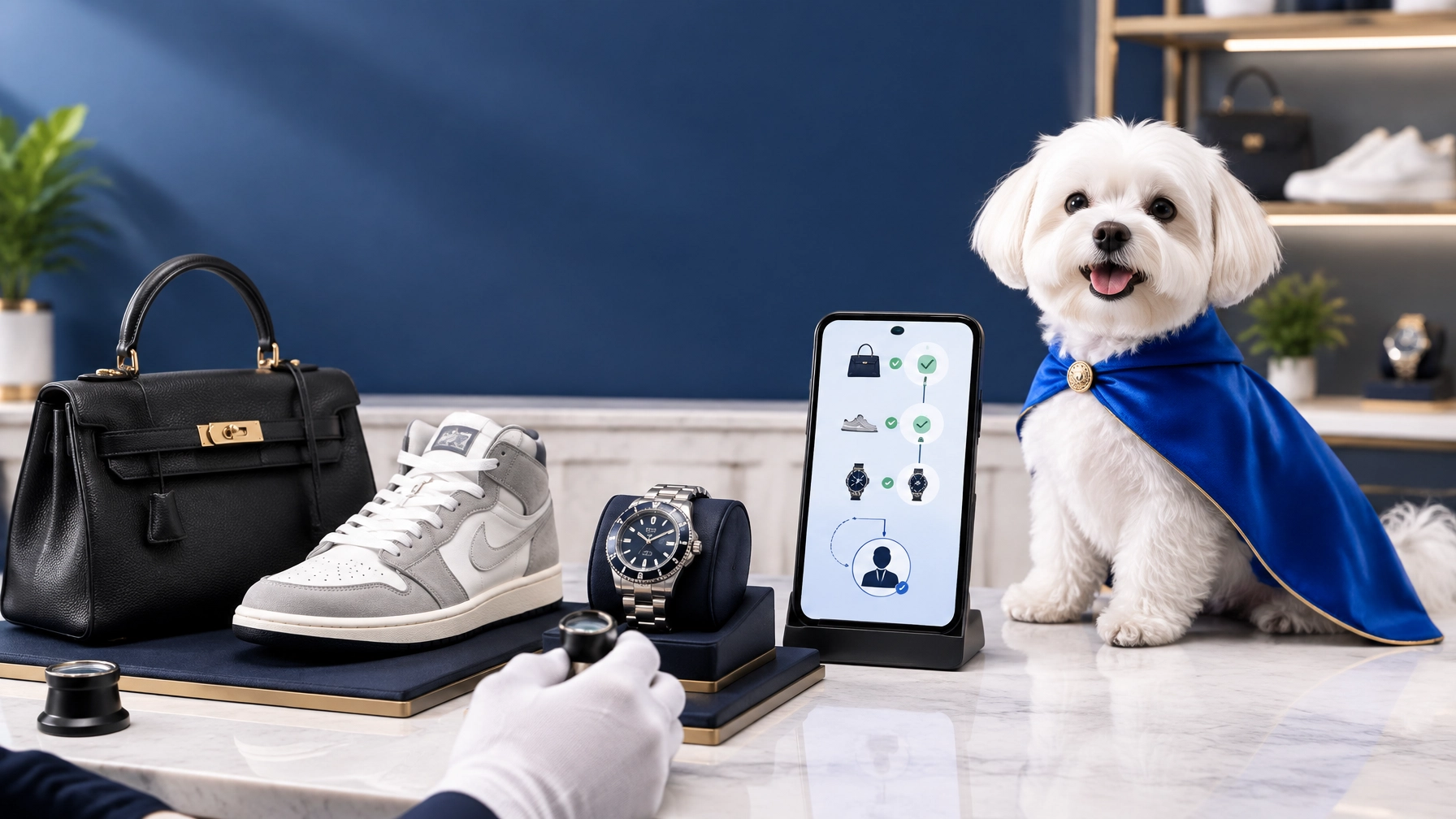
How many times a week does your customer ask, “Is this real?”
If your answer is, “We don’t sell fakes,” you may be trying to build trust. But without a documented process behind that statement, it can create more risk than protection.
A verbal promise is not counterfeit detection. It is not professional authentication. It is not a written intake policy, a chain of evidence, or a response plan.
It is an unverified claim.
For resale shops, pawn shops, online thrifters, and TikTok sellers, that difference matters.
“We Don’t Sell Fakes” Can Become a Representation
When you tell a customer that your store does not sell counterfeit goods, the statement may be understood as more than a general policy.
It can sound like a guarantee:
- The item was checked.
- Your business has a reliable authentication process.
- Your staff can identify counterfeit goods.
- The customer can rely on your conclusion.
If a counterfeit later appears in a transaction, that statement may be used to question your procedures, advertising, and level of care.
This does not mean every accidental counterfeit sale creates criminal liability. U.S. criminal law generally focuses on knowingly trafficking in counterfeit goods. For example, 18 U.S.C. § 2320 addresses intentional trafficking in goods bearing counterfeit marks.
But criminal liability is not the only concern.
A business may also face:
- Customer refund demands
- Chargebacks and marketplace disputes
- Consumer-protection complaints
- Trademark or brand-owner claims
- Lost inventory and lost revenue
- Reputation damage
- Costly legal review
- Increased scrutiny of past transactions
“I didn’t know” is not the same as “I used reasonable care.”
The Counterfeit Problem Is Getting Harder
Basic fakes are often easier to spot.
The stitching may be poor. The logo may be crooked. The packaging may have obvious errors. The price may be far below market value.
Superfakes are different.
They may include:
- Accurate-looking materials
- Better hardware
- Convincing date codes or serial formats
- Correct packaging
- Near-identical construction
- Professional-looking online listings
- Stolen photos and fabricated purchase stories
A seller may genuinely believe an item is authentic and still be wrong.
That is especially true with:
- Designer bags
- Luxury watches
- High-end sneakers
- Limited-edition streetwear
- Jewelry and accessories
- Popular resale brands
Your team’s experience is valuable. It is not a substitute for a consistent escalation process.

A Quick Visual Check Is Only the First Layer
Staff training can help identify warning signs. It should not be the only control protecting your business.
At intake, your team can review:
- Price: Is the deal inconsistent with the item’s condition and market value?
- Source: Is the seller’s story complete and credible?
- Construction: Are seams, edges, fonts, logos, and materials consistent?
- Hardware: Do engravings, finishes, weight, and placement make sense?
- Identifiers: Are serial numbers, date codes, tags, or model details consistent?
- Packaging: Does the box, dust bag, receipt, or documentation raise concerns?
- Listing history: Are the photos original, or do they appear copied from another seller?
These checks are useful.
They are also incomplete.
A counterfeit may pass several visual checks. An authentic item may have legitimate variations because of age, production period, repairs, or regional release.
The practical rule is simple:
Use staff inspection to identify risk. Use professional authentication to make the final decision on higher-risk items.
Your Business Needs a Counterfeit-Control Workflow
A real strategy should answer five questions:
- What do we check?
- Who performs the check?
- When does an item get escalated?
- What records do we retain?
- What happens if the item is later challenged?
A workable process may look like this.
1. Document the intake
Record:
- Seller name and contact information
- Brand and item category
- Model or style details
- Serial number or identifier
- Condition
- Purchase or loan value
- Seller’s explanation of provenance
- Photos taken at intake
- Staff member handling the item
For pawn shops, follow all applicable state and local recordkeeping rules. Requirements vary by jurisdiction.
2. Photograph the evidence
Take clear images of:
- Front and back
- Interior and exterior
- Logos and labels
- Hardware
- Stitching
- Serial areas
- Tags and packaging
- Any existing damage or alterations
Good intake photos create a record of what your business actually received.
They also help a remote authenticator review the item efficiently.
3. Establish escalation triggers
Do not let every employee make an independent judgment about when an item is “good enough.”
Create written triggers, such as:
- Item value above a set threshold
- High-counterfeit brand or category
- Unusually low purchase price
- Incomplete seller history
- Conflicting identifiers
- Unusual construction
- Customer request for proof
- Employee disagreement
- Item intended for online sale
When a trigger appears, pause the listing or sale.
4. Escalate to human experts
Technology can make the process faster. It should not remove expert oversight.
At Authenticate Pro, the authentication workflow uses advanced AI systems and then escalates authentications to qualified human experts. This human review is central to achieving approximately 99% accuracy.
That escalation matters because authentication is not always a simple pattern match.
A human expert can assess context, construction, brand-specific variations, and conflicting details. They can also review the evidence when photos are incomplete or the item falls into a difficult category.
This is the difference between a quick opinion and professional authentication.

Virtual Authentication Helps Online Sellers Move Faster
Online thrifters and TikTok sellers often work under time pressure.
A product arrives. A buyer wants an answer. A live stream is scheduled. A listing needs to go up before someone else sells a similar item.
That pressure can lead to rushed decisions.
Virtual authentication gives sellers a practical way to submit detailed photos for review without shipping the item to a physical store first.
Authenticate Pro’s published process includes:
- Uploading clear product photos
- Pre-authentication by a brand expert
- Review through its expert and community process
- An administrative conclusion
- A report connected to the item’s unique reference information, where applicable
Available service options and processing times vary. Authenticate Pro lists services ranging from rapid checks to Level 2 authentication, which may take 12 to 48 hours and may include available guarantee options under the applicable terms.
The goal is not to slow down your business.
The goal is to avoid making a high-cost decision based on confidence alone.
Designer Bag Authentication and Sneaker Authentication Need Different Checks
A single generic checklist is not enough for every category.
Designer bags
Review:
- Stitching patterns
- Edge paint
- Logo placement
- Hardware shape and finish
- Interior labels
- Date codes or serial details
- Lining and material
- Model-specific construction
Sneakers
Review:
- Box labels
- Size-tag formatting
- Stitching and panel shape
- Midsole and outsole details
- Insole printing
- Materials and colorway
- Accessories and packaging
- Release-specific features
Watches and jewelry
Review:
- Movement or internal construction, where appropriate
- Engravings
- Weight
- Hallmarks
- Hardware
- Serial information
- Seller documentation
- Signs of replacement parts or modification
Category knowledge matters. An employee who can spot a questionable sneaker may not be qualified to authenticate a designer handbag or luxury watch.
A Written Policy Is Better Than an Absolute Slogan
Instead of relying only on:
“We don’t sell fakes.”
Use customer-facing language that explains your process.
For example:
“We use documented intake procedures and professional authentication for higher-risk luxury items. Items are held from sale when additional review is needed.”
That statement is more useful because it describes an action.
Your policy should also explain:
- Which categories require professional authentication
- Whether authentication is completed before or after purchase
- How long records are retained
- What happens when an item cannot be verified
- How customers can raise a concern
- What refund or return terms apply
- Whether any guarantee has conditions or limitations
Avoid promising more than your process can support.
A claim such as “100% guaranteed authentic” deserves careful legal and operational review. Your marketing should match your actual procedures.
What to Do When a Customer Challenges an Item
Do not argue from instinct.
Use a response process:
- Pause the sale or further distribution.
- Preserve the item and transaction records.
- Review the original intake photos and authentication report.
- Seek professional re-authentication.
- Document communications with the customer.
- Follow your written refund and remediation policy.
- Consult qualified legal counsel when the issue involves a brand owner, demand letter, law enforcement, or repeated counterfeit activity.
Do not destroy, alter, or return questionable goods without understanding your legal and business obligations.
Counterfeit matters can become more complicated when multiple transactions, employees, sellers, or online platforms are involved.
Build Trust With Proof, Not Just Promises
Authenticate Pro’s approach is built around a patented process that connects sellers and buyers with advanced AI systems and human experts.
Its ACE framework stands for:
Authentication · Community · Experts
The point is not to claim that technology replaces judgment.
The point is to create a documented path from submission to review to conclusion.
That gives your staff a process. It gives your customers greater confidence. It gives your business evidence that it took counterfeit detection seriously.
Clothes Mentor has described using Authenticate Pro as a value-added service that gives staff and customers confidence when purchasing high-value branded goods. That is the operational advantage of professional authentication: it can support both risk control and sales conversion.

Replace the Slogan With a System
“We don’t sell fakes” should be the result of your process, not the process itself.
Start with these steps:
- Create a written intake checklist.
- Photograph every high-risk item.
- Set clear escalation thresholds.
- Require professional authentication when appropriate.
- Keep authentication reports with transaction records.
- Train staff on category-specific warning signs.
- Publish a clear customer policy.
- Create a documented response plan for disputes.
- Review your marketing claims with your actual capabilities.
The counterfeit market will continue to change. Superfakes will continue to improve. Your safeguards need to improve with them.
If your store buys, pawns, lists, or sells luxury goods, contact Authenticate Pro to learn how virtual authentication and human expert review can fit into your workflow. You can also review reseller membership options and current service pricing.
Confidence is not created by saying “we don’t sell fakes.”
It is created by showing customers, and your team, exactly how you work to prevent them.
Leave a Reply