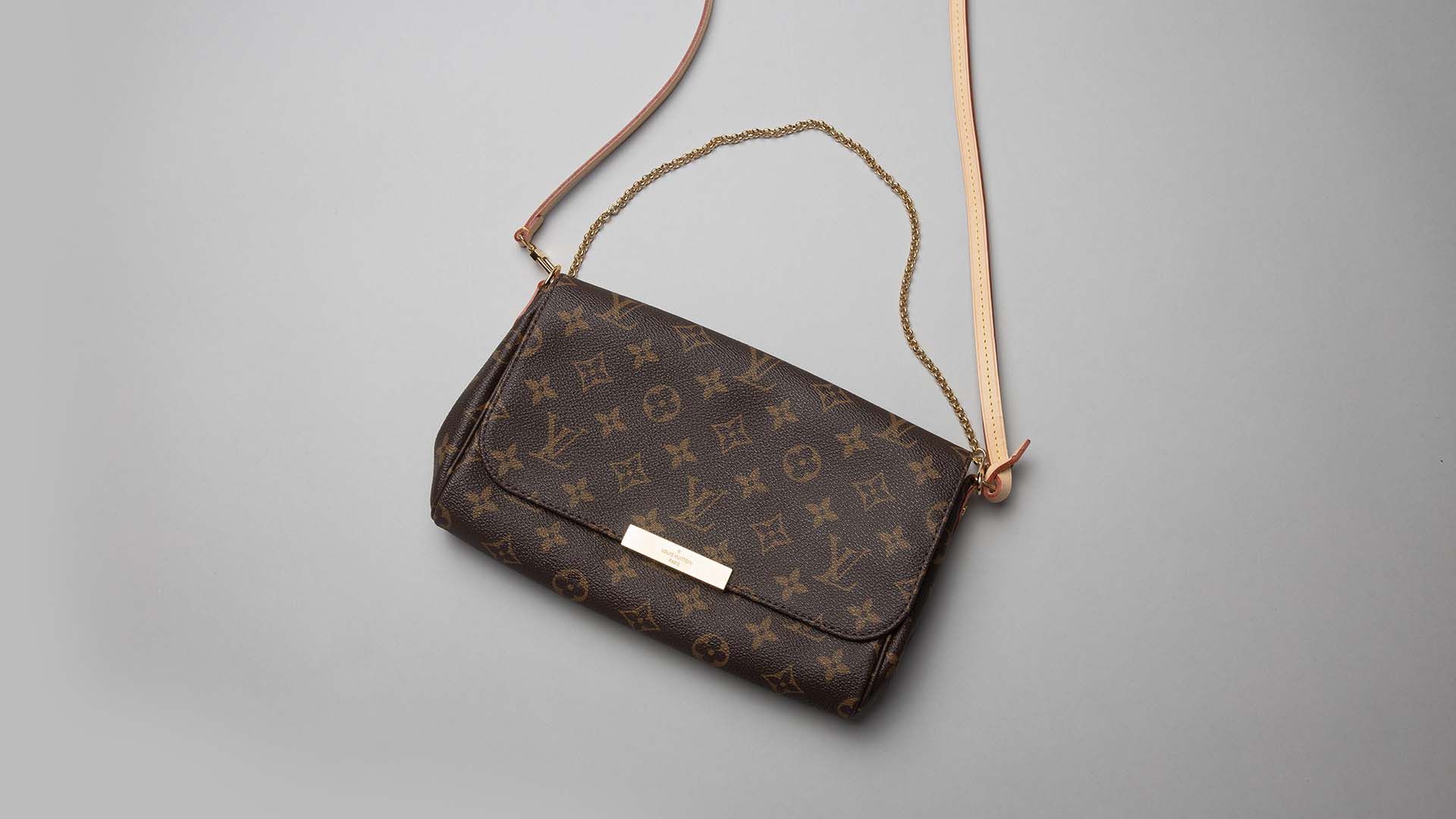
A Louis Vuitton bag can bring serious resale value: or serious risk.
For pawn shop owners and counter staff, the goal is not to become a brand historian during a busy shift. The goal is to use a fast, repeatable intake process that identifies obvious red flags, documents the item properly, and escalates uncertain pieces before money changes hands.
How many times a week does a customer ask, “Is this real?”
Your answer affects more than one transaction. A counterfeit can lead to:
- Lost inventory cost
- Refunds and disputes
- Damaged customer trust
- Reputation problems
- Potential legal and compliance concerns
Use this checklist for an initial Louis Vuitton review. Then remember the most important rule:
No single detail proves authenticity. Review the entire item: and escalate when the risk is high.

Step 1: Start with the seller’s story
Before inspecting the bag, ask practical questions.
- Where did the seller get it?
- How long have they owned it?
- Do they have a receipt, dust bag, or original paperwork?
- What model do they believe it is?
- Has it been repaired, altered, or customized?
- Why are they selling it today?
The story is not proof. Receipts and packaging can be copied. But the story helps you assess risk.
Look for a price mismatch
A popular Louis Vuitton model offered at an unusually low price deserves more scrutiny.
A low price does not automatically mean counterfeit. The item may have heavy wear, damage, missing accessories, or limited demand. Still, a seller who describes a nearly new bag and offers it far below market value should trigger a deeper review.
Quick rule: If the story, condition, and asking price do not make sense together, slow down.
Step 2: Run a 60-second visual triage
Do not begin by searching for a date code. Start with the big picture.
1. Check the monogram pattern
On many Louis Vuitton monogram pieces, the pattern should look intentional and balanced.
Look for:
- Clean, crisp motifs
- Consistent color
- Logical alignment at seams
- Symmetry on front panels and pockets
- No obviously random or awkwardly cut logos
A counterfeit may place motifs too close to seams, cut them in unusual locations, or distort the familiar LV flowers and symbols.
However, do not reject an item simply because a logo is cut off. Design, panel construction, and model details vary. Treat pattern alignment as one piece of the review.
2. Inspect the stitching
Authentic luxury construction should look controlled.
Check for:
- Even stitch length
- Straight lines
- Consistent spacing
- Tight, secure thread
- No loose ends or messy corners
- Thread color appropriate for the model
Sloppy stitching across several areas is a significant warning sign. One imperfect stitch on a used item is not enough to make a final decision.
3. Test the hardware
Handle the zippers, clasps, rings, snaps, and other metal components.
Ask:
- Does the hardware feel substantial?
- Do zippers move smoothly?
- Do clasps close securely?
- Are engravings sharp and centered?
- Is the finish consistent?
- Is there unexpected flaking, hollow sound, or lightweight feel?
Cheap-feeling hardware combined with poor stitching and incorrect pattern alignment is a strong counterfeit signal.
Step 3: Review the materials and construction
Louis Vuitton bags use different materials across models and production periods. Do not expect every item to feel identical.
Canvas
Monogram canvas should generally feel structured and durable, not thin, rubbery, or excessively plastic-like.
Check for:
- A consistent surface texture
- Balanced flexibility
- Clean edges
- No unexplained bubbling or peeling
- A finish appropriate for the model
Vachetta leather
On models with untreated vachetta leather, handles and trim typically change over time.
Newer leather may appear pale. Older leather may develop a honey or caramel patina. Uneven patina can be normal because handles receive different amounts of handling, light, and moisture.
Do not use color alone as a pass-or-fail test.
Edge glazing
Inspect leather edges and painted trim.
Red flags include:
- Thick blobs
- Cracking
- Uneven color
- Paint bleeding onto nearby materials
- Rough or unfinished corners
Interior lining
Open every compartment.
Compare the lining to reliable references for the specific model and era. Look for:
- Correct material and color
- Clean seams
- Properly finished pockets
- Accurate labels
- Correct placement of hardware and interior features
Counterfeits often look acceptable from the outside but reveal poor construction inside.
Step 4: Examine the heat stamp closely
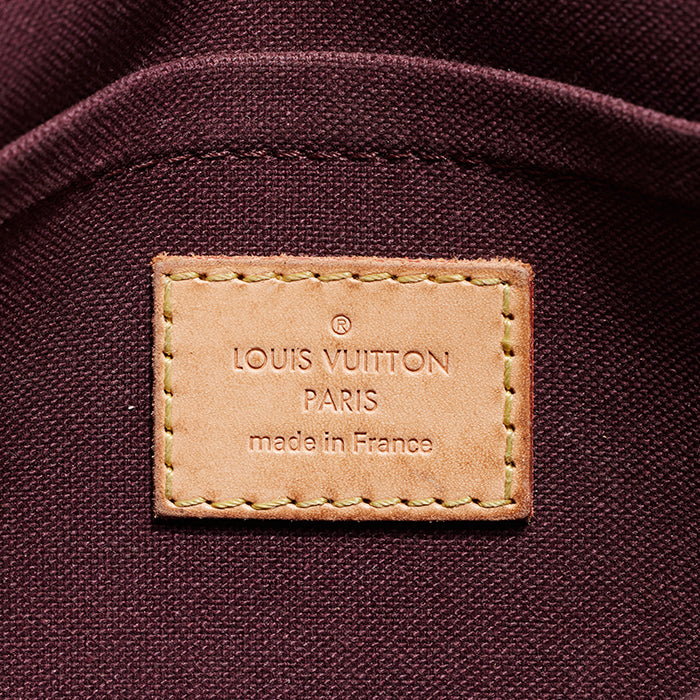
The Louis Vuitton heat stamp is an important checkpoint. It is not a standalone certificate of authenticity.
A legitimate-looking stamp should generally be:
- Clear
- Crisp
- Horizontally level
- Evenly spaced
- Properly centered for its location
- Consistent with the item’s model and era
Pay close attention to the lettering. Authentication references commonly identify details such as:
- Round “O” characters
- A short tail on the “L”
- Thin, clean lettering
- The two “T” characters in “VUITTON” appearing very close together
- Lowercase “made in” wording with the country name formatted correctly
Do not over-trust a good stamp
Counterfeit manufacturers can copy a logo stamp. A convincing heat stamp does not override incorrect hardware, lining, stitching, or materials.
Review the stamp together with the rest of the bag.
Step 5: Handle date codes and newer identification methods carefully
Older Louis Vuitton items may include a date code inside a seam, pocket, or leather tab. When present, the format should be consistent with the item’s production period and country marking.
But a missing visible date code is not automatic proof of a counterfeit.
Newer Louis Vuitton items may use embedded RFID technology rather than a visible date code. That means counter staff should avoid a common mistake:
Do not reject a newer-looking bag solely because you cannot find a date code.
Use the item’s model, construction, materials, heat stamp, hardware, and production era together. If those details do not align, escalate the item.
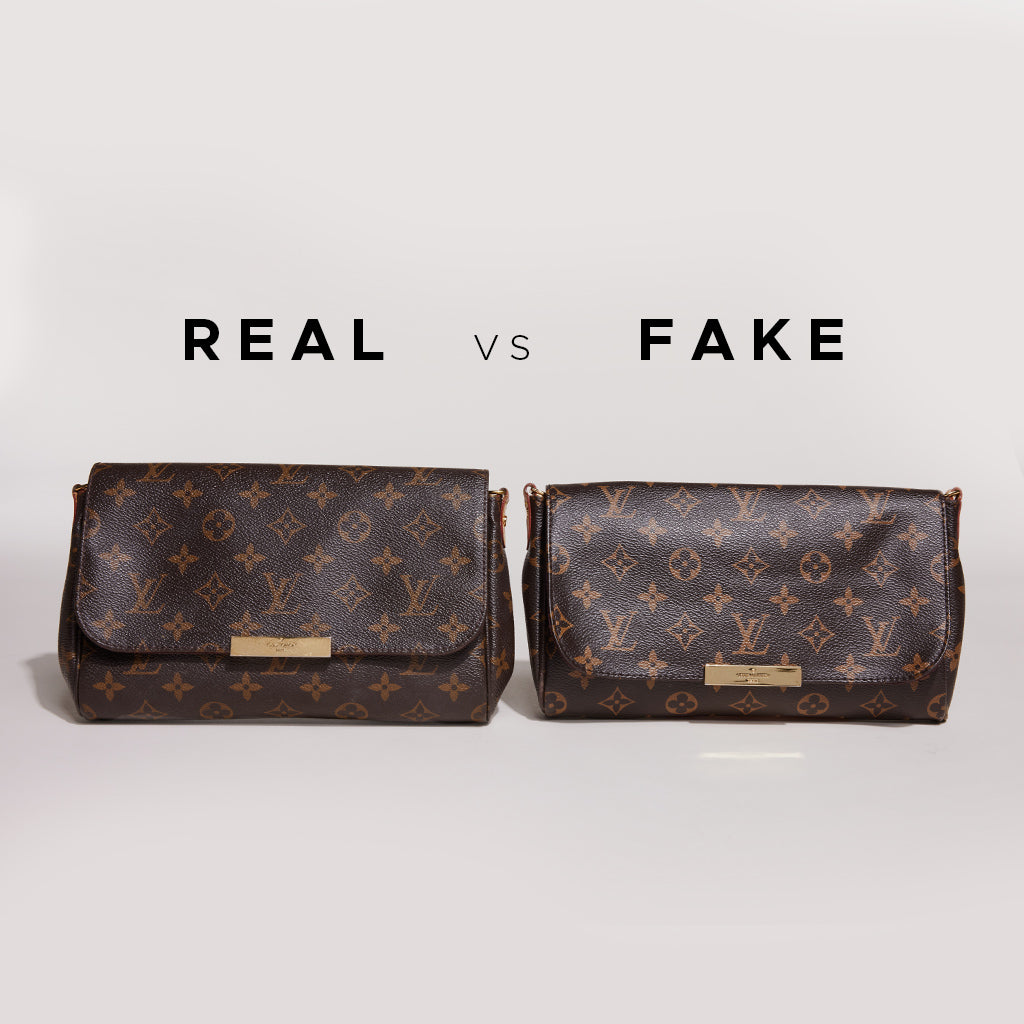
Real vs. fake: use comparison images carefully
Side-by-side comparisons can help staff notice differences in pattern, shape, hardware, and overall construction.
But internet images are not a substitute for authentication. Lighting, wear, repairs, camera quality, and model variations can make genuine pieces look different from one another.
The pawn shop decision checklist
After the first inspection, place the item in one of three categories.
✅ Lower-risk item
- Construction is consistent
- Pattern and materials make sense
- Hardware feels appropriate
- Heat stamp is clean
- Interior matches the model
- No major contradictions appear
Even then, high-value inventory may justify professional review.
⚠️ Hold for authentication
- The item passes basic checks but has uncertainties
- The model or production era is unclear
- A date code or interior detail needs verification
- The seller’s story and the item do not fully match
- The potential loan or resale value is significant
Do not force a fast “yes” because the customer is waiting. A short delay is cheaper than a counterfeit acquisition.
❌ Decline or quarantine
- Multiple major details are wrong
- Branding is misspelled
- Hardware is clearly poor quality
- Stitching is inconsistent throughout
- The lining or construction is obviously incorrect
- The item shows signs of alteration or tampering
Follow your shop’s policies for documenting and handling suspected counterfeit merchandise. Avoid making accusations at the counter. Use neutral language such as, “We are unable to accept this item based on our inspection.”
Document before you submit
Take clear photos of:
- Front and back
- Bottom and side panels
- Interior lining
- Heat stamp
- Date code or interior tag, if present
- Hardware engravings
- Zippers, corners, handles, and damage
- Any questionable detail
Good photos speed up the review and create a record for your shop.
When speed and accuracy both matter
A counter inspection is useful. It is not the same as an expert conclusion.
Authenticate Pro uses a patented process that combines technology with human review. Daisy AI can assist with preliminary findings, but uncertain or submitted authentications move to human brand experts. That human escalation is central to reliability, with approximately 99% accuracy cited across the company’s authentication conclusions.

ACE: Authentication · Community · Experts
For pawn shops, the ACE approach is practical:
- Authentication: Review the item using a documented process.
- Community: Use shared knowledge, reports, and transparent records to support better decisions.
- Experts: Escalate luxury items to qualified human reviewers when the stakes are high.
That is the difference between guessing and managing risk.
Authenticate Pro offers authentication options for resale businesses, including Quick Check, Express Authentication, and Level 2 Authentication. Current service timing and pricing are available on the Authenticate Pro pricing page.
You can also review the reseller membership options, or contact Authenticate Pro directly through the company website.
Final counter reminder
Print this list and keep it near the intake station:
- ☐ Ask where the item came from
- ☐ Check whether the price and story make sense
- ☐ Review pattern alignment
- ☐ Inspect stitching and thread
- ☐ Test hardware and engravings
- ☐ Examine canvas, leather, glazing, and lining
- ☐ Review the heat stamp
- ☐ Do not reject newer bags only because a date code is missing
- ☐ Photograph every important detail
- ☐ Escalate high-value or uncertain items to human experts
- ☐ Do not let speed replace accuracy
A strong pawn shop authentication process protects your inventory, your revenue, and your reputation. When Louis Vuitton walks in, use the checklist first. Then bring in the experts when the answer is not clear.
Leave a Reply