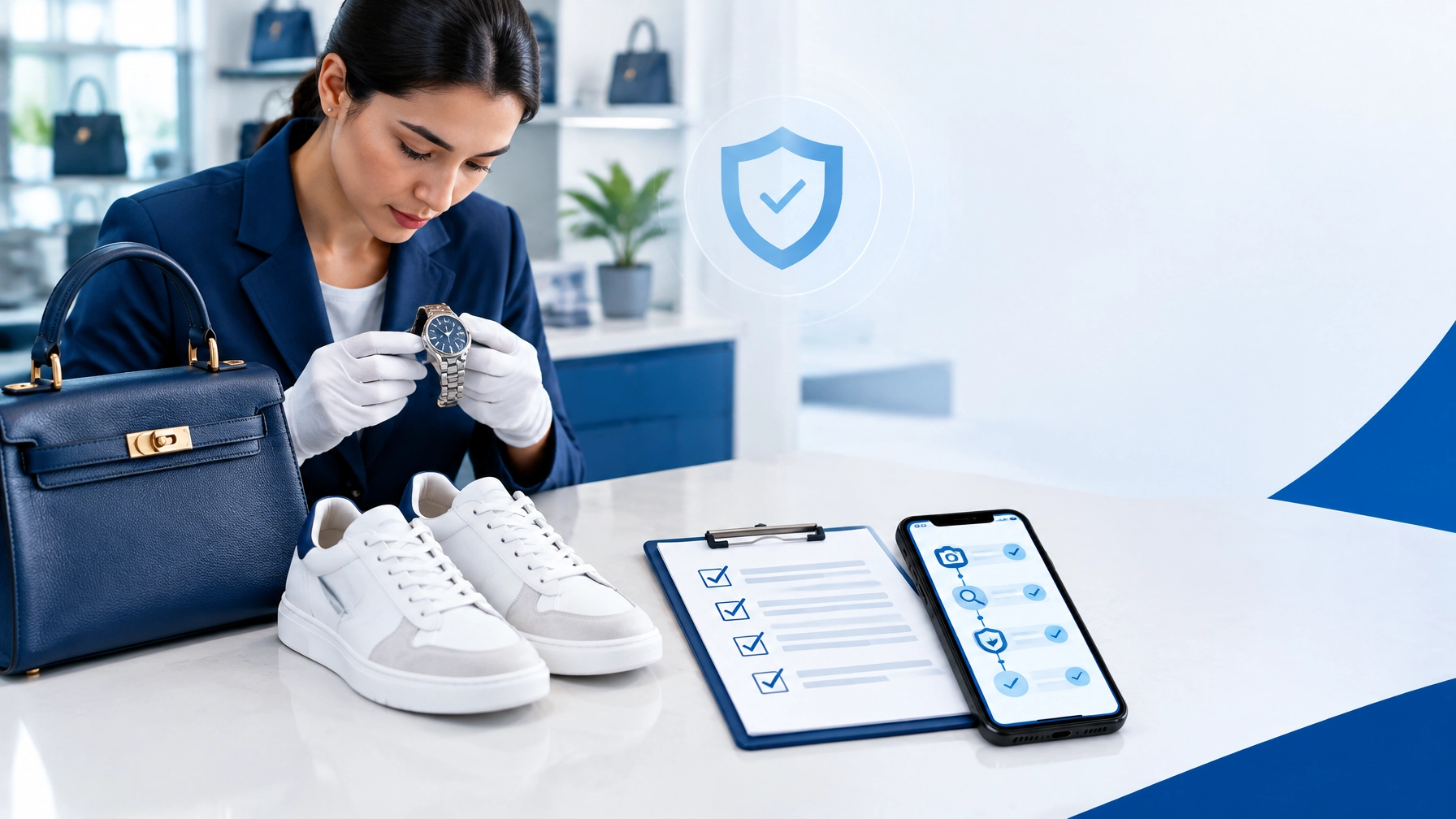
If your policy is simply “We don’t sell fakes,” you do not have a counterfeit control system.
You have a statement of intent.
That distinction matters.
Pawn shops and resale businesses handle high-risk merchandise every day: luxury handbags, watches, jewelry, designer shoes, collectibles, and branded accessories. A single counterfeit item can create more than an inventory loss. It can trigger customer disputes, refunds, negative reviews, brand complaints, legal exposure, and damage to the reputation you built over years.
Counterfeit liability begins before the item reaches the sales floor.
The solution is not to expect every employee to become a luxury authenticator. The solution is to build a repeatable intake process with clear escalation rules, documentation, and professional authentication when the risk is too high for an internal visual check.
This article is general business information, not legal advice. Counterfeit laws and pawn regulations vary by jurisdiction. Consult qualified legal counsel for policies specific to your location.
“We Don’t Sell Fakes” Is Not a Control
A real control answers practical questions:
- What does staff inspect at intake?
- Which categories require manager approval?
- When must an item be held?
- Who decides whether an item can be purchased or listed?
- What records are saved?
- What happens if a customer later challenges authenticity?
- How do you prevent an authenticated item from being swapped or returned?
A slogan answers none of these questions.
Federal law prohibits trafficking in counterfeit goods. The U.S. Code provision on counterfeit goods outlines serious criminal consequences for knowing violations. Separately, a business may face civil claims or consumer complaints when it makes inaccurate statements about an item’s brand, materials, condition, or authenticity.
An “as-is” statement may not protect a business from every problem. If your listing says “authentic,” “real diamond,” “genuine designer,” or “18K gold,” that representation should be supported by appropriate testing, documentation, or expert review.
Counterfeit Liability Is an Intake Problem First
By the time a suspected counterfeit reaches your sales floor, your business has already invested time and money in it.
You may have:
- Paid the seller.
- Created an inventory record.
- Photographed the item.
- Listed it online.
- Promoted it in an email or social post.
- Accepted a customer’s payment.
- Stored it alongside legitimate merchandise.
That is why the strongest pawn shop counterfeit controls operate at intake.

Build a Three-Stage Intake Process
Stage 1: Identify the item and the seller
Start with traceability.
For every higher-risk branded item, record:
- Seller identification and contact information.
- Date and location of intake.
- Brand and item type.
- Model, style, reference, or serial number.
- Distinguishing marks, engravings, tags, and hardware.
- Condition and included accessories.
- Seller-provided receipts, boxes, dust bags, or certificates.
- Clear photographs from multiple angles.
For pawn shops, these records also support stolen-property controls and law-enforcement requests. For resale stores, they create a documented chain of custody.
Do not rely on memory. Do not rely on a single front-facing photograph. The item record should be specific enough that another trained employee can identify the same item later.
Stage 2: Complete a consistent counterfeit detection screen
Staff should use the same checklist for every applicable item.
One practical starting point is the “3 P’s” often used in counterfeit awareness:
- Price: Is the purchase price unusually low compared with the item’s normal market value?
- Packaging: Are there spelling errors, poor materials, inconsistent labels, or missing manufacturer details?
- Place: Is the source, seller story, or transaction context unusual?
The 3 P’s do not prove an item is fake. They identify when additional review is required.
Staff should also inspect category-specific details, including:
- Logo placement and font.
- Stitching, edge paint, lining, and hardware.
- Engravings, date codes, serial numbers, and tags.
- Weight, materials, construction, and finishing.
- Watch movement, dial details, caseback, and reference information.
- Jewelry markings, stone characteristics, and metal testing results.
- Packaging consistency and accessories.
The key is consistency. A good employee having a good day is not a process.
Stage 3: Escalate instead of guessing
Your procedure should clearly state what staff must do when they are uncertain:
- Do not buy or lend against the item yet.
- Place it in a designated hold area.
- Record the reason for the hold.
- Notify a manager or approved reviewer.
- Request professional authentication when the value or risk justifies it.
- Do not list or advertise the item until the review is complete.
“Probably real” is not a business decision.
Create Clear Acceptance Rules
Not every item needs the same level of review. Your policy should divide merchandise into risk levels.
Lower-risk items
These may receive normal intake inspection when:
- The brand and item type are familiar to staff.
- The value is modest.
- There are no significant red flags.
- The item does not carry a high counterfeit rate.
Medium-risk items
Require manager review when:
- The brand is frequently counterfeited.
- The seller has limited documentation.
- The price is inconsistent with market value.
- Serial numbers, tags, or construction raise questions.
- The employee has not handled the category before.
High-risk items
Require professional authentication before purchase, lending, or resale when dealing with:
- Luxury watches.
- High-value handbags.
- Designer shoes and accessories.
- Gold and diamond jewelry.
- Collectibles and trading cards.
- Branded musical instruments.
- Items with significant resale value.
- Any item with conflicting or incomplete information.
A simple rule works well:
If the business cannot confidently support its authenticity claim, the item does not move forward without expert review.
Document the Decision, Not Just the Result
A professional authentication report is useful. Your internal record is also important.
For each reviewed item, document:
- Who inspected it.
- When the inspection occurred.
- What evidence was reviewed.
- What concerns were identified.
- Whether the item was escalated.
- The authentication provider or expert.
- The final conclusion.
- Any conditions or limitations.
- Whether the item was accepted, declined, returned, or removed from inventory.
Store the photographs and report with the inventory record. Use consistent file names or item IDs.
This documentation helps management identify patterns. If multiple questionable items come from the same source, that is a seller-risk issue. If one employee repeatedly accepts problematic items, that is a training issue. If one category produces frequent disputes, that is a policy issue.
Professional Authentication Should Be Part of the Workflow
Internal inspection is valuable. It is not always enough.
Professional authentication creates an independent review for items where the cost of being wrong is high. It also gives your staff a defined escalation path instead of forcing them to make a high-stakes decision alone.
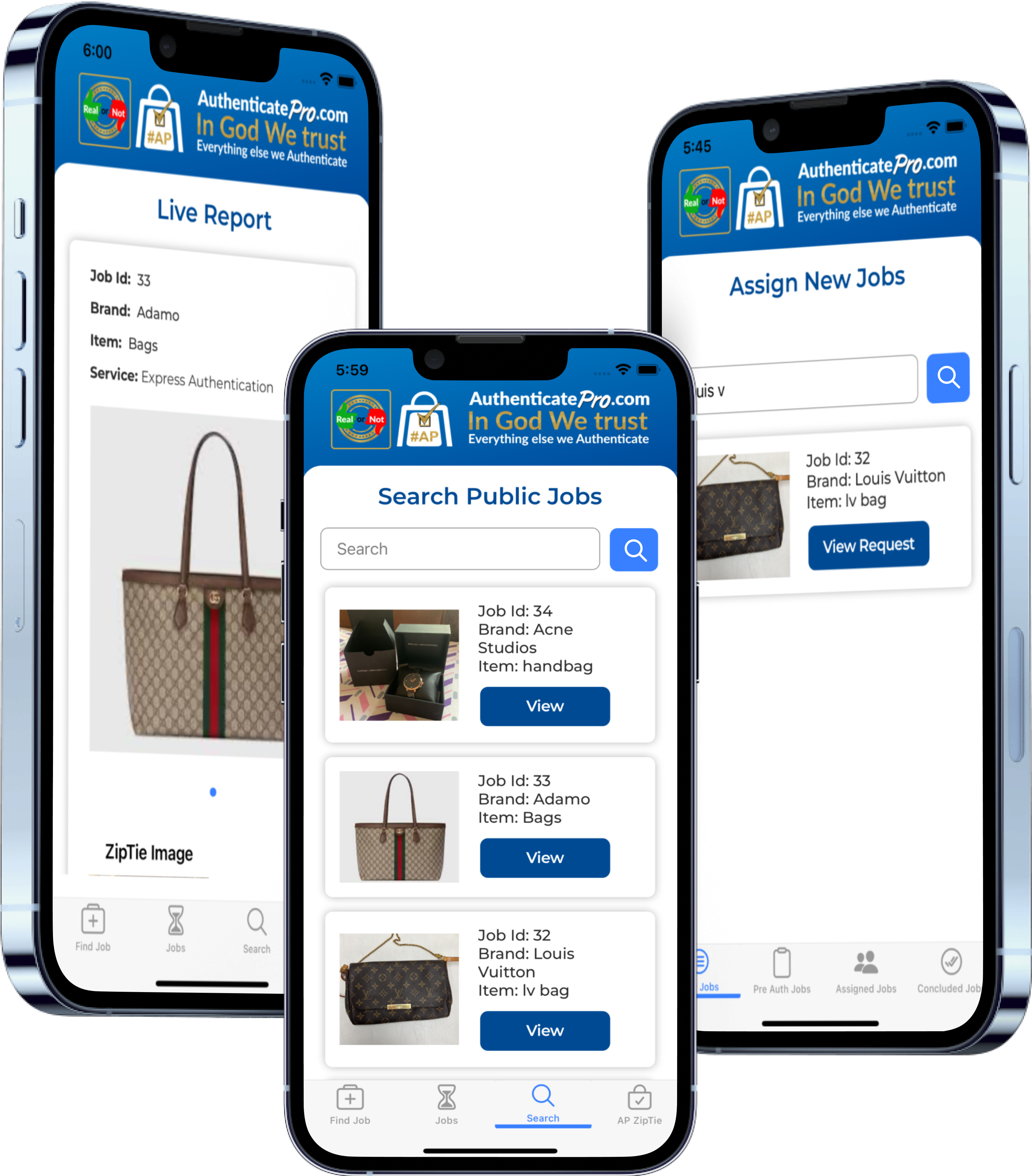
A practical workflow looks like this:
- Staff photographs the item clearly.
- The item is assigned an internal reference number.
- The item remains on hold.
- Photos and required details are submitted for review.
- The submission moves to an appropriate human expert.
- The conclusion and supporting report are saved.
- Management approves the purchase, listing, or rejection.
Authenticate Pro’s process combines technology with human review. Initial information can be submitted through the platform, but authentications move to human experts for the final review process. The company reports approximately 99% accuracy based on its authentication conclusions.
That escalation matters. Artificial intelligence and image-based tools can assist with screening. They should not replace qualified human judgment for high-risk merchandise.
Protect the Item After Authentication
Authentication is only useful if the report stays connected to the merchandise.
Use item-level controls such as:
- A unique internal inventory number.
- A tamper-evident tag or zip tie where appropriate.
- Photographs showing the tag attached to the item.
- The tag or reference number recorded on the receipt.
- A report connected to that same number.
- A return inspection procedure.
This helps prevent item substitution and return fraud. It also gives the customer a way to connect the product they purchased with the review that was performed.
If a customer requests authentication after purchase, your store should know:
- The request timeframe.
- Who pays for the service.
- What photographs or receipt information are required.
- Whether the item must remain tagged.
- What happens if the item is found to be counterfeit.
- Who handles the customer communication.
Put these terms in writing. Train staff to explain them clearly.
What to Do When a Counterfeit Is Discovered
Do not discount it as a “replica.”
Do not list it with a disclaimer.
Do not move it to another location.
Do not return it to inventory and hope the issue disappears.
Instead:
- Remove the item from sale immediately.
- Preserve photographs, transaction records, and communications.
- Secure the item separately.
- Obtain professional authentication if the conclusion is not already documented.
- Notify management.
- Review whether the seller, buyer, or law enforcement must be contacted.
- Consult counsel for significant or repeated incidents.
- Document the final resolution.
The U.S. Customs and Border Protection guidance on intellectual property rights explains why counterfeit goods create risks beyond ordinary inventory loss. Counterfeit trade can result in seizure, destruction, financial penalties, and reputational harm.
Train Staff With Short, Repeatable Procedures
Training does not need to be complicated.
Give employees:
- A one-page intake checklist.
- Category-specific red flags.
- A clear hold-and-escalate rule.
- Examples of acceptable documentation.
- A list of items requiring professional authentication.
- A script for declining questionable merchandise.
- A process for reporting near misses.
A useful staff script is:
“We cannot complete this transaction until the item passes our verification process. We would rather pause than make an inaccurate decision.”
That protects the customer and the employee.
Make Authenticity a Documented Service Standard
Customers already ask, “Is this real?”
Your answer should not be a verbal promise. It should be a process.
Clothes Mentor Reno, a resale business featured by Authenticate Pro, described professional authentication as a value-added service that gives staff and customers confidence with high-dollar branded merchandise. That is the commercial benefit of proper controls: fewer avoidable disputes, better customer conversations, and stronger trust in your inventory.
You can learn more about Authenticate Pro’s authentication services for resale stores or review available authentication pricing and service levels.
The Bottom Line
“We don’t sell fakes” is not a counterfeit strategy.
A real strategy includes:
- Written intake controls.
- Consistent counterfeit detection procedures.
- Clear staff escalation rules.
- Accurate inventory and seller documentation.
- Professional authentication for high-risk items.
- Secure item-level tracking.
- A documented response to suspected counterfeits.
You cannot eliminate every risk. You can make it much harder for a counterfeit to enter your inventory, much easier to identify a problem, and much more defensible when questions arise.
That is the difference between making a promise and operating a control system.
Start with Authenticate Pro to create a more reliable authentication workflow for your pawn shop or resale business.
Leave a Reply