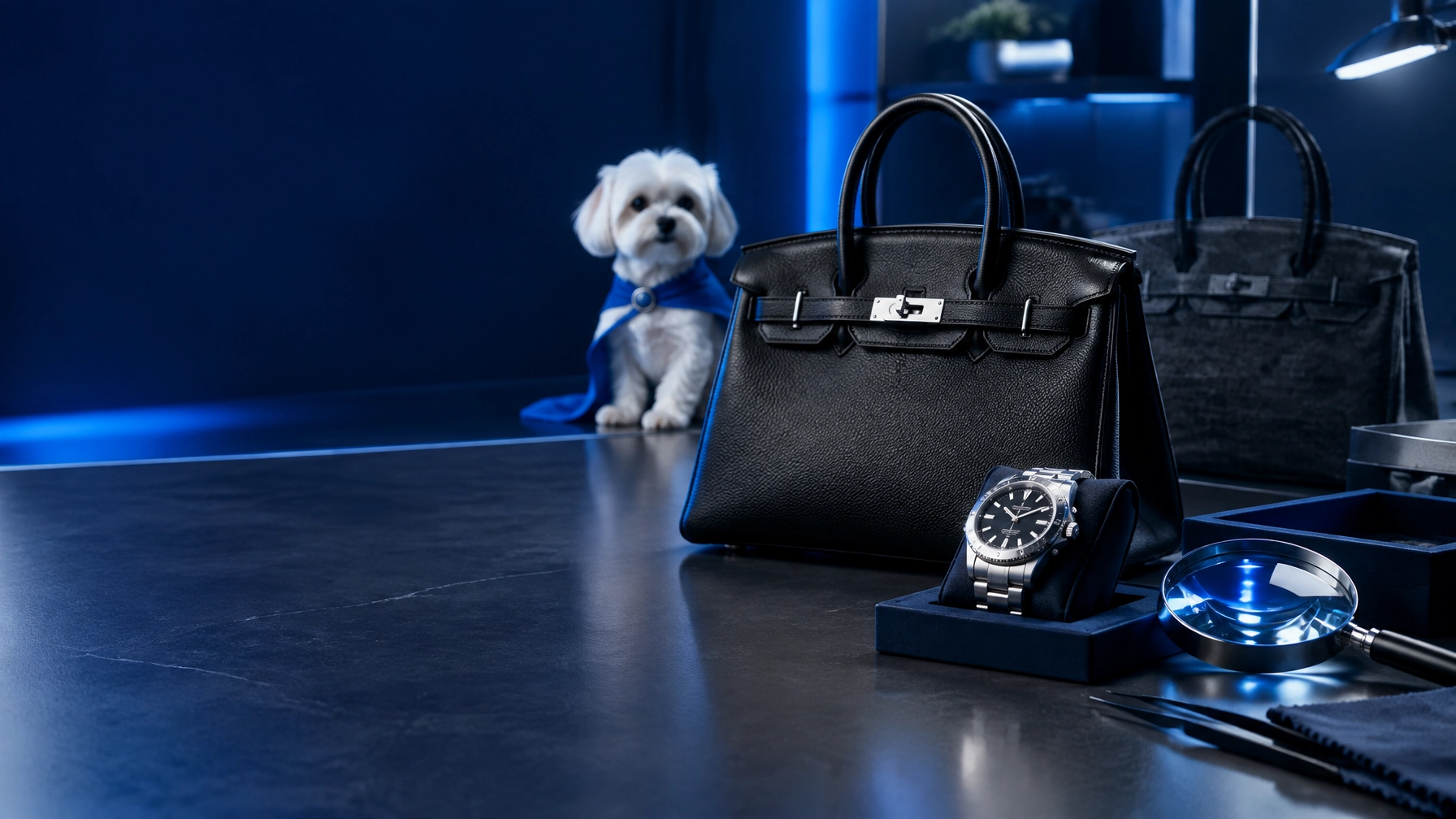
How many times a week do you hear, “Is this real?”
For resale stores, pawn shops, online thrifters, and TikTok sellers, that question is no longer a formality. It is a business risk.
Superfakes are becoming harder to identify. They can copy the look, feel, packaging, serial numbers, hardware, and construction of authentic luxury goods. A quick visual check is not enough.
One counterfeit can lead to:
- Refunds and lost inventory
- Chargebacks and disputes
- Marketplace account restrictions
- Damaged customer trust
- Legal and trademark exposure
- Lost revenue and wasted staff time
The answer is not panic. It is a better process.
What Is a Superfake?
A superfake is a counterfeit item made to closely imitate an authentic luxury product.
Basic counterfeits often have obvious flaws:
- Uneven stitching
- Incorrect fonts
- Cheap hardware
- Poor materials
- Wrong proportions
- Incorrect logos or labels
Superfakes are different.
They may include:
- Convincing materials and finishes
- Correct-looking date codes or serial numbers
- Accurate packaging and dust bags
- Replicated hardware weight
- Similar stitching patterns
- High-quality engraving and stamping
- Photos and receipts designed to appear legitimate
That does not mean every superfake is impossible to identify. It means the old shortcut of checking one detail is no longer reliable.
A correct serial number does not prove authenticity. Neither does a receipt, box, dust bag, or seller story.
Why 2026 Fakes Are Harder to Spot
1. Counterfeiters are copying the entire product experience
The item is only one part of the sale.
Sophisticated counterfeit operations may replicate:
- Product packaging
- Care cards
- Tags
- Authentication cards
- Online listings
- Purchase receipts
- Serial-number formats
- Seller profiles
The goal is to make the entire transaction feel genuine.
That is why provenance matters. So does a professional review.
2. There may be no single “obvious tell”
Many people learned authentication from simple checklists:
- Check the logo.
- Check the stitching.
- Check the serial number.
- Check the hardware.
Those details still matter. But a superfake may pass several of them.
Authentication now requires looking at the complete construction and context of the item. Brand-specific knowledge matters. So does experience with variations across years, production locations, materials, and model updates.
3. Technology helps. It does not replace judgment.
Image-based tools and AI can help organize information, flag inconsistencies, and support an initial review.
But technology can make mistakes in both directions:
- Rejecting an authentic vintage or heavily worn item
- Missing a sophisticated counterfeit
- Confusing a model variation with a defect
- Overlooking details that require physical or brand-specific knowledge
The safest workflow combines technology with trained human review.
At Authenticate Pro, authentications move to human experts for the final review process. The company reports a 99.5% conclusion rate based on its last 2,000 authentications, supporting an overall accuracy target of approximately 99%.
That escalation matters.

The Risk of Selling One by Accident
You may not know an item is counterfeit when you list it.
That does not eliminate the problem.
Financial risk
A counterfeit sale can trigger:
- A full refund
- Return shipping costs
- Chargeback fees
- Lost selling fees
- Replacement or recovery costs
- Time spent handling the dispute
The item may also be difficult to resell or recover.
Reputation risk
Customers remember the bad transaction.
One counterfeit can become:
- A negative review
- A social media complaint
- A TikTok warning
- A marketplace report
- A reason customers stop consigning with you
For a local resale store or pawn shop, trust is a major competitive advantage. Once customers question your inventory, every item becomes harder to sell.
Legal and compliance risk
Selling counterfeit goods can create trademark and consumer-protection exposure. The legal details depend on the facts and jurisdiction, but the basic business lesson is simple:
Good intentions are not the same as a documented authentication process.
The U.S. Customs and Border Protection agency warns that counterfeit merchandise can result in civil or criminal penalties. The FTC also addresses deceptive practices and online marketplace transparency.
The FTC’s guidance on the INFORM Consumers Act explains that certain high-volume sellers on online marketplaces may need to provide verified business, tax, banking, and contact information.
For general counterfeit risks, review CBP’s guidance on fake goods and their consequences.
This article is not legal advice. If you receive a demand letter, takedown notice, or legal complaint, contact a qualified attorney.
How to Stay Ahead of Superfakes
1. Slow down at intake
Do not let speed create expensive mistakes.
Before buying or listing an item, record:
- Seller name and contact information
- Purchase date
- Seller statements about authenticity
- Photos of the item
- Photos of serial numbers, tags, and markings
- Condition details
- Included accessories
- Any receipts or proof of purchase
For pawn shops and resale stores, keep the item and its records connected. For online sellers, photograph the item before shipping.
2. Use a red-flag checklist
A checklist will not replace an expert. It will create consistency.
Watch for:
- A price far below market value
- Multiple high-demand items from one unknown source
- Pressure to buy immediately
- Missing or inconsistent provenance
- Packaging that does not match the item
- Serial numbers that look correct but do not fit the model
- Hardware, stitching, or materials that feel inconsistent
- Sellers who resist authentication
One red flag may not decide the case. Several red flags should stop the transaction until the item receives a professional review.
3. Do not rely on one detail
A receipt can be fake.
A serial number can be copied.
A box can be switched.
A good-looking logo can still be attached to a counterfeit item.
Use a multi-layer process:
- Visual inspection
- Brand and model comparison
- Construction review
- Material and hardware analysis
- Serial or date-code review where applicable
- Provenance review
- Human expert escalation
If the evidence conflicts, do not force a yes-or-no decision.
4. Escalate uncertain items to human experts
A professional workflow should define when an item moves beyond routine review.
Escalate when:
- The item is high value
- The brand or model has a high counterfeit risk
- The item is vintage or heavily modified
- Photos show conflicting details
- The item lacks reliable provenance
- Staff members disagree
- A technology-assisted review produces an uncertain result
- The item could create serious financial or reputational damage
An “unable to authenticate” decision is better than a confident mistake.

5. Keep an audit trail
Documented authentication protects your business in several ways.
Keep:
- Intake photos
- Authentication reports
- Expert conclusions
- Staff notes
- Seller communications
- Condition reports
- Chain-of-custody records
- Dates and order numbers
- Photos of seals or security tags
This gives your team a repeatable process. It also helps you respond clearly if a customer challenges an item later.
Make Authentication a Selling Point
Authentication should not be hidden in the back office.
It can be part of your customer experience.
Tell buyers:
- Items are professionally reviewed
- Human experts are involved
- Reports are available when applicable
- Customers can ask questions before purchasing
- Your store has a documented process
- You stand behind the inventory you sell
For online and TikTok sellers, show the process without revealing sensitive security details.
You can say:
“Upon request, this item can be professionally authenticated by a third-party brand expert before or after purchase, subject to the seller’s authentication policy.”
Make sure your policy is accurate. Do not promise coverage, timing, or guarantees you do not actually provide.

Authenticate Pro’s Patented ACE approach : Authentication · Community · Experts : is built around making professional authentication more accessible to resale businesses and their customers.
The benefit is straightforward:
Customers get more confidence. Staff get more support. Stores reduce avoidable risk.
One Clothes Mentor Reno testimonial described the service as a value-add that helped customers feel more confident purchasing high-dollar items and gave the team “peace of mind.”
That is the real opportunity. Authentication is not just a cost. It can help you close sales, support pricing, and stand apart from sellers who simply say, “It looks real.”
A Practical 2026 Workflow
Use this process for luxury goods:
- Receive the item.
- Record the seller, source, condition, and purchase details.
- Photograph the item before handling or shipping.
- Complete your internal red-flag check.
- Send uncertain or high-value items for professional authentication.
- Escalate to human experts.
- Quarantine items that cannot be confidently authenticated.
- Keep the report and chain-of-custody records.
- List the item with accurate condition and authentication information.
- Give customers a clear way to ask questions or request review.
Stay Ahead Before the Next Dispute
Superfakes are not going away.
The best defense is not memorizing more internet tips. It is building a consistent system that combines documentation, professional authentication, and human expertise.
Start with your next intake.
Review your current process. Identify where an item can enter inventory without enough documentation. Decide which brands, values, and situations require escalation.
Then make authentication visible.
Customers want confidence. Staff want support. Your business needs both.
Explore Authenticate Pro’s resale store membership options, review available authentication pricing, or visit AuthenticatePro.app to learn more.
Leave a Reply