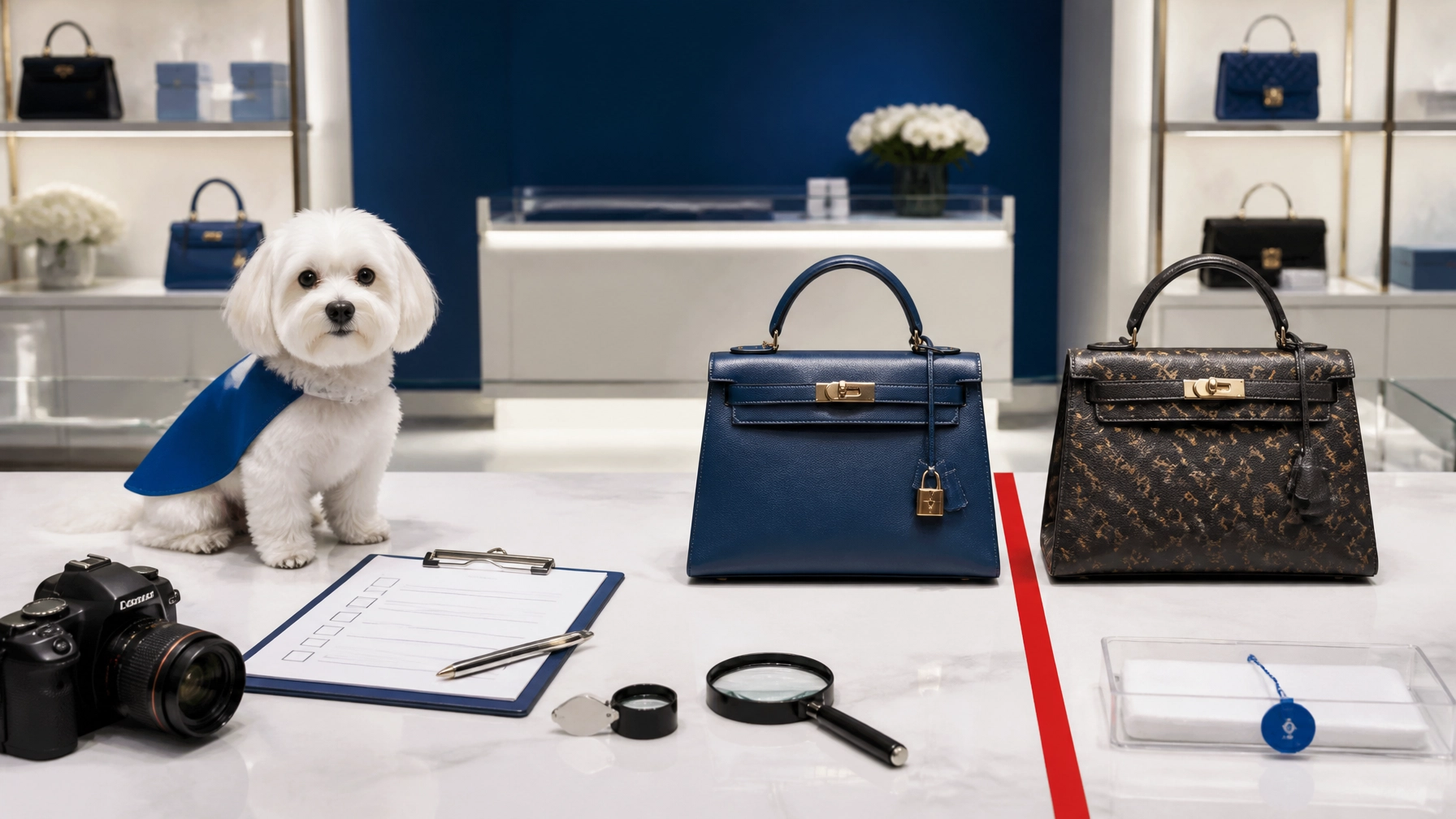
How many times a week does a customer ask, “Is this real?”
For resale stores, pawn shops, online thrifters, and TikTok sellers, that question is not just about customer confidence. It is a business-control issue.
“We don’t sell fakes” is a statement of intent. It is not an intake process. It does not document what you checked, who approved the item, or what you did when the details did not line up.
That gap creates counterfeit liability.
A single questionable handbag, watch, sneaker, or designer jacket can lead to:
- Refunds and chargebacks
- Lost inventory and revenue
- Platform restrictions or account suspension
- Customer complaints and negative reviews
- Brand-owner demands
- Legal expenses
- Damage to your reputation
The practical answer is not panic. It is a repeatable system.
Counterfeit liability does not depend on bad intent
Many small businesses assume they are protected because they did not knowingly purchase or sell a counterfeit item.
That assumption is risky.
A business can create exposure by accepting, listing, advertising, or selling an item without taking reasonable steps to verify authenticity. Red flags can include:
- An unusually low purchase price
- An unclear or inconsistent seller story
- Missing receipts or provenance
- Poor stitching, hardware, tags, or packaging
- Serial numbers that do not match the item
- Pressure to complete the transaction quickly
- A seller who refuses identification or documentation
Under U.S. federal trademark law, a rights holder may pursue significant statutory damages for counterfeit marks. The Lanham Act, 15 U.S.C. § 1117, allows statutory damages in eligible cases, with higher potential amounts when infringement is found to be willful.
That does not mean every questionable item becomes a lawsuit. It does mean that “we did not know” is not a substitute for documented controls.

The same principle applies to selling counterfeit goods online. A TikTok seller who posts a product, describes it as authentic, and collects payment is not operating outside the risk. Neither is a pawn shop that accepts a fake as collateral and later places it in inventory.
A written policy is useful. A documented process is better.
Every business handling branded resale inventory should have a written counterfeit policy. Keep it short and clear:
We do not knowingly accept, advertise, or sell counterfeit merchandise. Items with unresolved authenticity concerns are rejected, held, or escalated for professional review before listing.
Then build the daily workflow around that policy.
Step 1: Identify the seller
Before accepting higher-risk luxury inventory, record:
- Seller’s name and contact information
- Government-issued identification, where appropriate
- Date of intake
- Purchase or consignment terms
- Seller-provided explanation of ownership
- Any available invoice, receipt, or prior authentication report
This matters for resale stores and pawn shops because inventory should not arrive without a traceable source.
Step 2: Photograph the item before it moves
Take clear intake photographs of:
- Front, back, bottom, and side profiles
- Logo and branding
- Stitching and seams
- Hardware, zippers, and closures
- Serial numbers, date codes, or model identifiers
- Interior labels and lining
- Packaging and accessories
- Visible wear or damage
For online sellers, these images also create a record of the exact item that was listed and shipped.
Do not rely only on the seller’s photos. Photograph the item yourself when it enters your control.
Step 3: Record the red flags
Do not write “looks good” and move on. Use specific observations.
Examples:
- “Logo spacing appears inconsistent.”
- “Hardware color differs from known reference.”
- “Receipt does not identify the item.”
- “Serial information is incomplete.”
- “Seller could not explain source.”
- “Packaging is inconsistent with the item’s age.”
A documented concern is easier to escalate than a vague feeling.

When should a resale store use professional authentication?
Not every item carries the same risk. Your process should become stricter as the potential loss increases.
Require professional authentication before listing or purchasing when:
- The item is high value
- The brand is heavily counterfeited
- The item has limited or incomplete provenance
- Staff disagree about authenticity
- The seller is asking for an unusually fast decision
- The item will be marketed as “authentic,” “genuine,” or “100% real”
- A customer specifically requests verification
- The business has no trained expert for that brand or category
Staff training is valuable. It is not a replacement for escalation.
A good workflow combines technology with human review:
- Upload clear, complete images.
- Submit supporting documentation.
- Use preliminary screening to identify obvious concerns.
- Escalate the item to a qualified human brand expert.
- Receive and store the final conclusion.
- Keep the report connected to the item record.
Authenticate Pro’s process is designed around this escalation. Authentications move to human experts, helping deliver approximately 99% accuracy based on the company’s reported authentication results.
The goal is simple: do not make a high-risk decision alone when professional review is available.
Why “we’ll call it a replica” is not a reliable workaround
Some sellers believe they can reduce risk by describing an item as a “replica,” “inspired,” or “not guaranteed authentic.”
That language does not automatically solve the problem.
If the item uses protected branding, imitates a genuine product, or is marketed in a way that may confuse buyers, the business can still face legal and platform risk. Disclaimers do not repair counterfeit inventory.
The safer choices are:
- Reject the item
- Hold it out of sale
- Request additional documentation
- Send it for professional authentication
- Return it according to your written policy
- Consult qualified legal counsel when the situation is serious
Never list an item while hoping the description will protect you.
Online sellers need controls before the listing goes live
For TikTok sellers, online thrifters, and marketplace operators, the listing itself can become evidence of what the business represented.
Before publishing a luxury listing:
- Photograph the exact item in your possession
- Include clear detail shots
- Record the item’s condition
- Avoid absolute claims unless supported by verification
- Store the authentication report with the listing record
- Document who approved the listing
- Keep shipping and return records
- Use tamper-evident controls where appropriate
If you want to authenticate luxury items online, image quality is critical. One distant photo of the front of a bag is not enough. Experts need the details that reveal construction, materials, date codes, hardware, and branding.

For stores using Authenticate Pro, available service options include Mini Check, Quick Check, Express Authentication, and Level 2 Authentication. Review current service details and conditions on the Authenticate Pro pricing page.
What to do when an item is questioned
A fast, calm response protects your business.
Do this
- Stop the listing or sale
- Separate the item from verified inventory
- Preserve packaging and seller communications
- Save intake photos and transaction records
- Note who identified the concern and when
- Escalate for professional review
- Notify the appropriate manager
- Contact legal counsel if you receive a demand or formal notice
Do not do this
- Quietly relist the item
- Alter or remove identifying details
- Return the item without recording what happened
- Delete messages or photographs
- Accuse the seller publicly without verification
- Move the item to another sales channel
- Assume a refund ends every possible issue
A questionable item should create a controlled case file, not a scramble.

A simple weekly audit can expose weak points
Once a week, review a small sample of luxury-item transactions.
Ask:
- Was the seller identified?
- Were item photographs captured?
- Were serial numbers and details recorded?
- Was provenance requested?
- Were red flags documented?
- Was authentication required?
- Is the report connected to the item?
- Could another employee understand the decision?
If the answer is “no,” improve the process before a customer, platform, or brand owner identifies the weakness for you.
Build trust with proof, not promises
Customers do not need another seller saying, “Trust me.”
They need confidence that the item was reviewed, the process was consistent, and the business will respond if a concern arises.
That is why professional authentication can become more than a defensive expense. It can support:
- Fewer counterfeit-related returns
- Better staff decisions
- Stronger customer confidence
- More defensible inventory records
- Clearer online listings
- A more credible resale operation
Clothes Mentor has described Authenticate Pro as a value-add service that gives customers confidence when purchasing high-dollar branded goods. That is the business advantage of replacing a promise with a process.
The next step
You do not need to overhaul your entire operation in one day.
Start with three controls:
- Photograph every high-risk item at intake.
- Document the red flags and seller information.
- Escalate uncertain items to professional authentication before sale.
Authenticate Pro helps resale businesses, pawn shops, and online sellers review luxury merchandise through a structured process that connects digital submission with human experts.
Learn more through the Authenticate Pro resale store program, review current pricing and service options, or contact Authenticate Pro with questions about your workflow.
“We don’t sell fakes” is a goal.
A documented intake process, professional authentication, and clear escalation controls are the strategy.
This article provides general business information and is not legal advice. Counterfeit laws and liability standards vary by jurisdiction. Consult a qualified intellectual-property attorney for advice about a specific situation.
Leave a Reply