How many times a week does a customer ask, “Is this real?”
For resale stores, pawn shops, thrift shops, online thrifters, and TikTok sellers, that question is no longer a simple quality check. It is a business risk.
Modern superfakes can copy the look, feel, packaging, and even digital identifiers of genuine luxury products. A quick glance may not be enough. Sometimes, a single familiar “tell” is not enough either.
The good news? Businesses can stay ahead with a layered counterfeit detection process that combines staff training, documentation, technology screening, and escalation to human experts.
What Are Superfakes?
A superfake is a counterfeit item manufactured to closely imitate an authentic luxury product.
Traditional counterfeits often reveal themselves through:
- Poor stitching
- Incorrect logos
- Cheap materials
- Lightweight hardware
- Misspelled packaging
- Obvious shape or proportion issues
Superfakes are different.
They may use better leather alternatives, more accurate molds, improved hardware, and packaging that looks credible in online photos. Some counterfeiters also copy serial formats, QR codes, authenticity cards, and other details that once helped buyers feel confident.
That creates a serious problem for businesses. A fake item can lead to:
- Lost inventory costs
- Refunds and chargebacks
- Customer complaints
- Marketplace penalties
- Damaged reviews
- Reputation loss
- Legal and brand-protection concerns
The issue affects both high-value luxury pieces and popular resale categories.

Why Superfakes Are Harder to Catch in 2026
1. The outside may look nearly perfect
Counterfeiters have improved their ability to reproduce:
- Stitching patterns
- Logo placement
- Canvas or leather textures
- Hardware color and finish
- Bag proportions
- Sneaker shape
- Watch dials and markings
A product can appear convincing in a listing photo but still contain inconsistencies in construction or materials.
2. Familiar checks can be copied
Serial numbers, date codes, authenticity cards, dust bags, boxes, and QR codes should still be reviewed. But they should never be treated as proof by themselves.
A genuine-looking code may be:
- Copied from another item
- Placed on the wrong product
- Used with incorrect formatting
- Paired with packaging from a different production period
Documentation supports an authentication decision. It does not replace one.
3. Online selling removes important sensory clues
A buyer scrolling through TikTok Shop, Instagram, eBay, or another marketplace may only see a few photos. They cannot feel the leather, weigh the hardware, inspect the interior, or compare the item with a known authentic example.
That places more pressure on sellers to photograph and document inventory correctly before listing it.
The Categories Most Affected by Superfakes
Luxury Handbags
Handbags remain one of the highest-risk categories because they carry significant resale value and include many details that can be imitated.
Counterfeit detection should include a complete review of:
- Exterior material and grain
- Stitching consistency and count
- Logo shape and spacing
- Hardware weight, engraving, and finish
- Interior lining and pockets
- Date codes, tags, or microchips
- Handle construction
- Edge paint and glazing
- Included accessories and packaging
Do not rely on one detail. A convincing logo does not make an entire bag authentic.
Sneakers
Popular sneakers are frequently targeted because demand can rise quickly around limited releases, collaborations, and influencer trends.
Review:
- Box labels and product codes
- Size-tag formatting
- Stitching and panel alignment
- Sole construction
- Insole printing
- Material texture
- Glue patterns
- Shape and heel structure
- Accessories and packaging
Sneakers can also be altered, swapped, or paired with the wrong box. Document the entire item, not just the side profile.
Luxury Watches
Watches create a different challenge. The exterior may look accurate while internal components are incorrect.
Reviewers may need to examine:
- Case weight
- Dial printing
- Hand alignment
- Crown and clasp details
- Cyclops magnification, when applicable
- Engravings and micro-markings
- Movement and internal construction
- Bracelet and end-link fit
- Service history and provenance
For valuable watches, advanced inspection may be necessary. A watch that looks correct from the outside may still require specialist review.
A Practical Counterfeit Detection Process for Resale Businesses
The strongest approach is not one test. It is a repeatable system.
Step 1: Train staff to identify risk
Your team does not need to memorize every detail of every brand. They do need to know when an item requires additional review.
Create brand and category checklists that cover:
- Common models handled by your business
- High-risk brands
- Required intake photos
- Known documentation formats
- Material and construction points
- Red flags that require escalation
Train staff to ask:
- Is the price unusually low?
- Does the seller’s story make sense?
- Is the item consistent with the claimed age?
- Do the accessories match the product?
- Are multiple details slightly wrong?
One small discrepancy may be harmless. Several together should stop the item from moving directly to sale.
Step 2: Document the item before listing
Good documentation improves both authentication and customer confidence.
Capture clear, well-lit photos of:
- Front, back, and side profiles
- Brand stamps and logos
- Serial numbers, date codes, or tags
- Hardware and engravings
- Stitching and seams
- Interior labels and lining
- Soles and size tags for sneakers
- Dial, caseback, crown, and clasp for watches
- Packaging and accessories
Keep a record of:
- Seller name and contact information
- Intake date
- Purchase price
- Claimed provenance
- Employee who performed the first review
- Authentication decision
- Report or job number
For online sellers, photograph the item before shipping. Maintain a complete record of the condition and identifying features. This can help reduce return fraud and disputes.
Step 3: Use technology as a screening layer
Technology can help identify details that are difficult to evaluate quickly. Image comparison, digital records, and AI-assisted screening can support your team’s workflow.
However, technology should be treated as a screening and decision-support layer, not a reason to skip expert review.
Use technology to:
- Organize authentication requests
- Compare images and product details
- Flag inconsistencies
- Track reports
- Create a searchable item history
- Provide customers with a transparent record
Authenticate Pro’s Real Or Not mobile app supports photo-based submissions, preliminary review, expert participation, and report tracking.
Step 4: Escalate uncertain items to human experts
This is the step many small businesses cannot afford to skip.
If an item is high value, high risk, unusual, or simply uncertain, escalate it. Do not force a yes-or-no decision based on pressure to list inventory quickly.
Authenticate Pro’s process connects technology with human expertise. Authentications move to human experts to achieve approximately 99% accuracy, based on the company’s reported authentication results.
That human escalation matters because experts can evaluate context, construction, material behavior, category-specific details, and conflicting evidence. They can also identify when an item cannot be confidently authenticated from the available images.

Build a “Do Not List Yet” Policy
A written policy helps employees make consistent decisions.
Place an item on hold when:
- Documentation conflicts with the item
- Photos are incomplete
- The seller refuses additional images
- The price is far below market value without a credible reason
- The item contains multiple inconsistencies
- Staff members disagree
- A technology screening result is inconclusive
- The item belongs to a high-risk category
- The product is valuable enough that a mistake would be financially significant
Use a neutral internal label such as “Pending Authentication.”
This protects staff from making rushed decisions and gives management a clear escalation path.
Make Authentication Visible to Customers
Customers want confidence before they spend hundreds or thousands of dollars.
A visible authentication process can help your business stand apart. Consider offering:
- Authentication reports
- Item-specific report numbers
- Clear return and guarantee policies
- Staff explanations at checkout
- Authentication information in online listings
- A documented chain of custody
- Optional security tags or zip ties where appropriate
Authenticate Pro offers services for resale businesses, including Mini Check, Quick Check, Express Authentication, and Level 2 Authentication. Review current pricing and membership options to find the service structure that fits your inventory and sales volume.
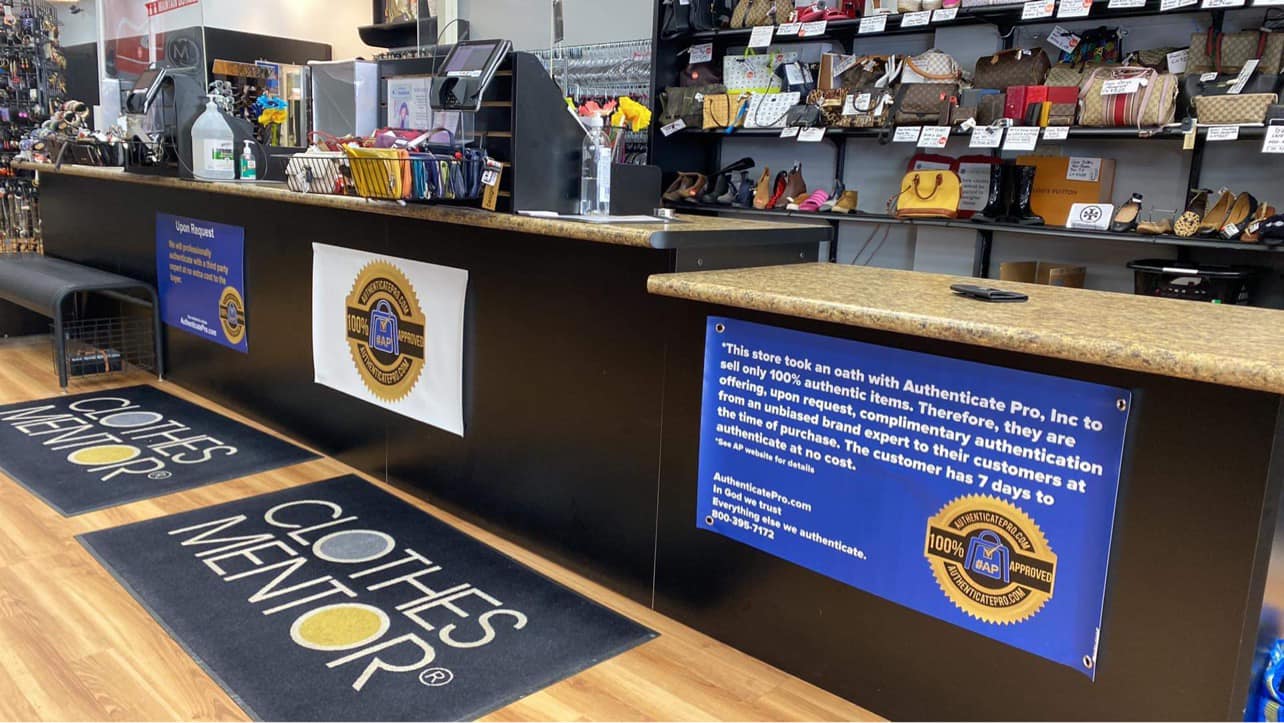
Clothes Mentor has described Authenticate Pro as a value-added service that gives customers confidence when purchasing high-dollar authentic goods and helps differentiate the store from competitors. Read more about Authenticate Pro for resale stores.
What Small Sellers Can Do Today
You do not need a laboratory to improve your process.
Start with these actions:
- Photograph every item before listing it.
- Use brand-specific checklists.
- Keep seller and purchase records.
- Never rely on packaging alone.
- Treat unusually low prices as a risk signal.
- Separate uncertain inventory from approved inventory.
- Require a second review for high-value items.
- Use technology for screening and organization.
- Escalate difficult items to human experts.
- Explain your authentication policy to customers.
For TikTok sellers and online thrifters, consistency is especially important. Fast content and fast sales are valuable. But a fast sale of a counterfeit item can create weeks of refunds, messages, disputes, and reputation damage.
Stay Ahead of Superfakes With a Layered System
Superfakes are not going away. The answer is not to rely on one experienced employee, one serial-number search, or one app result.
The stronger model is:
Staff training + complete documentation + technology screening + human expert escalation
That is how resale businesses build a repeatable counterfeit detection process.
Authenticate Pro helps sellers, buyers, resale stores, pawn shops, and online businesses make more informed decisions about luxury inventory. Submit clear photos, use the platform to organize the request, and escalate uncertain items to experienced human experts.
Do not wait until a customer finds the fake first.
Contact Authenticate Pro to learn how professional authentication can support your store, online shop, or resale operation.
In God we trust. Everything else we authenticate.
Leave a Reply