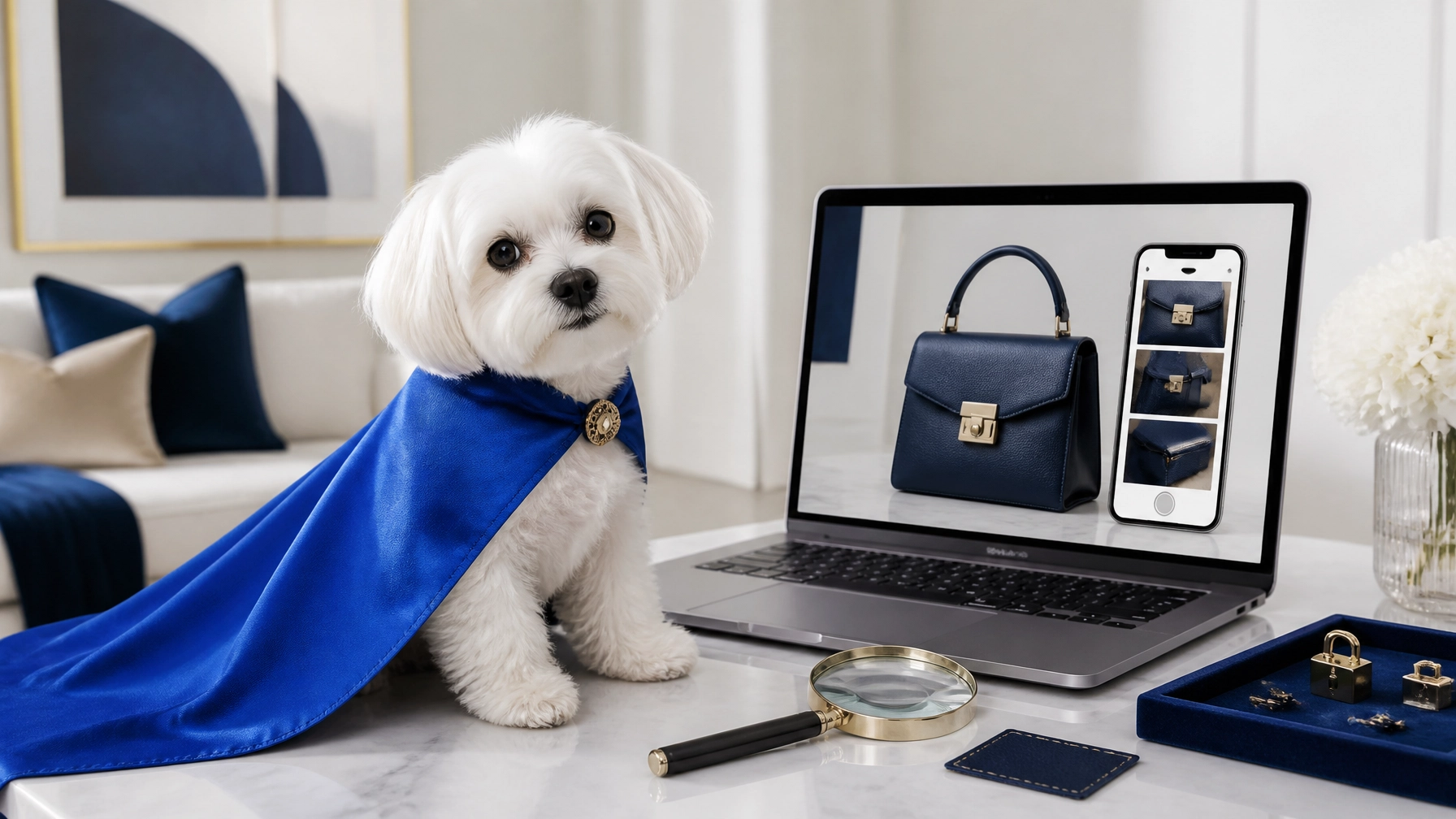
Buying luxury items from an estate sale, thrift store, Poshmark, eBay, or Facebook Marketplace can be profitable.
It can also be expensive.
One convincing counterfeit can cost you the purchase price, shipping, platform fees, customer trust, and future sales. Superfakes make the problem worse. They may copy the shape, branding, packaging, and serial details of an authentic item.
You do not need to drive to a specialist every time you need an answer.
With an online authentication service, you can submit photos from home, receive expert review, and make a better buying or selling decision before the item moves to your customer.
Here is how virtual authentication works.
What Is Virtual Authentication?
Virtual authentication is the remote review of an item using detailed photographs and item information.
You submit images through an app or website. The authentication team reviews the item’s construction, materials, branding, hardware, stitching, labels, and other brand-specific details.
A reliable process does not depend on one person or one feature.
Authenticate Pro uses a patented process that connects advanced AI systems with human experts. The initial technology-assisted review helps organize and assess the submission. Authentications then escalate to qualified human experts for final review.
That human escalation is critical.
Authenticate Pro reports approximately 99% accuracy based on its recent authentication history. The goal is simple: help you avoid buying or selling counterfeit merchandise by accident.

The Step-by-Step Online Authentication Process
1. Identify the Item Before You Submit It
Start with the basics.
Write down:
- Brand
- Item type
- Model or style name, if known
- Approximate year
- Condition
- Where you found it
- Any included accessories
- Purchase price or expected selling price
This information gives the authentication team useful context. It also helps you identify inconsistencies.
For example, the seller may describe a bag as a current model even though the details suggest an older release. A sneaker may be listed with the wrong colorway. A “rare” item may have a production detail that does not match the claimed date.
Do not assume the seller’s description is accurate.
2. Photograph the Item Clearly
Your photos affect the quality of the review.
Use:
- Bright, even lighting
- A neutral background
- A steady camera
- Clean lenses
- High-resolution images
- Multiple angles
Avoid dark rooms, heavy filters, glare, and blurry close-ups.
For a handbag, photograph:
- Front, back, bottom, and side panels
- Interior lining
- Logo or heat stamp
- Serial number or date code
- Stitching
- Zippers and pulls
- Buckles, studs, and other hardware
- Edges, corners, and handles
- Brand tags and care labels
- Dust bag, box, cards, and receipt, if available
For sneaker authentication, include:
- Both shoes from multiple angles
- Size tag
- Tongue label
- Heel branding
- Toe box
- Stitching
- Midsole and outsole
- Insole branding
- Box label
- Extra laces and accessories
- Any signs of wear or repair
Do not photograph only the “best-looking” side.
A professional review needs the complete item. A counterfeit can use an accurate logo while failing in the stitching, materials, lining, hardware, or construction.
3. Open an Authentication Request
Use the Authenticate Pro website or the Real Or Not by Authenticate Pro mobile app to begin.
Select the appropriate service and provide the item details. Make sure the brand and category are correct.
Authenticate Pro offers different service levels, including:
- Mini Check
- Quick Check
- Express Authentication
- Level 2 Authentication
- Price Check
- “As Is” expert opinions
Turnaround times vary by service and expert availability. Published timeframes range from approximately 15 minutes to 60 minutes for Express Authentication, 20 minutes to 12 hours for Mini and Quick Checks, and 12 to 48 hours for Level 2 Authentication.
Check the current pricing and service options before submitting. Fees, coverage, turnaround times, and guarantee conditions can change.
4. Receive the Initial Technology-Assisted Review
Your images enter the authentication workflow.
AI-supported tools can help identify details, compare visual characteristics, and flag areas that require closer inspection. This is useful for handling common patterns across large numbers of submissions.
But AI should support, not replace, experienced judgment.
The question is not simply whether the item looks similar to an authentic product photo. The review must consider whether the item’s details work together.
A bag can have the correct shape but incorrect hardware. A sneaker can have convincing branding but the wrong label format. A wallet can include a believable date code but use inconsistent stitching or materials.
These details matter.
5. Escalation to Human Experts
This is the most important part of a reliable online authentication service.
Authentications escalate to human experts who understand brand-specific construction and production details. Experts review the submission and assess the item beyond a basic image match.
Depending on the workflow, the item may move through additional expert review, voting, or administrative conclusion before the final result is issued.
This layered process helps reduce the risk of a rushed decision.
It also matters when the item is a superfake. High-quality counterfeits are designed to pass casual inspection. They may include copied serial formats, accurate-looking packaging, and nearly identical materials.
A human expert knows not to rely on one “magic” detail.
6. Review the Result and Report
You will receive a conclusion through the service.
The result may indicate that the item is authentic, not authentic, or requires an opinion based on the selected service. Review the report carefully and save it with your item records.
A report can help you:
- Decide whether to complete a purchase
- Price an item for resale
- Respond to a buyer’s authenticity question
- Document your sourcing process
- Protect your store or seller reputation
- Identify items that should not be listed
Authenticate Pro also offers report lookup through its system. For certain services and store programs, an AP Zip Number can connect an item to its report.
Important: a Zip Number is not automatically proof of authenticity. It must be activated in the system and connected to the item’s report. If you use an AP Ziptie, keep it intact when guarantee terms require it. Removing or tampering with the Ziptie can void the applicable guarantee.
How Authentication Protects You From Selling Superfakes
How many times have you purchased an item because the price looked like a deal, only to wonder whether the deal was too good?
That uncertainty is expensive.
Before listing a luxury item, authenticate it. This is especially important when you sourced it from:
- Estate sales
- Flea markets
- Local thrift stores
- Facebook Marketplace
- Online auctions
- Poshmark
- eBay
- Liquidation lots
- Private sellers
Do not list first and investigate later.
A buyer may receive the item, identify a problem, open a dispute, and post a negative review before you have time to respond. Even if you did not know the item was counterfeit, your business may still absorb the loss.
Use a simple workflow:
- Source the item.
- Photograph it before cleaning or altering it.
- Submit it for authentication.
- Save the report.
- List only after the result supports the listing.
- Keep the authentication record with your inventory file.
If the item receives a negative or inconclusive result, stop.
Do not relist it on another platform. Do not assume a different buyer will not notice. Contact the seller, marketplace, or payment provider based on the applicable policies.
Authentication Is More Than a Logo Check
A common mistake is checking one detail and treating it as a final answer.
These clues are not enough by themselves:
- A serial number
- A receipt
- A dust bag
- A branded box
- A seller’s guarantee
- A low or high price
- A familiar logo
- A positive marketplace rating
Counterfeiters can copy individual details.
Reliable handbag authentication and sneaker authentication evaluate the item as a whole. The materials, dimensions, construction, branding, hardware, labels, and age should make sense together.
That is why clear photos and human expert escalation matter.
When to Choose a Higher-Level Review
Consider a higher-level authentication service when:
- The item has a high resale value
- The purchase price is substantial
- The item is vintage or unusual
- The item has been altered or repaired
- The seller cannot provide provenance
- The item is a known counterfeit target
- The initial images do not show enough detail
- You plan to offer a guarantee to your buyer
Authenticate Pro’s membership program for resellers is designed for businesses that authenticate items regularly. Individual sellers can review available service options without committing to a membership.
For very expensive items, review the guarantee terms before ordering. Know what is covered, what documentation is required, and whether an AP Ziptie must remain attached.
What Makes an Online Authentication Service Reliable?
Look for these features:
- Human expert review
- Clear photo instructions
- Brand-specific knowledge
- Technology-assisted analysis
- A documented result
- Report access or verification
- Transparent turnaround times
- Clearly stated guarantee conditions
- Support for your item category
Be cautious with services that promise certainty from one image or one serial number.
A trustworthy provider should also be willing to say when the available evidence is not enough.
Authenticate Before You List
You can run a resale business from your living room. Your authentication process should be just as professional as your listings.
Before you buy that “unbelievable” estate-sale find or accept a luxury consignment item, get a second layer of confidence.
Start with Authenticate Pro, review the authentication process demo, or contact the team with questions about your item.
The best time to find a counterfeit is before you pay for it, or before your customer receives it.


Frequently Asked Questions
Can I authenticate a luxury item online from home?
Yes. You can submit clear photographs and item information through an online authentication service or mobile app. The submission is reviewed through technology-assisted tools and escalated to human experts for a final conclusion.
What photos do I need for handbag authentication?
Submit full views of the handbag along with close-ups of the logo, interior, serial number or date code, stitching, hardware, lining, edges, handles, tags, and included accessories.
Does online authentication work for sneakers?
Yes, if the service supports footwear. Include the size tag, box label, stitching, outsole, midsole, heel, toe box, insole, branding, and accessories.
Can virtual authentication detect superfakes?
It can significantly reduce risk, but no process should encourage you to rely on one detail. A layered workflow using AI-supported analysis and human expert escalation is better equipped to identify inconsistent construction and brand-specific details.
What should I do if an item is not authentic?
Do not list or resell it. Save the authentication report and contact the seller or marketplace according to its policies. If a guarantee applies, review the service terms and required documentation.
Leave a Reply