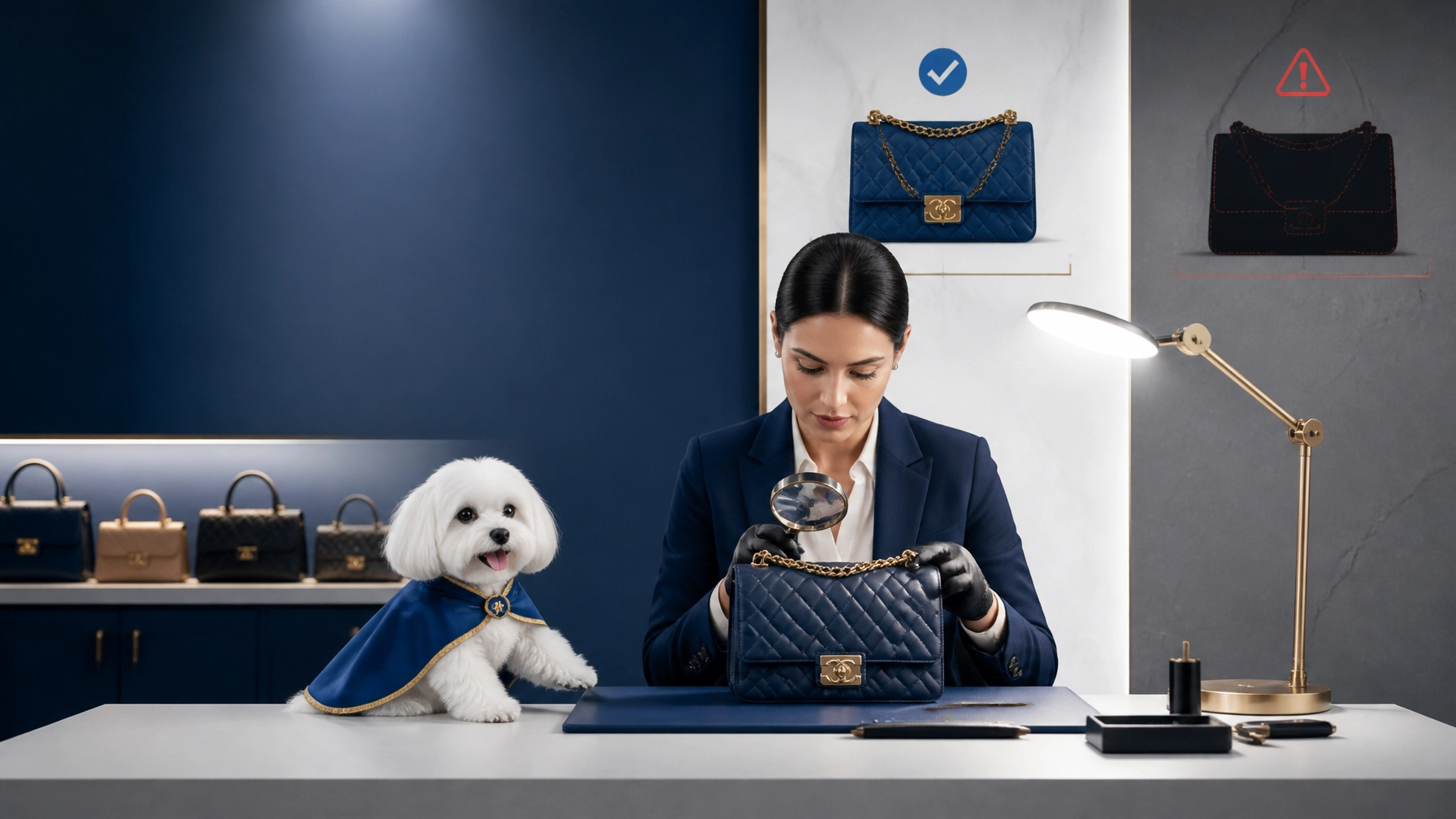
How many times a week does a customer ask, “Is this real?”
If your answer is, “We don’t sell fakes,” you may be stating your intention. You are not describing a process.
That distinction matters.
Counterfeits enter legitimate resale businesses every day. They can arrive through consignors, online suppliers, estate purchases, pawn transactions, marketplace listings, or customer trade-ins. Many are obvious. Others are superfakes designed to pass a quick inspection.
The risk is not limited to businesses that knowingly sell counterfeit goods. A resale store, pawn shop, TikTok seller, or online thrifter can face serious consequences after selling a fake by accident.
The solution is not a promise. It is a documented authentication process.
Good intentions do not authenticate luxury items
Most resale operators do not want to sell counterfeits.
They want to:
- Protect customers.
- Maintain their reputation.
- Avoid refunds and chargebacks.
- Preserve relationships with brands and suppliers.
- Keep inventory moving.
But good intentions do not verify a handbag, watch, sneaker, or accessory.
A counterfeit item can look convincing in photographs. It may have:
- Correct-looking logos.
- Plausible serial numbers.
- High-quality stitching.
- Similar leather or fabric.
- Accurate packaging.
- Replicated hardware.
- A believable purchase story.
That is why “we don’t sell fakes” is not an anti-counterfeit policy. It is only a claim about what you hope will happen.
A real policy answers different questions:
- Who authenticates each high-risk item?
- What happens when staff are unsure?
- Which brands require escalation?
- What records are kept?
- Can the customer verify the result?
- What happens if an item is later challenged?
Counterfeit liability can exist even without intent
The legal details depend on your location, business structure, and facts. This is not legal advice. But the basic risk is clear.
Under U.S. law, knowingly trafficking in counterfeit goods can create criminal exposure under 18 U.S.C. § 2320. The Department of Justice explains that the government generally must prove intentional trafficking and knowledge that the mark was counterfeit.
That does not mean an unintentional sale is risk-free.
Brand owners may pursue civil trademark claims under the Lanham Act. A business may still have to deal with:
- Injunctions.
- Product removal.
- Refunds and recalls.
- Lost inventory.
- Legal fees.
- Brand-owner claims.
- Customer complaints.
- Marketplace account restrictions.
- Reputation damage.
Intent can affect the severity of the consequences. It does not turn a counterfeit item into an authentic one.
The bigger issue is willful blindness. If a business repeatedly ignores warning signs, accepts suspicious inventory without investigation, or relies on “the consignor said it was real,” that may look less like an innocent mistake and more like a failure to perform reasonable due diligence.
The pawn shop counterfeit problem is especially expensive
Pawn shops and secondhand buyers often make fast decisions.
A customer needs an immediate offer. Staff must evaluate condition, demand, ownership, and resale value. Luxury goods can look like profitable collateral.
But speed creates pressure.
A pawn shop counterfeit can lead to:
- An inflated loan or purchase price.
- Inventory loss.
- Disputes with the customer.
- A difficult return or recovery process.
- A damaged relationship with local buyers.
- Significant downstream liability when the item is resold.
The same applies to thrift shops, consignment stores, and franchise resale businesses such as Plato’s Closet, Style Encore, and Clothes Mentor.
A purchase decision should not rely on a single employee’s confidence. Staff should know the basic red flags, but questionable items should move to professional authentication before they are listed, displayed, or sold.
Superfakes have changed counterfeit detection
Older advice often focuses on obvious flaws.
Check the logo. Feel the leather. Examine the stitching. Look at the date code.
Those checks still matter. They are not enough by themselves.
Superfakes are manufactured to imitate the details that casual buyers and busy sellers use as shortcuts. A fake may include a copied serial number, convincing materials, accurate proportions, and packaging that appears complete.

That makes counterfeit detection a layered process.
A stronger review may include:
- Clear photographs from multiple angles.
- Examination of stitching, spacing, and construction.
- Hardware and engraving review.
- Material and texture comparison.
- Serial, date code, or production-mark analysis where applicable.
- Comparison with known authentic references.
- Brand-specific expertise.
- Review of the item’s source and transaction history.
- Escalation when evidence is incomplete or conflicting.
No single detail should carry the entire decision.
If the item cannot be confidently authenticated, the safest business decision may be to decline it.
Professional authentication creates a defensible process
A luxury authentication service gives your team an outside review. More importantly, it creates a repeatable workflow.
That workflow should make it clear that your business did more than assume authenticity.
At Authenticate Pro, the process begins with item photographs and a pre-authentication review. The item can then move through voting and administrative review, with results documented through the platform.
Most importantly, authentications escalate to human brand experts. AI and technology can assist with screening, organization, and speed. Human experts provide the specialist judgment required for difficult items. Authenticate Pro reports approximately 99% accuracy based on its authentication history.

That human escalation is critical when:
- The brand is frequently counterfeited.
- The item is high value.
- The piece is vintage or discontinued.
- The photos reveal conflicting details.
- The item may be a superfake.
- Your staff lacks brand-specific experience.
- The purchase source is unclear.
A professional result does not eliminate every legal risk. No authentication service can guarantee that a business will never encounter a disputed item.
It does show that your business took a meaningful step to reduce counterfeit risk.
Build an authentication process your staff can follow
Your process does not need to be complicated. It needs to be consistent.
1. Identify high-risk inventory
Create a list of brands, categories, and price points that require additional review.
Examples include:
- Luxury handbags.
- Designer footwear.
- Watches.
- Fine jewelry.
- Limited-edition sneakers.
- Rare or discontinued pieces.
- Items purchased through unfamiliar channels.
2. Capture complete intake information
Record:
- Seller name and contact information.
- Purchase or consignment date.
- Item description.
- Brand and model.
- Serial or date information.
- Purchase price.
- Seller representations.
- Clear item photographs.
3. Set a “do not list” rule
Do not display or publish an item until the required authentication step is complete.
This is especially important for online sellers and TikTok sellers. A livestream, short video, or marketplace listing can create a public representation of authenticity before anyone has properly examined the item.
4. Escalate uncertainty
Give employees permission to stop the transaction.
A useful rule is simple:
When in doubt, do not buy, list, or sell until the item receives professional review.
5. Keep the report
Save the authentication result with the inventory record. Documentation helps your team manage future questions, returns, and customer disputes.
Authenticate Pro offers options including Quick Check, Express Authentication, and Level 2 Authentication. Timing and coverage vary by service. Review the current terms before choosing the appropriate option.
Authentication protects more than inventory
A documented process can protect your customer experience.
Customers are not only buying a handbag or pair of sneakers. They are buying confidence that the item matches the description.
A verified authentication process can help you:
- Reduce accidental sales of counterfeits.
- Give staff a clear decision path.
- Improve customer confidence.
- Support higher-value transactions.
- Reduce avoidable returns.
- Differentiate your store from informal sellers.
- Demonstrate due diligence.
- Create a stronger record when questions arise.
Clothes Mentor shared that its Authenticate Pro service gives customers confidence with high-dollar luxury goods and has helped increase sales. That is the commercial value of trust: customers are more willing to buy when the process is visible and credible.

What to do if you suspect a counterfeit
Do not quietly relist the item. Do not remove the customer’s complaint from your records. Do not rely on a second guess.
Take practical steps:
- Stop the sale.
- Quarantine the item.
- Preserve photographs, messages, receipts, and seller information.
- Request professional authentication.
- Review whether similar items came from the same source.
- Contact affected customers when appropriate.
- Consult qualified legal counsel about your obligations.
If the item was imported or sourced internationally, U.S. Customs and Border Protection guidance explains the broader risks associated with counterfeit goods.
For consumer protection concerns, the FTC’s Bureau of Consumer Protection provides information on unfair, deceptive, and fraudulent business practices.
Replace the promise with proof
“We don’t sell fakes” is not a strategy because it does not explain how you prevent counterfeits from entering your sales channel.
A stronger message is:
- We have an intake policy.
- We escalate high-risk items to professional authentication.
- We document the result.
- We stop when authenticity cannot be established.
- We stand behind a process our staff and customers can understand.
That is how resale businesses protect revenue, reputation, and customer trust.
If you sell luxury items in a resale store, pawn shop, online shop, or TikTok storefront, explore Authenticate Pro for a professional authentication workflow designed for resale businesses. You can also review current pricing and service options or schedule a short information call.
Your goal should not be to say you never encounter counterfeits.
Your goal should be to prove that when one appears, you have a process that catches it before your customer does.
Frequently Asked Questions
Is a resale store liable for selling a counterfeit item accidentally?
Potentially. Criminal counterfeiting generally involves knowledge and intent, but civil trademark and consumer-protection exposure can still exist even when a seller claims the mistake was unintentional. Consult an attorney for advice about your specific situation.
Can employees authenticate luxury items themselves?
Employees can perform initial screening, but superfakes make informal inspection unreliable. A better process trains staff to identify red flags and requires escalation to professional authentication for high-risk or uncertain items.
Does professional authentication eliminate counterfeit liability?
No. Professional authentication reduces risk and demonstrates due diligence, but it does not guarantee that a business can never face a dispute, claim, return, or investigation.
Can I authenticate luxury items online?
Yes. A professional service can review clear, detailed photographs and other item information online. The result depends on image quality, brand coverage, item condition, and expert availability.
Leave a Reply