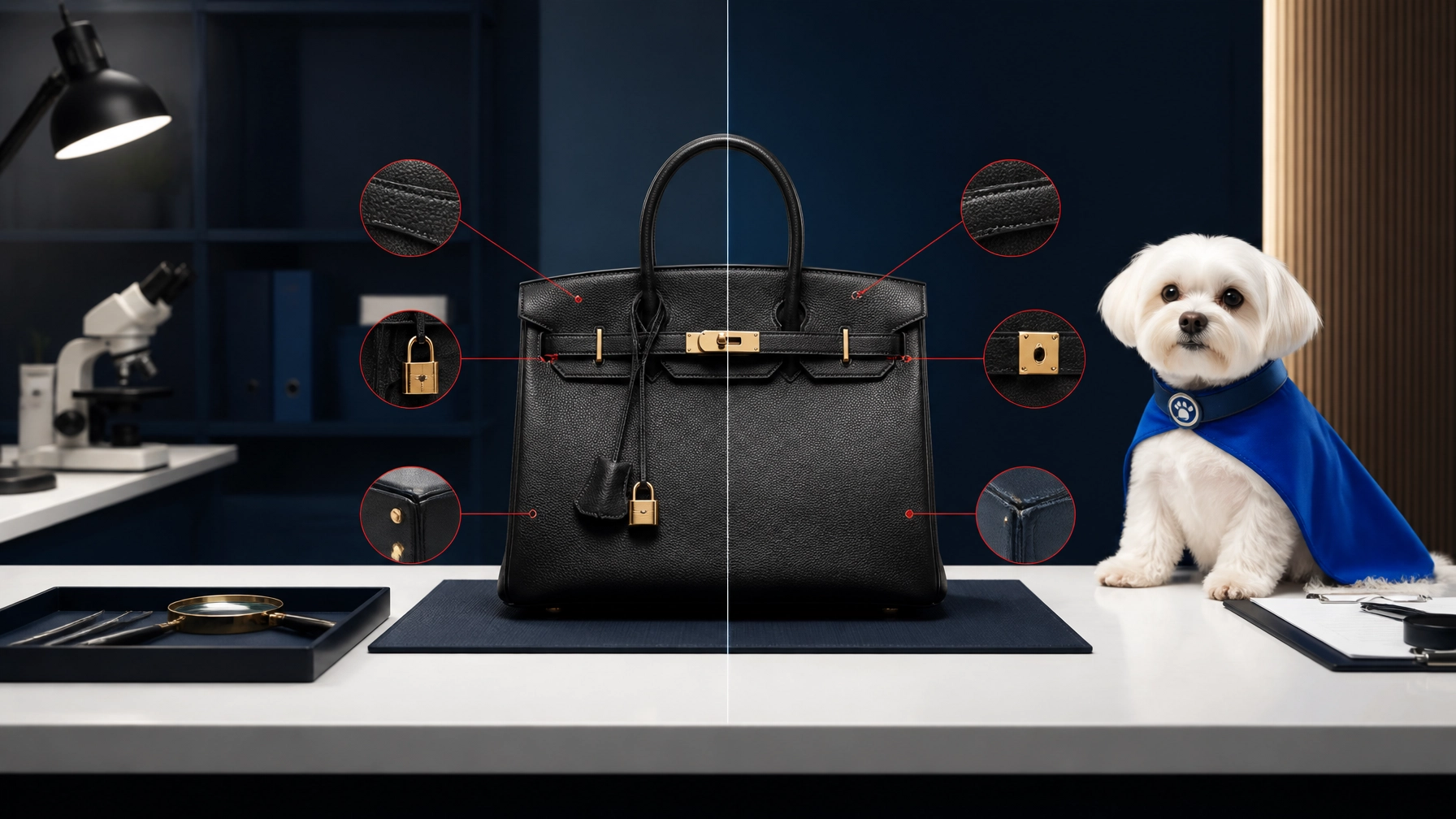
How many times a week does your customer ask, “Is this real?”
For resale stores, pawn shops, and online sellers, that question carries real financial risk.
One convincing counterfeit can lead to:
- Lost inventory
- Refunds and chargebacks
- Damaged customer trust
- Negative reviews
- Reputation loss
- Thousands of dollars in missed revenue
In 2026, traditional visual checks are no longer enough. Superfakes are improving quickly. They can copy leather texture, stitching, hardware, packaging, serial formats, and even digital credentials.
The solution is not panic.
It is a stronger, documented authentication process.
What Are Superfakes?
Superfakes are counterfeit luxury items made to imitate authentic products at an unusually high level.
They are not the obvious knockoffs customers could spot from across the room.
They may include:
- High-quality leather
- Correct-looking fonts and logo placement
- Carefully matched hardware
- Accurate-looking serial numbers
- Replica packaging and receipts
- Cloned or imitation NFC and RFID technology
- Construction details designed to pass a quick inspection
Some superfakes are difficult to identify without professional authentication. A bag may look correct in listing photos and still contain subtle problems in its materials, stitching, edge paint, lining, or internal structure.
That is why counterfeit detection in 2026 requires multiple layers.

Why a Quick Visual Check Is Not Enough
Many sellers still rely on a familiar checklist:
- Check the logo
- Read the serial number
- Feel the leather
- Examine the stitching
- Compare the item with online photos
These steps are useful.
They are not a complete authentication system.
Counterfeiters study the same guides. They review the same comparison photos. They know which details buyers and inexperienced sellers typically inspect first.
A superfake may pass the obvious checks while failing in less visible areas, such as:
- Thread thickness and stitch consistency
- Hardware weight and finish
- Edge-paint layering
- Material composition
- Interior construction
- Placement of reinforcement pieces
- Date-code or production-era inconsistencies
- Mismatched wear patterns
A serial number is not proof by itself. Neither is a dust bag, receipt, authenticity card, or digital chip.
One feature should never carry the entire authenticity decision.
The Biggest Mistakes Resale Businesses Make
1. Trusting the seller’s confidence
A seller may genuinely believe an item is authentic.
That does not make it authentic.
Good intentions are not provenance.
2. Treating a serial number as a guarantee
Serial numbers can be copied. Some are placed on the wrong model or production year. Others are paired with counterfeit items that otherwise look convincing.
3. Assuming technology replaces experts
AI tools are valuable. They can identify patterns that are difficult to see with the naked eye.
But rare items, heavily worn items, modified products, and sophisticated superfakes can create uncertainty.
AI should support a decision: not replace qualified human review.
4. Failing to document the process
If your store cannot explain how an item was evaluated, it becomes harder to defend the decision after a dispute.
Document:
- Intake photos
- Seller information
- Purchase or consignment details
- Authentication results
- Expert notes
- Report numbers
- Any attached tamper-evident identification
A Better 2026 Authentication Workflow
A reliable process should be simple enough for staff to follow consistently.
Step 1: Triage the item
Start by assessing risk.
Ask:
- What is the brand?
- What is the model?
- What is the expected resale value?
- Is this product frequently counterfeited?
- Is the seller’s provenance complete?
- Does the item show unusual wear or modifications?
- Are the packaging and accessories consistent with the item’s age?
High-value and high-demand items deserve more scrutiny.
Step 2: Capture clear images
Whether you are sending an item to a luxury authentication service or reviewing it internally, image quality matters.
Capture:
- Front and back
- Side panels
- Bottom
- Handles and straps
- Interior
- Logo and date-code areas
- Stitching
- Hardware
- Edge paint
- Any chips, tags, or serial markings
- Signs of wear or repair
Use natural lighting when possible. Avoid filters. Include close-ups and full-item views.
Step 3: Use AI for pre-authentication
AI can provide a fast first review.
It can help screen for inconsistencies in:
- Shape
- Proportions
- Stitching
- Hardware placement
- Logo spacing
- Materials
- Construction patterns
This is useful for sellers who need to make quick intake decisions.
But a pre-authentication result is not the same as a final expert conclusion.
Step 4: Escalate to human experts
This is the critical step.
When an item requires a final decision, it should move to trained human experts with brand-specific experience. Authenticate Pro’s process connects advanced AI systems with human experts, and authentications escalate to human review to support approximately 99% accuracy.
According to Authenticate Pro, its accuracy conclusion is based on the last 2,000 authentications.
That human escalation matters because experts can evaluate context. They can account for:
- Production-year changes
- Brand variations
- Regional differences
- Vintage construction
- Repairs and replacements
- Wear-related distortion
- Unusual but legitimate details
- Conflicting evidence
The goal is not simply to identify obvious fakes.
The goal is to make a better decision when the item is difficult.
Step 5: Keep a searchable report
A professional authentication report gives your store a documented record.
That record can help:
- Support a listing
- Answer customer questions
- Reduce return disputes
- Train new staff
- Review questionable purchases
- Protect your store’s reputation
Authenticate Pro’s platform provides report access and authentication options for more than 600 brands, including luxury fashion, footwear, accessories, jewelry, and other high-demand categories. Review current service options through the Authenticate Pro membership page.

Do Not Rely on Chips, Tags, or Digital Credentials Alone
Brands are using more embedded technology to support authenticity.
NFC and RFID chips can be useful. Digital certificates can add information about an item’s history. Blockchain systems may improve supply-chain records.
But technology is not automatically proof.
Some counterfeit products now include imitation chips or copied credentials. A chip may be present but linked incorrectly. A serial may exist but belong to a different item.
The question is not:
“Does this item have a chip?”
The better question is:
“Does the chip, item, construction, provenance, and brand history all agree?”
This is why modern professional authentication combines data, image analysis, physical inspection, provenance, and expert judgment.
Build a Store Policy Before a Problem Happens
Do not wait until a customer discovers a counterfeit item.
Create clear rules now.
Recommended policy for resale stores and pawn shops
- Low-value items: Staff checklist and image-based screening
- Moderate-value items: AI screening plus professional review when red flags appear
- High-value items: Mandatory human expert authentication before purchase or listing
- High-risk brands or models: Require complete documentation and additional review
- Unclear results: Do not list the item until the uncertainty is resolved
A simple rule protects your team:
If the result is inconclusive, the item is not cleared.
That does not always mean the item is counterfeit. It means there is not enough evidence to confidently represent it as authentic.
Protect the Customer and Your Bottom Line
Authentication is not only about rejecting fakes.
It also protects legitimate sellers and authentic inventory.
A customer who knows your store takes authentication seriously is more likely to:
- Buy higher-value items
- Return to your store
- Recommend your business
- Trust online listings
- Accept your pricing
- Use your store for future consignments
Clothes Mentor Reno described Authenticate Pro as a value-added service that gives staff and customers more confidence when purchasing high-dollar luxury goods. The store also reported that the service helped increase sales.
That is the business value of trust.
You are not just selling a handbag, watch, sneaker, or accessory. You are selling confidence that the item is what you say it is.
How to Authenticate Luxury Items Online
If you need to authenticate luxury items online, start with a complete photo submission and accurate item details.
Include:
- Brand and model
- Estimated purchase price
- Seller or source
- Condition
- Accessories included
- Known repairs
- Clear close-up images
- Any available receipt or provenance
Avoid cropped or blurry images. Do not hide flaws. Additional context helps experts make a more reliable determination.
Authenticate Pro offers several service levels, including:
- Quick Check: Typically 20 minutes to 12 hours
- Express Authentication: Typically 15 to 60 minutes
- Level 2 Authentication: Typically 12 to 48 hours
- Price Check: An estimated resale value and guidance
Service availability, pricing, and guarantee options vary. See the current Authenticate Pro pricing page for details.
The Bottom Line
Superfakes are not slowing down.
A polished exterior, convincing serial number, or digital tag is not enough. Counterfeit detection must become a repeatable business process.
Stay ahead by combining:
- Risk-based intake
- Clear photography
- AI-assisted screening
- Human expert escalation
- Documented reports
- Strong provenance standards
- Consistent staff training
When the item is valuable: or the answer is uncertain: use professional authentication before you buy, list, or sell.
Ready to strengthen your process? You can contact Authenticate Pro, call 800-395-7172, or schedule a 15-minute phone appointment. No pressure. Just a practical conversation about how to authenticate luxury items with more confidence in 2026.


Leave a Reply