
Selling luxury items on TikTok Shop can put your products in front of thousands of potential buyers fast.
That reach creates opportunity. It also creates risk.
One counterfeit handbag, watch, sneaker, or accessory can lead to:
- A forced refund
- A chargeback
- A removed listing
- Account suspension
- Lost inventory and revenue
- Damage to your reputation
- Possible legal exposure
How many times a week does a customer ask, “Is this real?”
For luxury resellers and online thrifters, professional authentication is no longer a nice extra. It is part of a responsible selling process.
Why authentication is now a must-have for TikTok Shop sellers
TikTok Shop buyers expect speed. They also expect protection.
A buyer may purchase after watching a short video, seeing a live sale, or finding a product through search. They may not know your business history. They may not understand brand-specific details. They may simply rely on your listing and your claim that an item is authentic.
That puts pressure on you as the seller.
TikTok Shop prohibits counterfeit products and takes intellectual property violations seriously. Depending on the situation, enforcement can include:
- Listing or content removal
- Refunds to affected buyers
- Loss of selling privileges
- Account suspension or termination
- Withheld funds or deposits
- Reporting to authorities in serious cases
TikTok also has policies concerning gray-market products and brand-related content. Rules can vary by country and change over time, so review the current TikTok Shop Anti-Counterfeit Policy and applicable Seller Center policies before listing.
The practical takeaway is simple:
If you cannot confidently support the authenticity and sourcing of an item, do not list it as authentic.
The real cost of selling a fake
The purchase price is only the beginning.
Suppose you buy a designer bag for $300 and list it for $700. If the item is later challenged as counterfeit, you could lose:
- The original $300
- The sale proceeds
- Shipping and handling costs
- Platform fees
- The item itself during a dispute
- Future sales from a suspended account
A buyer may also file a payment dispute alleging that the item was counterfeit or not as described. If the payment provider sides with the buyer, the funds can be reversed. Repeated disputes can make your account look high risk.
Then there is the trust issue.
Luxury resale depends on reputation. A single bad transaction can result in:
- Negative reviews
- Public social media complaints
- Lower conversion rates
- Fewer repeat customers
- Reduced access to suppliers
- Buyers questioning every item in your closet
A professional authentication report does not replace TikTok Shop compliance. It does give you stronger documentation, a more disciplined workflow, and a clear way to show buyers that you take authenticity seriously.

Five red flags to check before you buy inventory
Authentication should begin before you purchase inventory. Use these checks as an initial screening process.
1. The price is far below market value
A low price is not automatically proof of a fake. Clearance, condition, age, and urgency can all affect value.
But a luxury item priced dramatically below comparable resale listings deserves extra scrutiny.
Be cautious when a seller claims:
- “Guaranteed rare find”
- “Brand new, no receipt, huge discount”
- “Wholesale luxury inventory”
- “Authentic overstock”
- “Factory direct”
- “Only one left: pay now”
A price that feels too good may be hiding a counterfeit, an undisclosed flaw, or an unreliable source.
2. The photos avoid important details
Clear product photography matters.
Watch for listings with:
- Blurry or dark images
- Stock photos instead of actual item photos
- No interior photos
- No hardware close-ups
- No stitching or edge-paint detail
- Missing serial, date code, or identification information where applicable
- Photos that appear copied from another listing
For your own inventory, photograph the item from multiple angles. Capture the construction, logo placement, hardware, interior, tags, and condition. Do not rely on one attractive front-facing image.
3. Construction quality looks inconsistent
Counterfeits often reveal themselves through clusters of small issues.
Look for:
- Uneven stitching
- Crooked seams
- Loose threads
- Poor edge finishing
- Excess glue
- Lightweight or rattling hardware
- Incorrect engraving
- Inconsistent logo spacing
- Misspelled brand names
- Materials that feel or smell noticeably wrong
One minor defect may be normal for a pre-owned item. Multiple inconsistencies should stop the transaction until an expert reviews it.
4. The documentation does not match the item
Receipts, packaging, authenticity cards, and serial information can support an authenticity assessment. They are not proof by themselves.
Check whether:
- The receipt format matches the claimed purchase date
- The store information is complete
- The packaging fits the model and production era
- The serial or date code matches the expected format
- The documentation contradicts the condition or age of the item
Fake paperwork exists. Treat documentation as one part of a complete review.
5. The seller uses pressure tactics
Walk away when a seller refuses reasonable questions or pushes you to pay immediately.
Common warning signs include:
- “Someone else is buying it right now”
- Requests to move off-platform
- Bank transfer or gift card requests
- PayPal “Friends and Family” requests
- Refusal to provide additional photos
- No return policy
- Vague sourcing details
- An account with many luxury items but little transaction history
Good inventory should withstand reasonable due diligence.
What professional authentication adds
A seller’s personal experience is valuable. It is not always enough.
Luxury brands release many models, variations, materials, hardware finishes, and production changes. Counterfeit manufacturers also improve over time. A detail that looks correct on one model may be wrong for another.
Professional authentication adds:
- Brand-specific expertise
- A documented review process
- Independent evaluation
- A report or conclusion you can reference
- Stronger buyer communication
- Better internal inventory controls
- Additional support during disputes
The strongest workflow combines your own screening with professional review before the item goes live.
How Authenticate Pro fits into a resale workflow
Authenticate Pro’s patented process connects sellers with technology and human experts through its Real or Not by Authenticate Pro platform.
A practical workflow looks like this:
- Source the item. Keep receipts, seller messages, purchase records, and other provenance.
- Photograph the item carefully. Include every detail an expert may need.
- Submit the item for review. Upload clear photos through the platform.
- Use AI as an initial tool when appropriate. Daisy AI can assist with preliminary findings.
- Escalate to human experts. Authentications move to approved human experts for the final professional assessment.
- Review the conclusion and report. Keep the documentation with your inventory records.
- List accurately. Disclose condition, repairs, missing accessories, and any limitations.
- Preserve the evidence. Save the report, item photos, source information, and listing details.
Human expert escalation is critical. Authenticate Pro reports approximately 99% conclusion accuracy, based on its authentication history, with the final reliability coming from human brand expertise rather than an AI-only decision.

Daisy AI can help create a faster first review. It should not replace professional human authentication when the item is high value, difficult to assess, or likely to be disputed.
Turn authentication proof into a competitive advantage
Many sellers write “100% authentic” and stop there.
That statement is easy to make. Evidence is more persuasive.
Where marketplace rules allow, show buyers that you have a process:
- Mention that professional authentication is available
- Include a report or verification reference when appropriate
- Photograph the item before shipping
- Record the condition and identifying details
- Explain your return and dispute policies clearly
- Respond directly to authenticity questions
- Avoid exaggerated claims or guarantees you cannot support
A buyer may hesitate over a $900 handbag. A clear authentication process can reduce that hesitation.
The proof also helps your team. If multiple people source and list inventory, a consistent authentication workflow reduces mistakes and keeps everyone accountable.
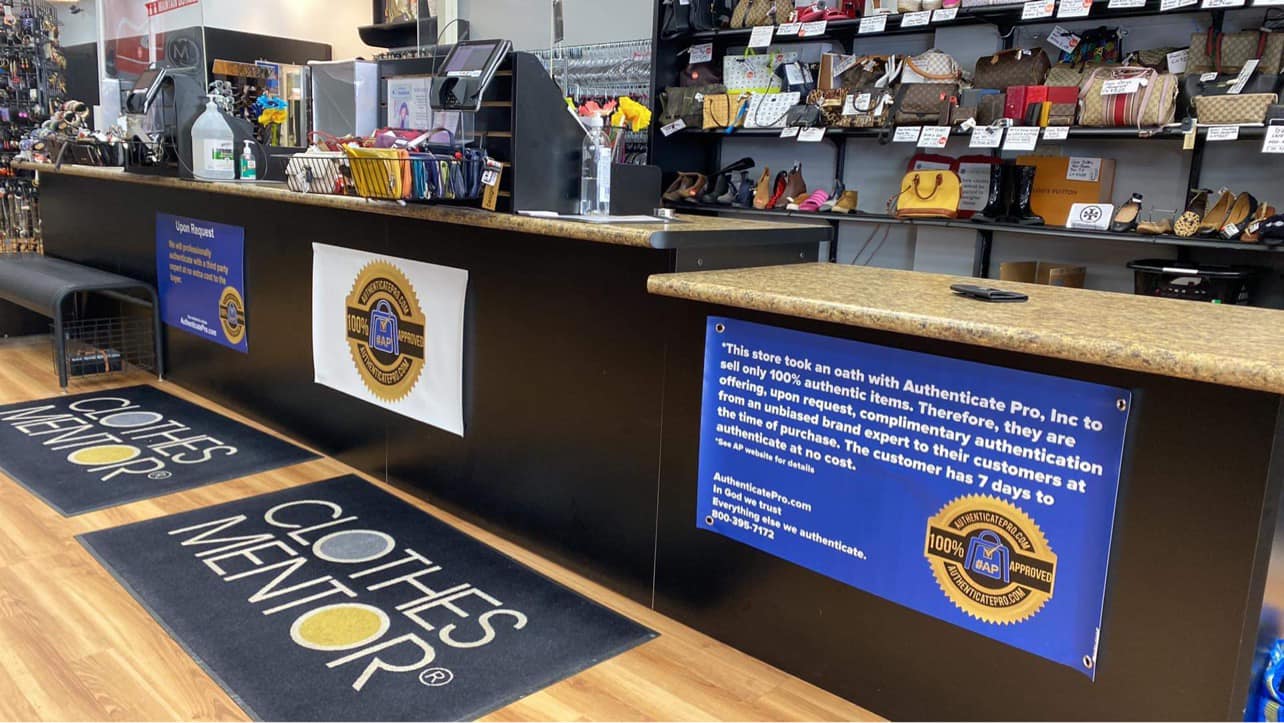
Clothes Mentor has described the value this way:
“It gives our customers the utmost confidence when purchasing high-dollar authentic brand name goods which in return has helped increase our sales.”
That is the business case. Authentication protects more than one sale. It supports customer confidence across your entire store.
What to include in a TikTok Shop luxury listing
Before publishing, use this checklist.
Listing checklist
✅ Use original photos of the exact item
✅ Show front, back, sides, base, interior, and hardware
✅ Describe condition and repairs accurately
✅ Include relevant model or style information
✅ Keep sourcing and purchase records
✅ Complete professional authentication before listing high-value items
✅ Keep the authentication report with your order records
✅ Use brand names only in compliance with TikTok Shop rules
✅ Review current marketplace policies
✅ Ship the same item shown in the listing
Avoid these mistakes
❌ Do not list an item as authentic when you are uncertain
❌ Do not use “1:1,” “AAA,” “mirror quality,” “replica,” or similar language
❌ Do not hide or blur details to avoid scrutiny
❌ Do not use stock photos as a substitute for real inventory photos
❌ Do not assume a receipt or dust bag proves authenticity
❌ Do not ignore gray-market or sourcing concerns
❌ Do not make legal or financial guarantees you cannot honor
Build a repeatable authentication system
You do not need to authenticate every low-value accessory in the same way. You do need a risk-based process.
Consider professional review for:
- High-value handbags
- Rare or limited-edition items
- Watches and jewelry
- Items with incomplete provenance
- Inventory purchased from unfamiliar suppliers
- Products with unclear serial information
- Items that a buyer is likely to challenge
- Any product you cannot confidently evaluate yourself
Authenticate before listing whenever possible. Waiting until after a buyer raises a concern puts your account, cash flow, and reputation under unnecessary pressure.
Authenticate Pro offers options for resellers, including membership programs and individual authentication services. Review the current service levels, timing, pricing, and guarantee terms before choosing the right workflow for your business.
Sell with evidence: not just confidence
TikTok Shop rewards attention. Luxury resale rewards trust.
Your videos may create the first impression, but your authentication process supports the sale. When buyers know that you inspect inventory, document your findings, and use professional experts when needed, they have a reason to buy from you instead of a less transparent seller.
The goal is not to make authentication sound complicated.
The goal is to make it consistent:
- Source carefully
- Screen every item
- Escalate uncertain pieces
- Use human experts for professional conclusions
- Preserve your records
- Communicate clearly with buyers
That is how online thrifters and luxury resellers protect their businesses while selling with confidence.
Marketplace policies and legal requirements can change by region. Review the current TikTok Shop rules and consult qualified legal counsel for advice about your specific business.
Leave a Reply