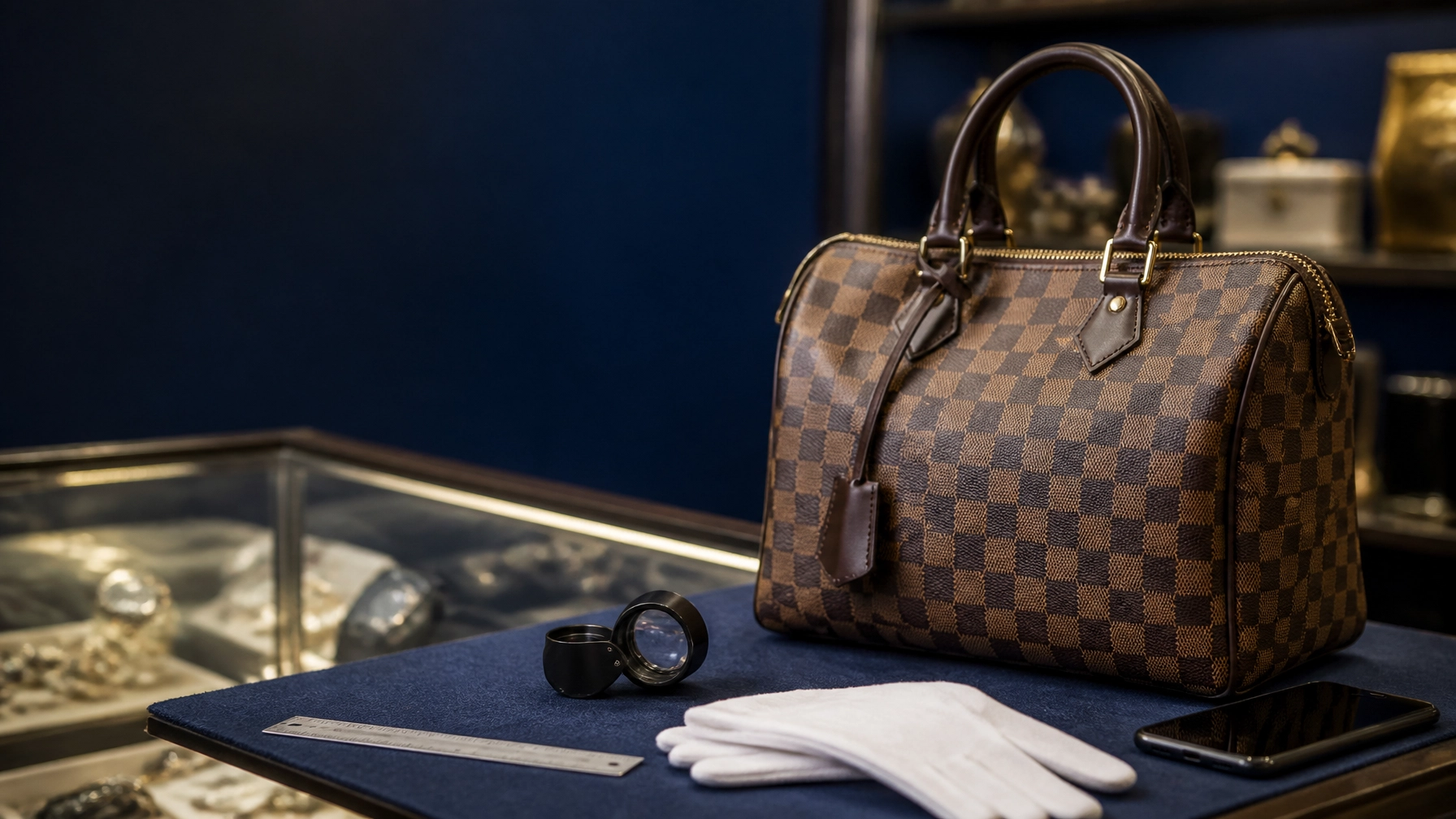
How many times a week does a customer ask, “Is this real?”
When a Louis Vuitton handbag walks into your pawn shop, the opportunity can be significant. So can the risk.
A genuine Louis Vuitton piece may create strong resale value, attract new customers, and build trust in your store. A counterfeit can lead to lost money, returns, damaged reputation, and difficult conversations with customers.
The answer is not one quick glance at a logo or date code. Reliable authentication requires a structured inspection. Every detail must make sense together.
This guide gives pawn-shop owners and staff a practical first-pass process for evaluating Louis Vuitton handbags before you lend against, purchase, or list them.
Important: A visual checklist can help identify obvious red flags. It should not replace professional authentication when the item is high-value, disputed, or difficult to evaluate.
Start With the Item’s Era
Before inspecting individual details, establish when the bag was likely made.
This matters because Louis Vuitton identification systems have changed over time.
Pre-2021 bags: look for a date code
Most Louis Vuitton bags produced before 2021 include a stamped date code hidden inside the bag.
The code may appear:
- On a small leather tab
- Along an interior seam
- Inside a pocket
- Under a strap or flap
- In another model-specific location
Modern pre-2021 codes commonly include two letters and four numbers. The format and meaning changed across different production periods, so do not rely on one universal date-code formula.
Check whether:
- The code format fits the apparent age of the bag
- The characters are clean and evenly stamped
- The code is placed in a logical location
- The factory letters make sense alongside the “Made in” stamp
- The date is possible for the model and style
A code that appears copied, blurry, crooked, or inconsistent with the bag’s age is a red flag.
2021 and newer bags: do not expect a visible date code
Louis Vuitton moved away from visible date codes on newer products. Many bags produced from 2021 onward use an embedded NFC microchip instead.
That means:
- A newer bag may not have a visible date code
- The absence of a date code does not automatically mean the bag is fake
- A visible classic date code on a style known to be post-2021 deserves closer review
- A phone may detect some NFC chips, but not every chip is user-readable
Do not reject a bag based on one missing feature. Confirm the model, production era, materials, and construction before making a decision.

Inspect the Heat Stamp and Lettering
The interior heat stamp is one of the most useful details to inspect. It commonly includes the Louis Vuitton name and a country-of-origin statement.
Look for:
- Crisp, even embossing
- Straight alignment
- Consistent spacing
- Correct spelling
- A clean, proportionate registered trademark symbol
- A country statement that fits the item’s other identifiers
Pay attention to the letter shapes. Experienced counterfeiters can reproduce the general appearance, but small inconsistencies often remain.
Common warning signs include:
- An oval-looking “O” instead of a round one
- Excessively long tails on letters
- Uneven or exaggerated spacing
- A registered trademark symbol that is oversized or too far away
- A stamp that is too deep, too shallow, smudged, or off-center
- Incorrect wording, such as a location statement that does not match known Louis Vuitton formatting
The heat stamp should not be evaluated by itself. Cross-check it against the date code, model, country, and construction.
Study the Monogram and Canvas
Louis Vuitton’s coated canvas is recognizable, but counterfeit materials can look convincing in quick photographs.
Examine the bag in good lighting. Use a clean work surface and inspect multiple panels.
Monogram alignment
On many Monogram canvas pieces, the pattern should look balanced and intentional.
Check whether:
- The front-facing logos are upright
- The pattern is symmetrical across major panels
- Flowers and logos are placed consistently
- Major design elements are awkwardly cut at seams
- The pattern changes unexpectedly from one panel to another
There are legitimate exceptions. Some models, including certain Speedy and Neverfull bags, may have an inverted back panel because one continuous piece of canvas wraps around the bag.
That is why “upside-down monogram equals fake” is not a reliable rule.
Canvas feel and color
Authentic coated canvas generally has a structured, textured feel with a subtle sheen.
Be cautious if the canvas appears:
- Overly smooth
- Plasticky
- Thin or floppy
- Excessively glossy
- Orange-toned or unusually dark
- Inconsistent from one section to another
For Damier canvas, inspect the squares. They should be even, aligned, and consistent. For Epi leather, the grain should be regular and clearly defined.
Check Stitching and Leather Trim
Small construction details often reveal more than the logo.
Stitching
Look at handles, tabs, pockets, corners, and strap attachments.
Authentic construction typically shows:
- Even spacing
- Straight stitch lines
- Slightly angled stitches where appropriate
- Consistent thread tension
- Clean finishing
- No loose threads or fraying
On many Monogram canvas pieces, the thread has a muted mustard-yellow appearance. Bright, neon-looking yellow thread can be suspicious.
Do not rely on memorized stitch counts alone. Stitch counts can vary by model and production period. However, visibly mismatched counts on symmetrical components or sloppy attachment points should trigger further review.
Vachetta leather
Many Louis Vuitton bags use untreated vachetta leather on handles and trim. Over time, it typically develops a natural honey or caramel-colored patina.
Look for:
- Gradual, even darkening
- Natural variation in color
- A leather feel rather than a plastic feel
- No peeling or artificial surface coating
- No unexplained gray tone
Condition matters. A heavily used bag may have water spots, stains, or uneven patina and still be genuine. Damage is not the same as counterfeit construction.
The key is whether the leather’s aging looks natural for the bag’s claimed age and use.
Evaluate Hardware, Zippers, and Engravings
Hardware should feel consistent with the quality of the bag.
Inspect:
- Zipper pulls
- Rings
- Buckles
- Rivets
- Feet
- Strap attachments
- Interior hardware
Genuine hardware generally feels solid, smooth, and substantial. Counterfeit hardware may feel lightweight, hollow, rough, or excessively bright.
Engravings should be:
- Crisp
- Evenly positioned
- Clean around the edges
- Consistent with the rest of the hardware
- Stamped or engraved rather than painted on
Run the zipper several times. It should move smoothly without catching, grinding, or feeling unusually stiff.
A single hardware variation does not automatically prove a counterfeit. Hardware can change across years and models. The concern is a pattern of inconsistencies.
Inspect the Lining and Interior Workmanship
The lining must match the specific model and era.
Depending on the bag, Louis Vuitton interiors may use materials such as:
- Textile
- Microfiber
- Alcantara-style suede
- Coated canvas
Check the model’s known construction before making a decision. A Neverfull, Speedy, or other common style should not have an interior material that clearly conflicts with its documented specifications.
Also inspect:
- Pocket placement
- Interior seams
- Edge finishing
- Glue residue
- Raw or unfinished edges
- Excessive wrinkles
- Hardware attachment points
The interior should show the same level of care as the exterior. Poor finishing inside is still meaningful.
Use smell carefully
A strong chemical, plastic, or glue smell can be a warning sign. Genuine leather and coated canvas may have a subtle material smell.
However, smell is not a final test. Cleaning products, storage conditions, smoke, perfume, and age can all change how a pre-owned bag smells.
Use it as supporting evidence only.
Build a Coherence Check Before You Buy
The most important authentication question is simple:
Do all of the details agree with one another?
Compare:
- The apparent age of the bag
- The model and colorway
- The date code or chip expectation
- The heat stamp
- The manufacturing country
- The canvas or leather
- The lining
- The stitching
- The hardware
- The condition
A date code may look correct but belong to a factory that conflicts with the country stamp. A heat stamp may look clean while the lining is wrong. A convincing canvas may be paired with poor hardware.
One questionable detail deserves research. Several conflicting details mean the item should be treated as high-risk.

Use a Standard Intake Workflow
A repeatable process protects your staff and your store.
Recommended pawn-shop intake steps
-
Photograph the item before handling it extensively
- Exterior front, back, sides, and bottom
- Handles and strap
- Interior lining
- Heat stamp
- Date code or chip area
- Hardware and zipper pulls
- Any damage or alterations
-
Record the customer’s description
- Claimed model
- Purchase source
- Approximate purchase date
- Included receipt, box, dust bag, or accessories
- Customer’s requested loan or sale value
-
Complete a first-pass inspection
- Look for obvious inconsistencies
- Avoid making a final decision based only on the date code
- Mark the item for escalation if multiple details conflict
-
Keep high-risk items separate
- Do not mix them into sellable inventory
- Do not promise authenticity before the review is complete
- Document who handled the item and when
-
Escalate before committing capital
- Use a professional authenticator for high-value or uncertain pieces
- Save the report with the intake record
- Communicate the result clearly to staff and customers
When to Send the Bag to an Expert
Professional review is especially important when:
- The bag has a high proposed loan value
- The item is a limited edition or unusual model
- The customer disputes your assessment
- The bag has conflicting date, country, or model information
- You are dealing with a post-2021 piece without a visible code
- Your staff has limited experience with the specific brand
- The item is being sold online to a customer who cannot inspect it in person
Authenticate Pro’s process combines image submission, technology-assisted review, and human expert escalation. Authentications move to experienced human experts to support approximately 99% accuracy in the final conclusion.
That second level matters. AI and automated tools can help organize information and identify patterns, but difficult luxury authentication decisions should move to qualified human reviewers.
A Practical Solution for Pawn Shops
Authenticate Pro supports resale stores, pawnshops, and other businesses that need a dependable authentication workflow.
The Authenticate Pro platform allows staff to upload clear item photographs and receive an authentication conclusion through a structured process. Available services include Quick Check, Express Authentication, Level 2 Authentication, Price Check, and other options depending on the item and program.
For businesses processing luxury inventory regularly, the Membership program is designed for resellers that want consistent intake support, customer confidence, and access to authentication services.
Current service details and rates are available on the Authenticate Pro pricing page.
The company also uses AP Zip Ties and unique report numbers for eligible workflows. These can help connect a physical item to its authentication report and reduce certain forms of return fraud. Always review the current terms, guarantee conditions, and Zip Tie requirements before using them in your store process.

Final Louis Vuitton Intake Checklist
Before accepting or listing the bag, ask:
- ✅ Does the apparent era match the date-code or microchip expectations?
- ✅ Is the heat stamp clean, correctly formatted, and consistent?
- ✅ Does the country statement make sense with the other details?
- ✅ Is the monogram or Damier pattern balanced and model-appropriate?
- ✅ Does the canvas or leather feel and look correct?
- ✅ Is the stitching even and properly finished?
- ✅ Does the vachetta show natural aging?
- ✅ Does the hardware feel solid and consistent?
- ✅ Does the lining match the model?
- ✅ Are there multiple details that conflict?
- ❌ Am I relying on one feature as proof?
- ❌ Am I committing money before the item is professionally reviewed?
When in doubt, pause the transaction.
A careful review may take more time at intake. A counterfeit dispute can cost much more in money, staff time, customer trust, and reputation.
For pawn shops, the goal is not simply to spot a fake. The goal is to create a repeatable system that protects every transaction and gives customers confidence in the luxury merchandise you sell.
Start with the physical details. Document what you find. Escalate uncertain items to human experts. That is how authentication becomes a business process instead of a guess.
Sources for general reference: Curiety’s Louis Vuitton authentication guide, LuxeDetect’s brand guide, and LegitGrails’ Louis Vuitton guide.
Leave a Reply