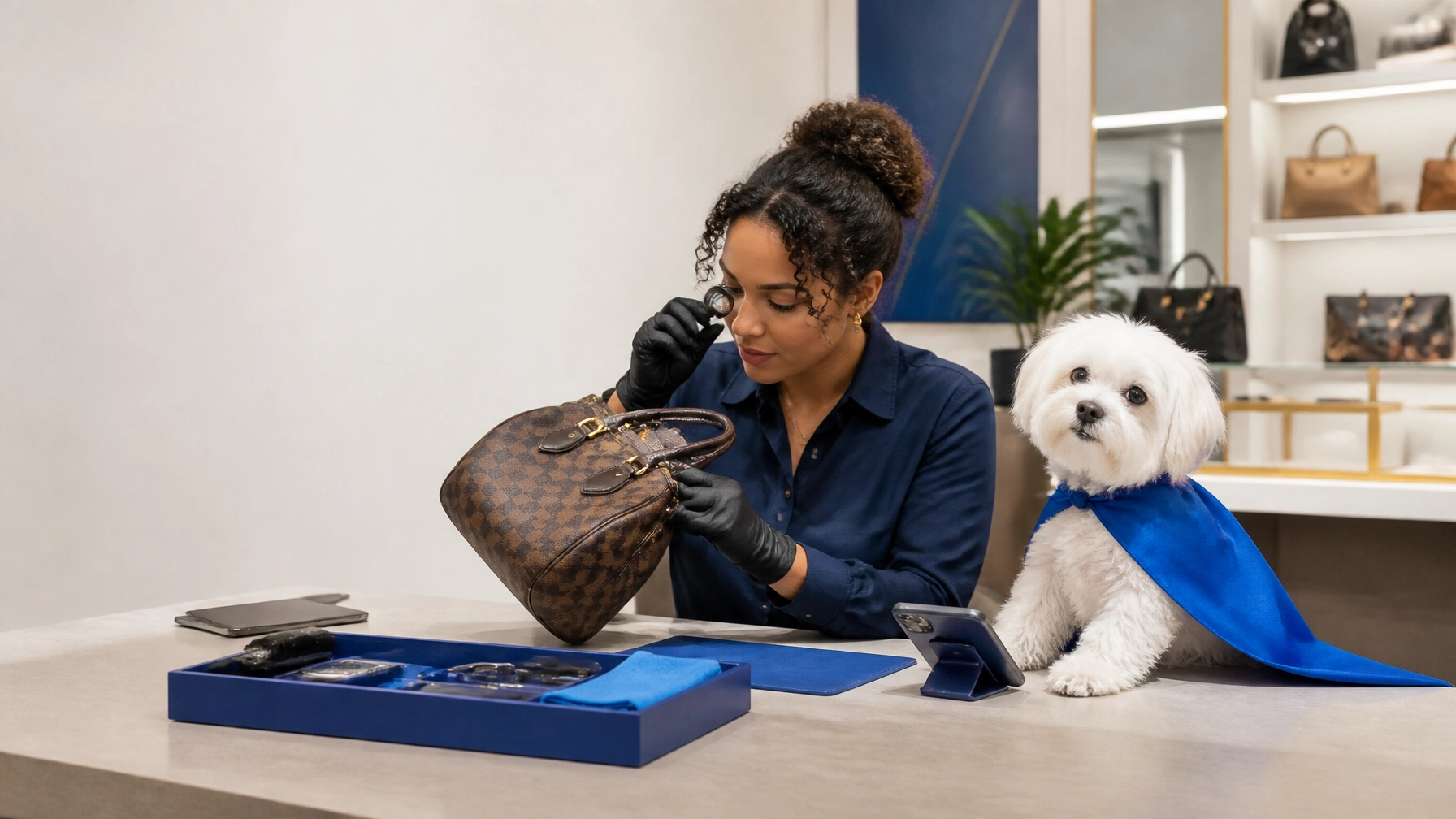
How many times a week does a customer ask, “Is this real?”
Your staff needs a consistent answer. Not a guess. Not a quick look at the logo. A repeatable process that helps protect your store from counterfeits, lost revenue, chargebacks, and reputation damage.
The goal is not to make every employee a master authenticator in one training session. The goal is to teach every employee how to triage an item in under 60 seconds, recognize meaningful red flags, and escalate anything that requires expert review.
The 60-second check is the first filter. It is not the final authentication.
Start With the Right Rule
Train your team to remember this:
When in doubt, pause the transaction and escalate.
A rushed purchase can create weeks of problems. A polite decline or professional authentication request protects the business.
Use a simple decision standard:
- ✅ No major red flags: Continue with your normal authentication process.
- ⚠️ One or two red flags: Escalate to a trained specialist.
- ❌ Several strong red flags: Decline the item or require third-party authentication before proceeding.
Your team should never feel pressured to buy an item simply because it looks valuable or the seller needs immediate cash.

The 60-Second Counterfeit Scan
Teach staff to inspect the same five areas every time.
1. Price and Seller Story
Start before touching the item.
Ask:
- Where was the item purchased?
- When was it purchased?
- Is there a receipt, warranty card, or other documentation?
- Why are you selling it today?
- Has it been authenticated before?
Watch for inconsistencies. The seller may provide a vague story, change details, or push for an immediate decision.
A low price is not proof of a fake. People need cash. Items have condition issues. Markets change.
But a luxury item priced far below its realistic resale value deserves more scrutiny.
Red flags include:
- “I need cash right now. You cannot take time to check it.”
- A story that changes during the conversation.
- A high-value item with no explanation of its origin.
- Pressure to skip paperwork or inspection.
For online thrifters and remote buying teams, review the listing before making an offer. Look for stock photos, stolen images, missing close-ups, vague descriptions, and sellers who refuse to provide additional photos.
2. Logo, Fonts, and Stamps
Counterfeiters often get branding almost right. “Almost right” is not good enough.
Check:
- Logo spacing.
- Font weight and shape.
- Letter alignment.
- Interior stamps.
- Country-of-origin markings.
- Engraved brand names.
- Spelling and punctuation.
Compare the item against a reliable reference from the same brand, model, and production era. Do not rely on memory alone.
A common training mistake is teaching staff one universal rule, such as “the logo must be perfectly centered.” Luxury brands use different construction methods across categories and years.
The correct question is:
Does this detail match what the brand used on this specific item and era?
3. Stitching, Materials, and Construction
Luxury goods are built with consistency. Inspect the overall construction rather than focusing on one isolated detail.
Look for:
- Uneven or crooked stitching.
- Loose threads.
- Inconsistent stitch length.
- Misaligned patterns.
- Poor edge paint or glazing.
- Wrinkled or improperly fitted lining.
- Materials that feel plasticky, overly smooth, or unusually light.
- Strong chemical or paint-like odors.
Do not use smell as a final test. Storage conditions, cleaning products, and age can affect an item’s scent. Treat it as one signal among several.
For handbags, inspect high-stress areas:
- Handle attachments.
- Corners.
- Base panels.
- Zipper tracks.
- Interior pockets.
- Strap connections.
For shoes and streetwear, check shape, labels, size tags, printing quality, sole construction, and material consistency.
4. Hardware, Weight, and Engravings
Hardware should look and feel intentional.
Check:
- Weight and balance.
- Finish consistency.
- Zipper movement.
- Engraving depth.
- Screw type.
- Logo placement.
- Hardware color compared with known authentic references.
Weak, shallow, uneven, or poorly spaced engravings are warning signs. Hollow-feeling hardware, rattling parts, and incorrect fasteners also deserve attention.
Do not assume heavy means authentic. Counterfeiters can add weight. The point is to compare multiple construction details, not to rely on one test.
For watches and jewelry, use appropriate tools and procedures. A jeweler’s loupe, scale, magnet, or metal-testing equipment can support an inspection. Staff should only perform tests they are trained and authorized to perform.
5. Serial Numbers, Date Codes, and Hallmarks
A serial number does not authenticate an item by itself.
Counterfeiters can copy real serial numbers. They can also create codes that look convincing but are placed incorrectly or use the wrong format.
Train your team to check:
- Whether the code exists for that model and era.
- Placement.
- Font.
- Spacing.
- Depth and quality of the marking.
- Whether the code appears altered or reattached.
- Whether the number matches supporting documentation.
For jewelry and watches, inspect hallmarks and reference numbers. Look for correct placement, clean impressions, and brand-appropriate formatting.
A missing code may be a red flag. It is not automatically proof of a counterfeit. Some brands, categories, and production periods use different identification systems.
Use a Standard Intake Checklist
Do not depend on each employee’s personal memory.
Create a one-page intake checklist with the same sequence for every item:
- Record the brand, category, model, color, and condition.
- Photograph the front, back, sides, interior, hardware, and identifying marks.
- Record the seller’s documentation and item history.
- Complete the 60-second red-flag scan.
- Mark the item as proceed, escalate, or decline.
- Add notes explaining the decision.
The checklist creates accountability. It also makes training easier because managers can review what staff saw and what they missed.
For online sales, require clear photographs before listing:
- Front and back.
- Interior labels.
- Serial or date code.
- Hardware engravings.
- Stitching and corners.
- Accessories and documentation.
- Any damage or repairs.
Never let a missing photo become an assumption that the detail is acceptable.
Train With Known Authentic and Counterfeit Examples
A slide deck is not enough.
Staff learn faster when they can handle real examples and compare them side by side. Build a training kit with:
- Known authentic items.
- Confirmed counterfeits.
- Magnifying tools.
- Digital scale.
- Reference photographs.
- Sample receipts and packaging.
- Category-specific checklists.
Run short exercises:
- Give each employee 60 seconds to inspect an item.
- Ask them to identify the strongest red flags.
- Have them explain whether they would buy, hold, or decline.
- Review the decision as a group.
Do not only show obvious fakes. Include convincing counterfeits. The goal is to teach staff how to slow down when an item looks close enough to pass at first glance.

Build Brand-Specific Quick Guides
General training gets employees started. Brand-specific guides improve consistency.
Create a short reference card for the brands your store handles most often. Each guide should include:
- Common models.
- Typical materials.
- Logo and font references.
- Hardware details.
- Serial or date-code formats.
- Common counterfeit patterns.
- Photos of known authentic examples.
- Escalation instructions.
Keep the guide practical. Five to ten strong checks are better than a confusing list of fifty minor details.
Update the guides as counterfeit techniques change. Add a “counterfeit of the month” discussion to your monthly staff meeting.
Know When Staff Should Escalate
Your employees should not be expected to make a final decision on every luxury item.
Escalate when:
- The item is high value.
- Two or more red flags appear.
- The brand or model is unfamiliar.
- The item has unusual construction.
- The documentation looks altered.
- The seller refuses reasonable inspection.
- Staff members disagree.
- A customer requests proof before buying.
- The item could create significant financial or reputational risk.
This is where professional authentication adds a critical second layer.
Combine Staff Triage With Expert Authentication
Authenticate Pro helps resale stores, pawn shops, online sellers, and thrift retailers create a more reliable workflow.
The company’s patented ACE approach stands for:
Authentication · Community · Experts
The process can begin with clear item photos and a preliminary review. It then moves to human experts and additional review when needed. That escalation matters.
AI and digital tools can help organize information and identify potential issues. They should not replace experienced human judgment on high-value or borderline items.
Authenticate Pro states that its conclusions achieve approximately 99% accuracy, based on its authentication history. The company’s workflow includes human expert involvement, community input, and administrative review.

Authenticate Pro offers several service levels, including:
- Mini Check: Generally 20 minutes to 12 hours for eligible brands.
- Quick Check: Generally 20 minutes to 12 hours.
- Express Authentication: Generally 15 to 60 minutes, depending on availability.
- Level 2 Authentication: Generally 12 to 48 hours with additional coverage options.
Service availability, timing, brands, fees, and guarantee terms can change. Review the current pricing information before building it into your store policy.
Resale businesses can also review the membership program to see how customer authentication, reports, zip ties, and store support may fit into their process.
Protect the Transaction After Authentication
Authentication should continue after the item passes review.
Use documented controls:
- Keep item photos with the transaction record.
- Record the authentication report or reference number.
- Use tamper-resistant identification when appropriate.
- Photograph the identifier before listing.
- Explain return and authentication policies to customers.
- Require the identifier to remain intact when guarantee terms depend on it.
These steps help reduce return fraud and prevent an authentic item from being swapped with a counterfeit.
The Goal: Consistency, Not Guesswork
Your staff does not need to identify every counterfeit in 60 seconds.
They need to identify when an item should not move forward without additional review.
Train the process. Practice with real examples. Use clear escalation rules. Document every decision. Then support your team with qualified human experts when the risk is too high for an in-store opinion.
That combination gives your buyers confidence and gives your business a stronger defense against counterfeit merchandise.
For more information, visit Authenticate Pro or contact the team to discuss a resale-store authentication workflow. You can also watch the Authenticate Pro demo.
How to Train Your Staff to Spot a Fake in Under 60 Seconds

Leave a Reply