
How many times a week does your customer ask, “Is this real?”
If you run a resale store, pawnshop, thrift shop, or online luxury business, you already know the answer: often.
That question is not an accusation. It is a business signal.
Customers want confidence before they spend. Your staff want confidence before they buy inventory. Your store needs confidence before an item reaches the sales floor.
A statement like “We don’t sell fakes” sounds reassuring. But by itself, it is not a counterfeit-prevention strategy.
It is a promise without a process.
And when a counterfeit item gets through, that promise can become part of the problem.
Good intentions do not authenticate merchandise
Most resale operators are not intentionally selling counterfeit goods. They are buying from suppliers, accepting trade-ins, processing consignments, and relying on staff judgment.
The problem is that counterfeiters rely on that judgment, too.
Modern fakes can include:
- Accurate logos and branding
- Convincing packaging
- Serial numbers that appear valid
- Correct-looking stitching and hardware
- Authentic product photographs used in online listings
- Items mixed into otherwise legitimate inventory
The International Trademark Association explains that counterfeits can appear in seemingly legitimate stores, online marketplaces, social media listings, and other normal sales channels.
So the real question is not:
“Would we knowingly sell a fake?”
The better questions are:
- How do you screen items before purchase?
- Who handles difficult or high-risk brands?
- What happens when staff disagree?
- Where are authentication records stored?
- What is your response when a customer challenges an item?
Without clear answers, “we don’t sell fakes” is an aspiration: not an operating system.
Why the phrase can create liability
A blanket statement about authenticity can create expectations. Customers may reasonably rely on it when deciding whether to buy.
If an item later proves counterfeit, the customer may not see the situation as a simple mistake. They may see it as a broken promise.
That can lead to:
- Refund demands
- Chargebacks
- Negative reviews
- Marketplace complaints
- Lost supplier relationships
- Brand-owner attention
- Consumer-protection concerns
- Damage to staff credibility
- Reduced customer confidence across your entire inventory
This does not mean every authentication mistake automatically creates legal liability. Laws vary by jurisdiction, product category, transaction, and business structure.
It does mean that broad claims should be supported by documented, repeatable controls. For legal guidance, consult qualified counsel in your jurisdiction.
The U.S. Customs and Border Protection explains that counterfeit goods can create economic, safety, and legal risks. Its guidance also notes that transporting counterfeit merchandise may result in civil or criminal penalties.
The slogan cannot protect your business if your process cannot support it.
One counterfeit can damage more than one sale
A counterfeit sale is rarely limited to the price of one handbag, watch, pair of sneakers, or accessory.
The larger cost can include:
- The original purchase price
- Staff time spent investigating the item
- Return shipping
- Lost sales while the issue is resolved
- Payment-processing fees
- Customer-service labor
- Social media fallout
- Lost repeat business
The reputational cost can be even greater.
A store that never makes authenticity claims may be viewed as careless when a fake slips through. A store that repeatedly says “we don’t sell fakes” may be viewed as misleading.
That difference matters.
Customers can forgive a documented mistake. They are less likely to forgive overconfidence followed by silence.
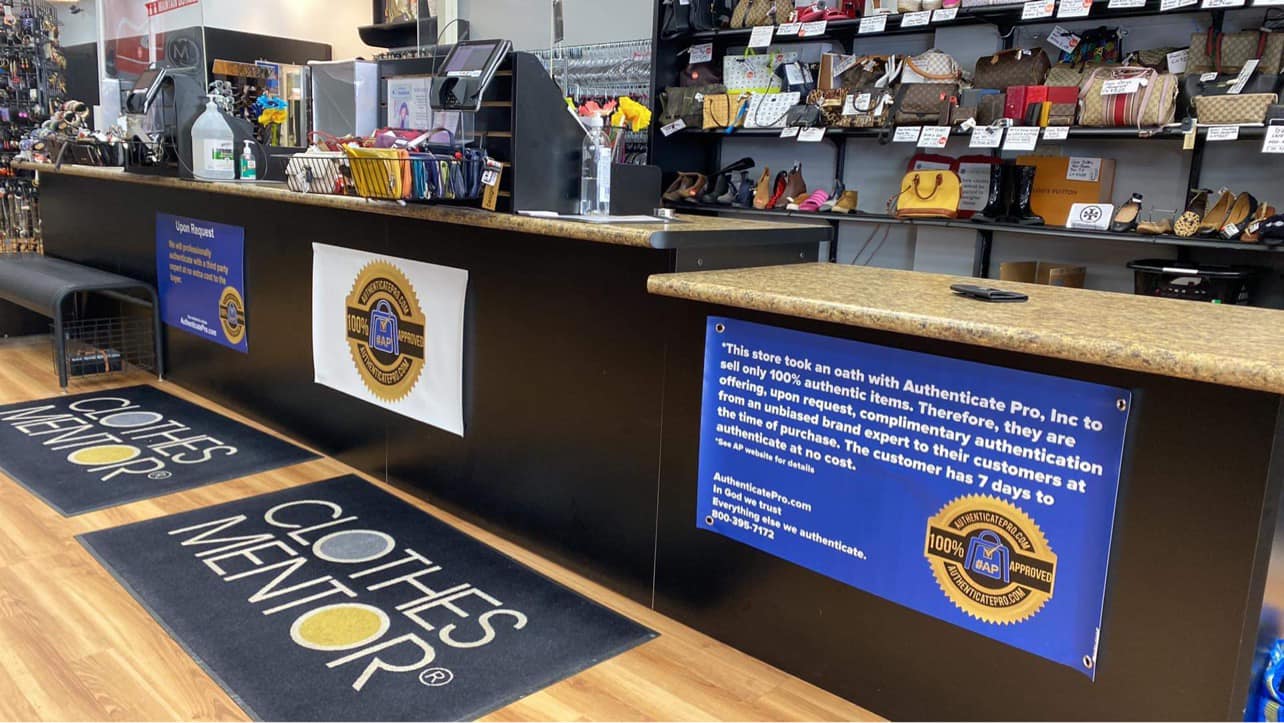
Clothes Mentor Reno described the value of a structured authentication program this way:
“It gives our customers the utmost confidence when purchasing high-dollar authentic brand name goods which in return has helped increase our sales.”
That is the difference between making a claim and building trust.
What a real counterfeit strategy includes
A workable strategy does not need to be complicated. It does need to be consistent.
1. Set sourcing standards
Start before the item enters your inventory.
Document:
- Who sold or consigned the item
- Purchase date
- Seller contact information
- Stated item history
- Receipts or proof of purchase, when available
- Photos taken at intake
- Any condition or authenticity concerns
A receipt does not prove authenticity by itself. Neither does a dust bag, box, or branded shopping bag.
But documentation creates a stronger record and helps identify repeat problems.
Be careful with sources offering unusually high volumes or prices that do not make commercial sense. As the INTA fact sheet notes, counterfeiters often use discounted pricing and authentic product images to attract buyers.
2. Use a consistent intake checklist
Staff should not authenticate differently depending on who is working that day.
Create a checklist that covers:
- Materials and construction
- Stitching and alignment
- Hardware
- Branding and typography
- Date codes or serial details, when applicable
- Labels and tags
- Packaging
- Odor, texture, and weight
- Model-specific features
- Signs of alteration or replacement parts
The checklist is not a substitute for expertise. It is a way to reduce skipped steps and create consistency.
3. Escalate uncertainty
This is where many stores fail.
An employee may be highly experienced with one brand and unfamiliar with another. A manager may recognize obvious red flags but not subtle ones. A second opinion may be necessary.
A strong workflow includes a clear rule:
If the item is uncertain, pause the listing or sale and escalate it.
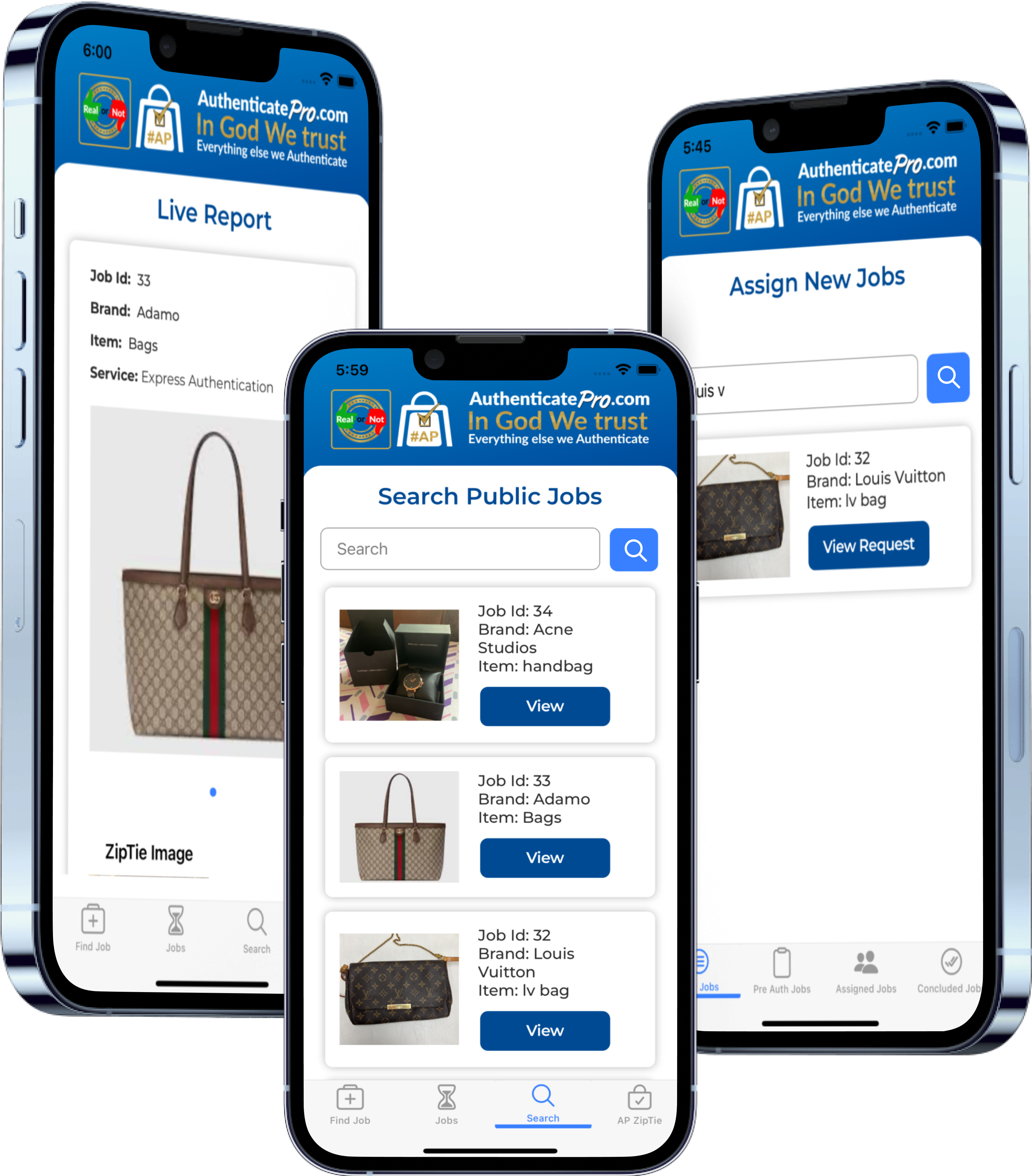
Authenticate Pro combines advanced AI systems with human brand experts. Authentications move to human experts to achieve approximately 99% accuracy, based on the company’s reported conclusion rate from its last 2,000 authentications.
AI can assist with speed and preliminary review. Human experts provide the critical escalation when the item requires deeper judgment.
That is a process. “We don’t sell fakes” is not.
4. Create an audit trail
When an item is authenticated, retain the evidence.
Your records may include:
- Intake photographs
- Authentication request details
- Expert findings
- Report or job number
- Date and time of review
- Staff member who approved the item
- Final listing details
- Customer receipt or order record
For businesses serving online buyers, a searchable report and unique item identification can make the transaction easier to verify after the sale.
Authenticate Pro’s authentication process includes picture submission, pre-authentication, expert and community review, and an administrative conclusion. Its AP ZipTie system can connect a unique number to a live report, depending on the service and guarantee terms.
Read the terms carefully. A ZipTie is not automatically a certification. Guarantee conditions may depend on the selected service and whether the ZipTie remains intact.
5. Have a response plan
Even a serious program may encounter a disputed item. Your response should be decided before the complaint arrives.
Your written procedure should cover:
- Who investigates the complaint
- How the item is removed from sale
- How evidence is preserved
- When a second authentication is requested
- How the customer is contacted
- When a refund or return is authorized
- How the original source is reviewed
- Whether related inventory is quarantined
Do not continue selling similar items while one disputed item is being investigated.
Do not delete the listing before preserving records.
Do not dismiss the customer simply because the item passed an informal staff check.
Replace the slogan with proof
You do not have to tell customers that your store is perfect.
In fact, absolute language can create unnecessary risk.
Instead of:
“We don’t sell fakes.”
Communicate what you actually do:
- We inspect luxury items before listing.
- High-risk or uncertain items are escalated to human brand experts.
- Authentication records are maintained for reviewed items.
- Suspect merchandise is removed from sale.
- Customers have a clear path to raise concerns.
That language is more credible because it describes behavior.
It also gives your staff something they can follow.
Build trust customers can see
A visible process can help turn an uncomfortable question into a sales advantage.
Authenticate Pro’s resale-store program is designed to help stores show customers that authentication is part of the transaction: not an afterthought.
Depending on the membership and service selected, features may include:
- Digital or physical seals
- AP marketing materials
- Authentication reports
- AP ZipTies
- Customer authentication access
- Expert review
- Optional guarantee upgrades
- Coverage for hundreds of brands
Current pricing and service terms are available on the Authenticate Pro pricing page. Membership is not required for every authentication service, but a structured membership program may make sense for stores processing luxury inventory regularly. Review current terms before making operational or marketing commitments.
The goal is simple:
Give customers a reason to believe you.
The bottom line
“We don’t sell fakes” is not a strategy because it does not control intake, authentication, documentation, escalation, or response.
It only states the desired outcome.
A real strategy is measurable:
- Items are screened.
- Concerns are documented.
- Uncertainty is escalated.
- Human experts review difficult items.
- Reports are retained.
- Suspect merchandise is removed.
- Customers receive a clear response.
That approach protects more than a single transaction. It protects your margins, your staff, your reviews, and the reputation you have worked to build.
Do not make customers trust a slogan.
Give them a process they can verify.
If your resale store needs a more consistent way to authenticate luxury inventory, visit AuthenticatePro.app or review the membership options. You can also contact Authenticate Pro at 800-395-7172 to discuss the right workflow for your store.
Intent matters. Process matters more.
Leave a Reply