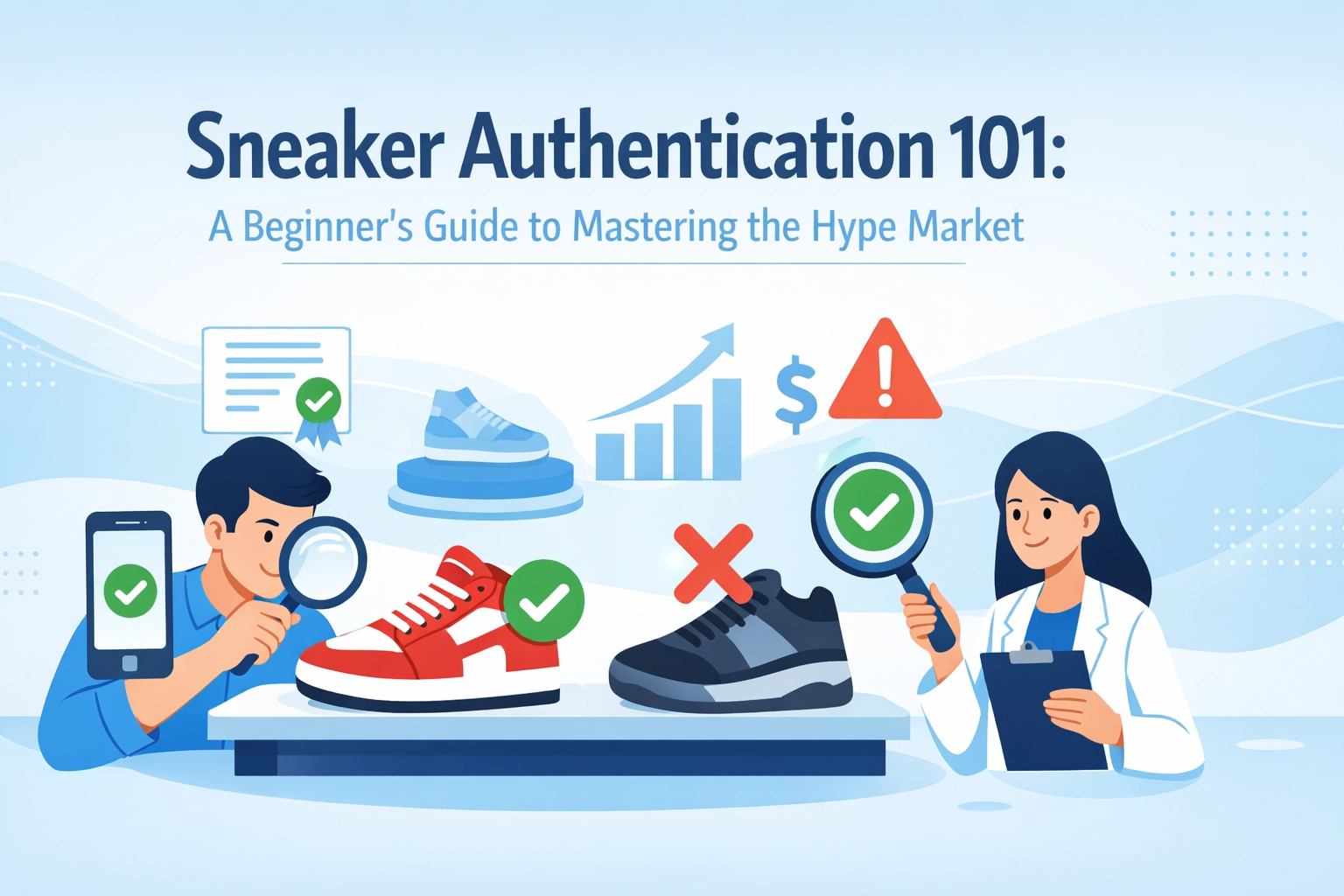
Let’s be real: the sneaker market isn’t just about shoes anymore. It’s an asset class. For resale stores, pawnshops, and online thrifters, a pair of limited-edition kicks can mean the difference between a massive profit margin and a costly mistake. If you’ve ever looked at a pair of "unauthorized authentic" Jordans and felt a bead of sweat hit your forehead, you aren’t alone.
The hype market is fast, loud, and unfortunately, filled with high-quality fakes that can fool even seasoned vets. That’s where we come in. At Authenticate Pro, we live for the details. And leading the charge is our favorite Maltese in a blue cape, Daisy AI. She’s here to make sure you never get stuck with a "fugazi" again.
In this guide, we’re breaking down the fundamentals of sneaker authentication. Whether you’re a pawnshop owner taking in your first pair of Yeezys or a Whatnot seller looking to build trust, this is your 101.
The Sneaker Gold Rush: Why You Can’t Wing It
The secondary sneaker market is worth billions. We’re talking about shoes that retail for $190 and flip for $1,200 in minutes. Because the stakes are so high, counterfeiters have leveled up. Gone are the days of "Nike" being spelled "Niek." Today’s "super fakes" use the same materials, the same patterns, and sometimes even the same factory machines as the originals.
If you’re running a business, "eye-balling it" is a recipe for disaster. One bad pair of Travis Scotts can tank your reputation on Poshmark or lead to a nasty chargeback at your brick-and-mortar store. You need a process. You need a sneaker authentication service that understands the nuances of the hype market.
The ACE Standard: Authentication · Community · Experts
At Authenticate Pro, we don’t just guess. We follow our Issued Patent ACE process: Authentication · Community · Experts. It’s a multi-layered approach that ensures every item is vetted by people who actually know the difference between a 2015 and a 2022 release. When you use our platform, you aren’t just getting a "yes" or "no": relying on our professional authentication means you’re backed by a system designed to protect your bottom line.

(Visual Suggestion: An infographic showing the ACE acronym: Authentication, Community, and Experts, with Daisy AI hovering nearby.)
Sneaker Authentication 101: The Beginner’s Checklist
Before you even send a photo to a shoe authentication service, there are several red flags you can spot yourself. Use these as your first line of defense during the intake process.
1. The Box and the Label
The box is often the first place counterfeiters get lazy.
- Font and Kerning: Look at the text on the box label. Is the font too bold? Are the letters touching each other when they shouldn't?
- The Sticker: Most authentic boxes have a sticker that is perfectly aligned. If it’s crooked, bubbly, or the color of the cardboard looks "off," be suspicious.
- The MSRP Tab: Many US-release Nike boxes have a perforated suggested retail price tab. If it’s missing or doesn't look like it was meant to be there, take a closer look at the shoes.
2. Symmetry and Alignment
High-end sneakers are subject to strict quality control (usually).
- The Heel Test: Place both shoes on a flat surface and look at them from behind. They should be identical in height and shape. If one heel tab is higher than the other, or if the "hourglass" shape of a Jordan 1 is missing, you might have a fake.
- The Toe Box: Press down on the toe box. It should spring back into shape relatively quickly. On cheap fakes, the material often stays indented or feels like flimsy plastic.
3. The Stitching
This is where the "experts" in luxury authentication service really shine.
- Consistency: Authentic pairs have consistent stitch length and spacing.
- The Corner Stitch: On Jordan 1s, there’s a specific "corner stitch" above the swoosh. If that stitch crosses over the swoosh or is messy, it’s a red flag.
- Loose Threads: While Nike's quality control has been debated lately, excessive loose threads or "nesting" (where thread bunches up) usually points to a replica factory.

(Visual Suggestion: An infographic checklist showing "Real vs. Fake" stitching and symmetry side-by-side.)
Use Your Senses: The Smell and Touch Test
You’d be surprised how much your nose can tell you.
- The Smell: Authentic sneakers have a very specific "new shoe" smell: a mix of leather and factory-fresh materials. Fakes often have a pungent, overwhelming chemical odor. That’s the smell of cheap industrial glue. If you open a box and it smells like a Sharpie factory, put them back.
- The Touch: Feel the materials. If it’s supposed to be tumbled leather, it should feel soft and textured, not like stamped plastic. Suede should have "movement": when you rub your finger across it, the fibers should shift and change color slightly.
Common Mistakes Pawnshops and Resale Stores Make
We’ve seen it all. If you’re a beginner in the hype market, avoid these common pitfalls:
- Trusting the Receipt: Receipts are the easiest things to fake. Never assume a shoe is real just because someone shows you a digital invoice or a printed Foot Locker slip.
- Ignoring the "Too Good To Be True" Price: If someone is offering you a pair of "Deadstock" (brand new) sneakers for 50% under market value, they aren't doing you a favor. They’re offloading a replica.
- Relying on "Legit Check" Apps Alone: Some apps use basic AI that can be fooled by high-tier replicas. You need a professional authentication partner that uses a patented process and human experts.
Why Professional Authentication is Your Best Marketing Tool
Think about your customers. They are nervous. They’ve heard the horror stories of buying "authentic" shoes on eBay only to find out they’re fakes three months later.
When you can point to a Certificate of Authenticity (COA) or a verified link from Authenticate Pro, you aren't just selling a shoe: you’re selling peace of mind. For online sellers on Whatnot or Poshmark, this is huge. It allows you to command higher prices because the buyer knows exactly what they are getting.

(Visual Suggestion: An infographic showing how a Certificate of Authenticity increases buyer trust and store reputation.)
How Authenticate Pro Protects Your Profits
We know that speed is everything in resale. You can’t wait three days for an answer when a customer is standing at your counter with a pair of Yeezy 350s. Our platform is built for the "right now" nature of the business.
By using our app, you can upload photos, get an expert opinion, and move forward with confidence.
- Decrease Returns: Stop fakes at the door and you'll never have to deal with an angry customer demanding their money back.
- Increase Throughput: Our shoe authentication service helps your staff make decisions faster.
- Build Your Brand: Become the "trusted" shop in your city. People will travel to buy from someone they know sells the real deal.
Ready to take your sneaker game to the next level? Check out our Membership options to see how we can fit into your workflow.
Final Thoughts: Don’t Let the Hype Blind You
The sneaker market is exciting, profitable, and: let’s face it: pretty cool. But it’s also a minefield for the unprepared. By mastering the basics of physical inspection and partnering with a professional authentication service like Authenticate Pro, you’re setting your business up for long-term success.
Daisy AI is ready to help you protect your shop. Don't leave your reputation to chance. Visit our pricing page to get started today and join a community that values truth over hype.

(Visual Suggestion: Daisy AI in her blue cape standing triumphantly over a "Verified Authentic" shield.)
Remember: In the world of sneakers, if you aren't certain, you're at risk. Stick with the ACE standard: Authentication · Community · Experts. It’s the only way to play the game and win.
Leave a Reply