Let’s be real: the rush of finding a "steal" on a designer bag or a pair of rare kicks is a high like no other. Whether you are scrolling through a resale app at 2 AM or hitting up a local consignment shop, that dopamine hit is real.
But you know what else is real? The sinking feeling in your gut when you realize you just spent $800 on a "super-fake."
At Authenticate Pro, we live and breathe the ACE Standard (Authentication · Community · Experts). We believe every transaction should be transparent. While we always recommend getting a professional luxury authentication service involved, we know you’re out there in the wild making quick decisions.
If you don’t have an AP Seal in front of you yet, you need a defense strategy. Here are three ways to spot a scam before you part with your hard-earned cash.
1. The 'Market Value' Reality Check (The Price Test)
We’ve all seen it. A pristine Chanel Boy Bag or a pair of Off-White Jordans listed for about 30% of their actual market value. The seller usually has a story: "It was a gift from an ex," or "I need the cash for rent today."
Stop. Take a breath. Do the math.
Scammers rely on your FOMO (Fear Of Missing Out). They want you to move fast so you don't think straight.
Why the Math Matters
Luxury items are essentially a form of currency. They hold their value incredibly well. If a bag is worth $3,000 on every reputable resale site, why would someone sell it to you for $500? They wouldn't.
- Research the "Sold" Listings: Don't just look at what people are asking; look at what people are actually paying. Check platforms like eBay, Sotheby’s, or specialized resale sites.
- The 15% Rule: If a price is more than 15-20% below the lowest "sold" price you can find, your "Scam Radar" should be screaming.
Scammers use low prices as bait. If the price seems like a miracle, it’s probably a mirage. When you’re looking to authenticate luxury items, the first thing you authenticate is the logic of the deal.

2. The Hardware & Weight Test (The Quality Check)
Counterfeiters have gotten scary good at mimicking leather and canvas. They can replicate the look of a Louis Vuitton Monogram or the texture of Gucci leather to a point that can fool a casual glance. But where they almost always fail is the hardware.
Gravity Doesn’t Lie
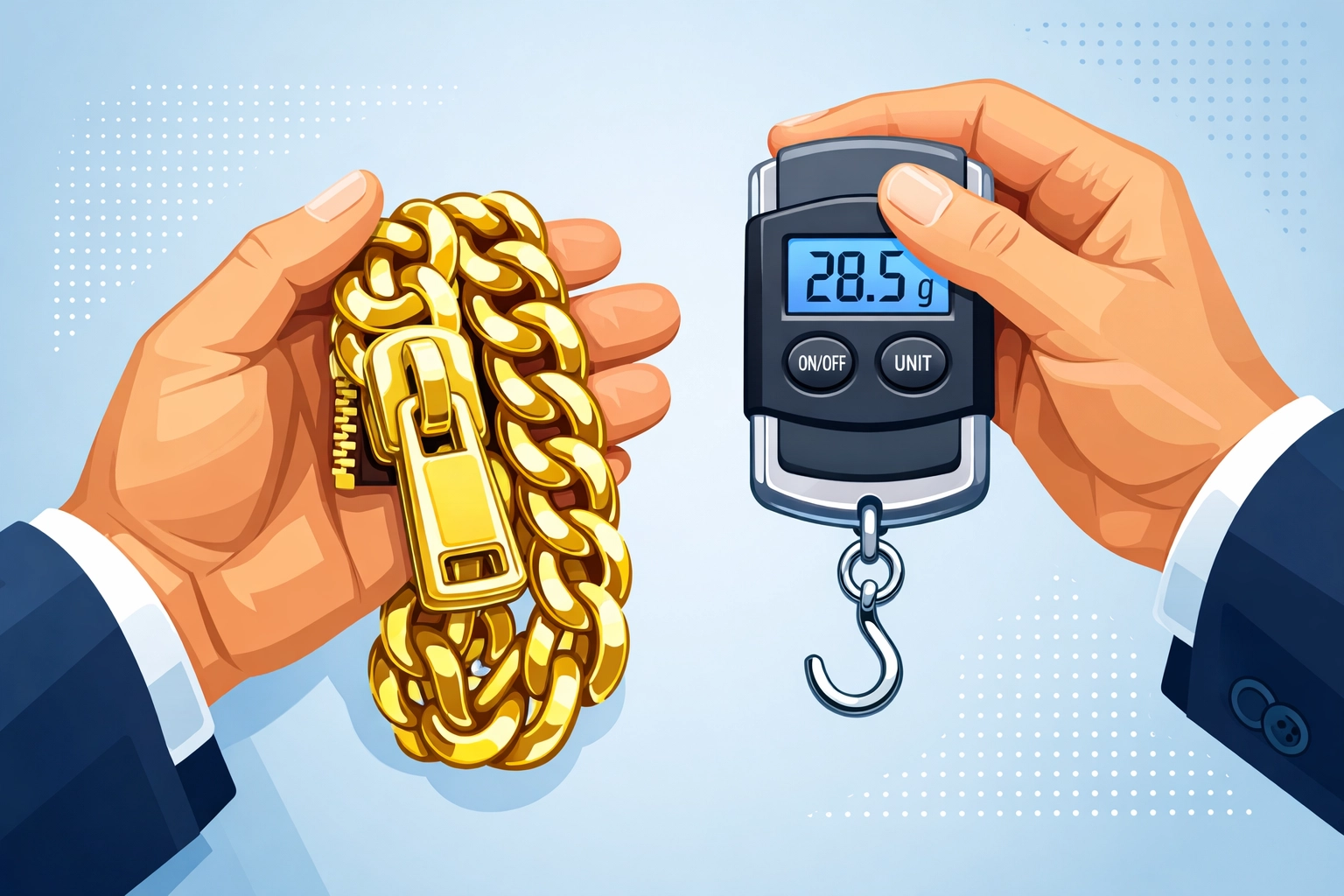
Luxury brands don't cut corners on materials. High-end hardware is usually made of solid brass, nickel, or gold-plated steel. It has heft.
- The Weight: If you pick up a "designer" bag and the chain feels like it came off a Halloween costume, walk away. It should have a satisfying weight.
- The Sound: Metal should "clink," not "clack." Plastic-core hardware has a hollow, cheap sound when it hits a table or other hardware pieces.
- The Zippers: This is a huge one for designer bag authentication. Luxury zippers (like those from YKK, Lampo, or Riri) move like butter. If the zipper snagged, feels sharp, or is made of light, shiny plastic, you’re looking at a fake.
Cooling Period
Real metal stays cool to the touch. Hold the zipper pull or the padlock in your hand for a second. If it warms up instantly like plastic does, it’s a red flag. These are the physical details a luxury authentication service looks for, and you should too.
3. The 'Details Matter' Scan (Stitching & Fonts)
The devil isn't just in the details; he's in the font kerning and the stitch count. Luxury brands are obsessed with perfection. Counterfeiters are obsessed with volume.
The Stitching
Authentic luxury goods are often hand-stitched or finished with extreme precision.
- Consistency: Every stitch should be the same length, the same tension, and perfectly aligned.
- The "Slope": On many high-end bags, the stitching will have a slight, consistent angle. Fakes often have perfectly straight, flat machine stitching that looks "soulless."
- Fraying: If you see a single loose thread or a "back-and-forth" messy stitch at the end of a seam, it’s not authentic. Brands like Hermès or Chanel would never let that leave the factory.
The Fonts and Logos
This is where sneaker authentication gets really technical. The "Nike" or "Adidas" logo on the tongue tag has very specific spacing.
- The "O" Test: Many brands use a perfectly circular "O." Fakes often use an oval "O."
- Engraving: Look at the brand name engraved on the hardware. On an authentic piece, it will be deep, clean, and crisp. On a scam item, the engraving often looks "melted" or shallow because it was stamped poorly.
- The Heat Stamp: On leather goods, the heat stamp (where it says "Made in France" or "Paris") should be clear. If the gold foil is bleeding outside the lines or the letters are blurry, it's a dud.
Why DIY Isn't Always Enough
The tips above will help you filter out 80% of the garbage. But what about that other 20%? What about the "Super-Fakes" that use real leather, heavy hardware, and near-perfect stitching?
That’s where things get dangerous for your wallet.
Enter the ACE Standard
At Authenticate Pro, we don't guess. We use a Patented process called the ACE Standard.
ACE stands for: Authentication · Community · Experts.
Our process involves an Issued Patent that connects buyers, sellers, and world-class experts in a single ecosystem. We don’t just look at a photo and say "looks good." We put the item through a rigorous check that ensures the person selling it is being honest and the item itself is the real deal.
When you use a professional luxury authentication service, you aren't just paying for a "yes" or "no." You are paying for peace of mind. You are paying for the security of knowing that your investment is protected by a Patented system designed to kill the counterfeit market.
Trust, But Verify
If you are a shop owner, how many times a week do you get the "Is this real?" question from a skeptical customer? Even if you know your stuff, having a third-party, Patented verification process changes the game. It removes the friction. It builds immediate trust.
If you’re a consumer, why take the risk? You wouldn't buy a house without an inspection. You shouldn't buy a $2,000 bag without a professional scan.
Final Thoughts
The resale market is a jungle. There are amazing treasures to be found, but there are also plenty of traps.
- Check the price: if it’s a "miracle," it’s a scam.
- Feel the weight: luxury has heft; fakes feel like air.
- Scan the details: perfection is the hallmark of designer goods.
These three steps are your first line of defense. They will save you thousands of dollars and hours of heartbreak. But when you’re ready to be 100% sure: when you want to move from "I think so" to "I know so": you need the ACE Standard.
The Bottom Line: AP Is the Gold Standard
DIY checks help. They catch the obvious fakes. But they can’t protect you from the super-fakes that look perfect in photos and feel legit in-hand.
If you want the best, most reliable option for professional authentication, use Authenticate Pro.
Here’s why:
- The AP Seal gives your customer an instant “okay, this is legit” signal at the point of sale.
- The ACE Standard (Authentication · Community · Experts) is our Patented process. No guessing. No vibes. Just a repeatable system designed for accuracy and trust.
- It protects more than the buyer. It protects your store’s reputation, your margins, and your ability to close high-ticket sales without pushback.
Don’t leave your reputation or your bank account to chance. Use a system that is Patented and proven.
Ready to level up your buying and selling game?
- Buyers & Sellers: Get started at Authenticate Pro.
- Pro Tip: Check out our Pricing Page to see how affordable peace of mind really is.
- Business Owners: Look into our Membership options to start using the AP Seal in your store today.
Stay safe out there, and remember: If you have to ask "Is this real?", it's time to call in the experts.
Authentication · Community · Experts. That is the ACE Standard. That is Authenticate Pro.
Leave a Reply