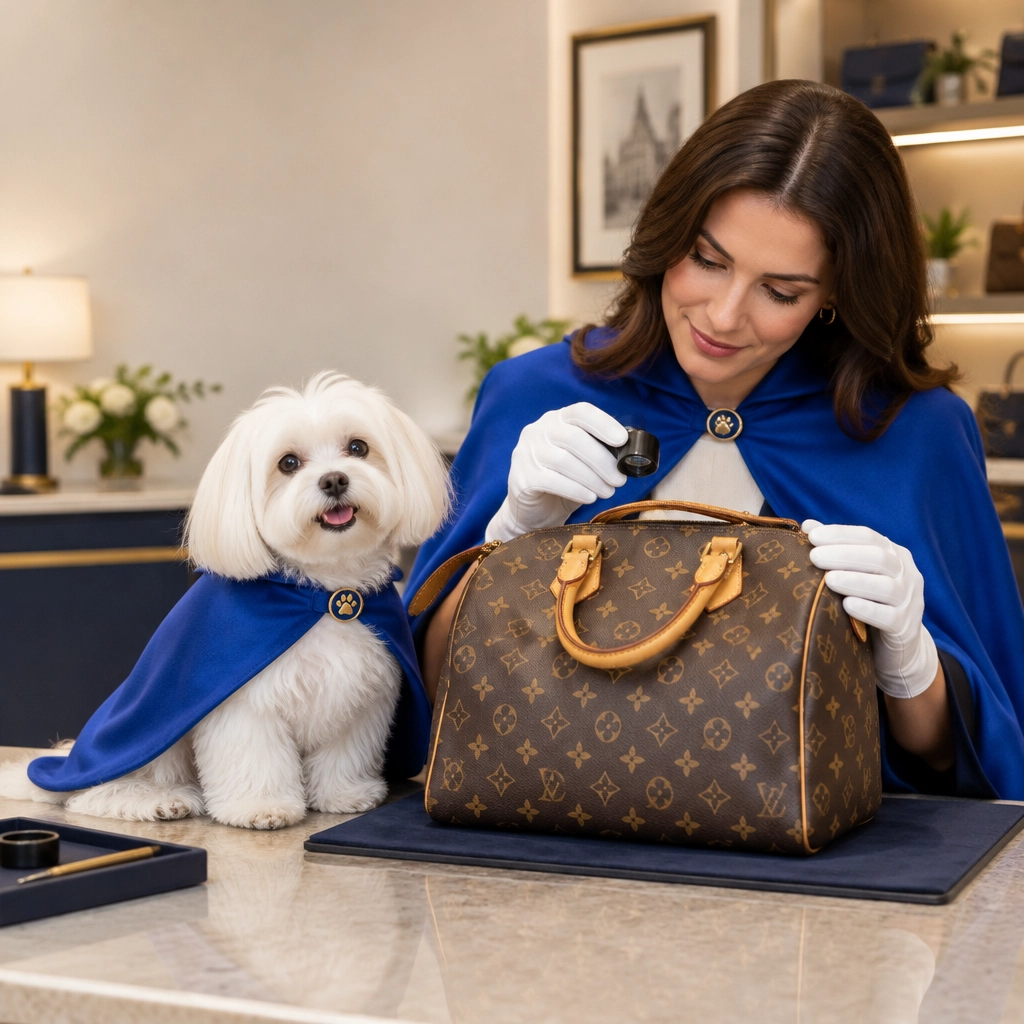
A Louis Vuitton bag walks in. Your team has a few minutes to decide what happens next.
The goal at the counter is not to authenticate from one detail. It’s to spot inconsistencies, document what you see, and know when to pause for professional authentication. That protects your shop from a pawn shop counterfeit, and helps you make a confident decision without guessing.
Use this staff-friendly walkthrough as a first-pass check. No special equipment required.
1. Start with the whole item, not the story
Before you inspect a date code or hardware, take in the bag as a complete object.
Ask the seller:
- What model and size is it?
- When and where was it purchased?
- Has it been repaired, relined, or altered?
- Are the accessories original to this bag?
Note the answers. Then look at the bag’s overall shape, proportions, materials, pattern placement, and construction. Compare it with trustworthy references for the specific model, size, material, and era. A bag can look plausible in general and still have details that do not belong together.
A receipt, dust bag, box, or convincing seller story can provide context. None proves authenticity. Packaging can be separated from an item, and convincing documents or accessories can be copied.
Counter check: Does the bag itself make sense as one consistent item?

2. Check the heat stamp and date code carefully
Look inside for the heat stamp and any date code. Record what you see and where you found it. Check whether the placement and details look plausible for the model and production period.
A heat stamp should appear clean and intentional. Watch for:
- Blurry, uneven, or double-struck impressions
- Odd spacing or inconsistent lettering
- Poor placement or a mismatch with the item’s claimed model
Then consider the date code as a chronology check, not an authenticity certificate. Code formats and placement can vary over time. Louis Vuitton began phasing out traditional date codes in 2021, so the absence of a familiar code alone does not prove a bag is counterfeit. And a code that looks correct can still be copied.
For more context on changing formats, see this Louis Vuitton date code guide. Use it as a reference, not a final verdict.
3. Inspect stitching, glazing, and construction
Check the places that get handled and stressed most: handles, handle tabs, corners, pocket edges, seams, and zipper ends.
Look for consistent stitch length, tension, color, and alignment. Loose threads, skipped stitches, puckering, or crooked attachments are reasons to look closer. One imperfect stitch by itself is not proof. Repairs, age, and wear can affect an authentic bag, too.
Next, inspect the leather edge glazing: the finished coating along the edges. It should look reasonably even and attached. Bubbles, cracking, pooling, or exposed raw edges may be concerns, especially when they appear alongside other inconsistencies.
The key is the pattern of evidence. Several construction issues together matter more than one isolated flaw.
4. Feel the hardware and check the lining
Handle the hardware. Does it feel substantial and operate smoothly? Look at zippers, clasps, rings, locks, and pulls. Check whether engravings appear clean and whether the finish, shape, and placement make sense for the specific item.
Do not treat wear as a verdict. Genuine hardware can show wear. Instead, note combinations of concerns: rough operation, sloppy engraving, a visibly cheap finish, and poor construction elsewhere.
Inside, check the lining’s material, color, texture, and fit. These details differ by style and model. Compare with references for the exact bag, not a general rule about what all Louis Vuitton linings should look like.

5. Treat smell and packaging as supporting details
A strong chemical or plastic smell may prompt another look. But smell is subjective. Storage, smoke, perfume, cleaning products, age, and repairs can all affect odor. Do not accept or reject a bag based on smell alone.
Check the dust bag and box if they come with the item. Note their condition and whether they seem consistent with the seller’s account. But authenticate the bag separately. A genuine item may arrive without its original packaging; a counterfeit can arrive with convincing accessories.
Louis Vuitton warns shoppers about counterfeit products and recommends purchasing through authorized channels. See its official guidance on replicas.
6. Use a simple counter decision
After your first pass, sort the item into one of three buckets:
- ✅ No obvious issues: Document the condition and continue under your shop’s normal policy. A clean first pass is not a professional authentication.
- ⚠️ Mixed evidence or questions: Hold the item and request a second look. This includes unclear codes, unusual vintage pieces, repairs, or disagreement among staff.
- ❌ Major contradiction: Do not represent it as authentic based on your checklist. Follow your shop’s procedures and applicable rules.
Capture clear photos of the front, back, base, sides, handles, interior, markings, hardware, and any areas of concern. Record the seller’s description and relevant context. Keep your language neutral while a review is pending: “unable to verify at intake” is safer and more accurate than a definitive claim based on a quick visual check.
Why one check is never enough
How many times a week does a customer ask, “Is this real?” The pressure to answer quickly is real. So is the risk of losing money, customer confidence, or your store’s reputation.
But date codes can be copied. Packaging can be replaced. Genuine bags can be repaired or worn. Counterfeits, including superfakes, can imitate individual details well enough to fool a rushed inspection.
A hands-on intake check is useful triage. It is not a substitute for professional authentication. When the item is valuable, the evidence is mixed, or staff are uncertain, pause and escalate.
When to escalate, and how Authenticate Pro can help
Authenticate Pro’s workflow combines technology and human review. When AI is uncertain, the authentication moves to human experts for a closer assessment. This expert escalation supports roughly 99% accuracy, based on Authenticate Pro’s reported results. It gives your team a path to a more reliable decision instead of relying on one visible clue.
The approach is built around ACE: Authentication · Community · Experts. Authenticate Pro’s Patented ACE authentication technology supports the process, with human experts involved when judgment is needed.
Need to authenticate luxury items online? Authenticate Pro offers an online authentication service for resale businesses and buyers. Check current options and turnaround information on the pricing page, or learn about membership for resale stores. Turnaround varies by service; the website lists options ranging from 20 minutes to 12 hours for some checks and 12 to 48 hours for Level 2 authentication.


Make the next step a clear one
The best pawn shop authentication habit is simple: inspect, document, and escalate when unsure. Your checklist helps staff catch concerns. A qualified expert helps assess the complete item.
Want a reliable next step for your team? Book an authentication with Authenticate Pro or visit Authenticate Pro to review services. No pressure to decide at the counter. Just a clearer process for the next luxury piece that walks in.
Leave a Reply