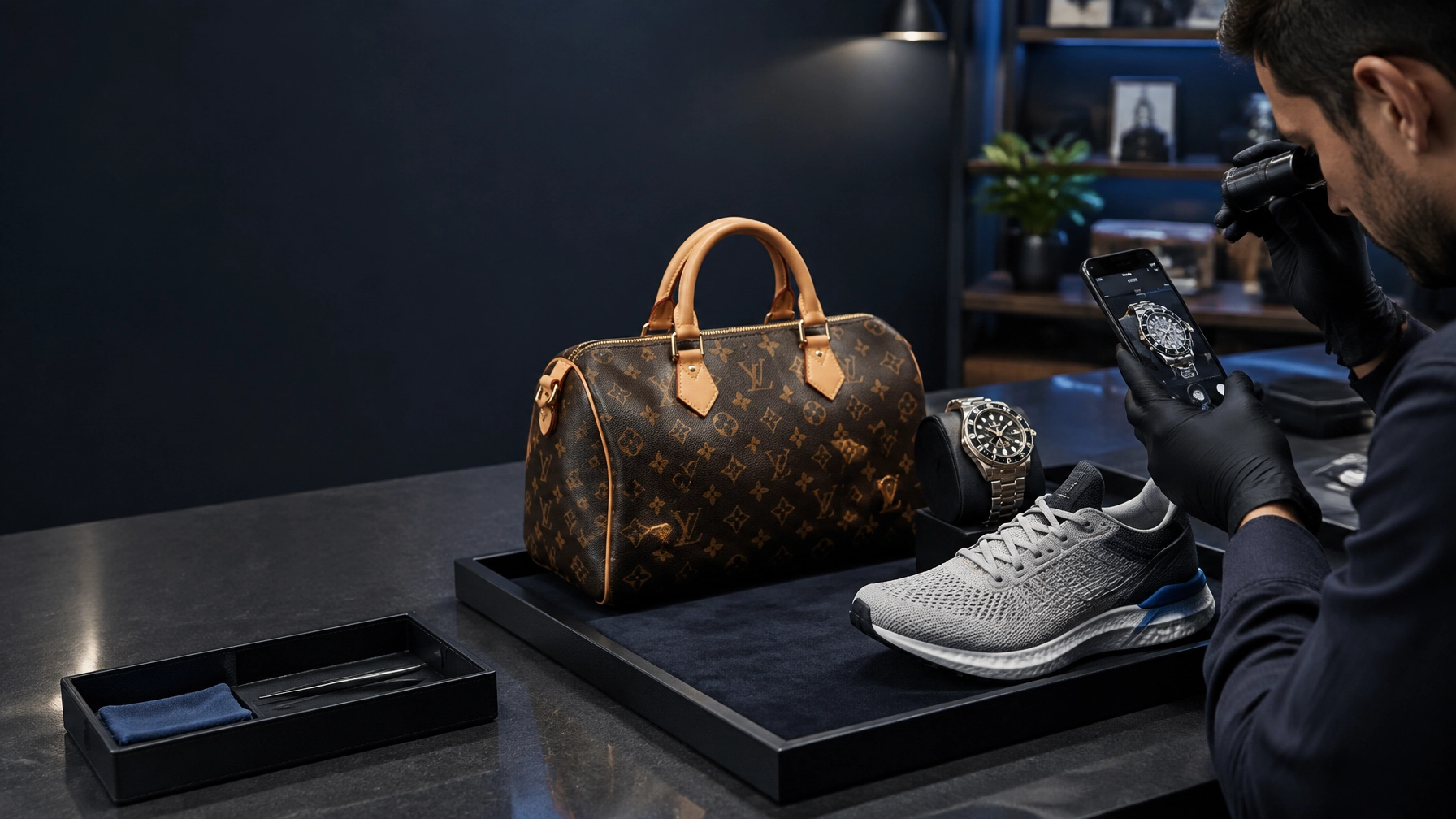
A luxury item can create a strong margin, or a costly problem.
For pawn shops, authentication is not a side task. It is part of intake, risk control, pricing, and customer service. One counterfeit handbag can mean lost revenue, chargebacks, damaged reputation, and difficult conversations with law enforcement or the original brand.
How many times a week does a customer ask, “Is this real?”
Your team needs a repeatable answer.
This pawn shop authentication guide explains what to check on designer handbags, luxury watches, and sneakers before making an offer. It also explains when to stop relying on an in-house visual inspection and use a professional online authentication service.
The first rule: Do not authenticate from one detail
A matching serial number does not prove authenticity.
Neither does:
- A receipt
- A dust bag
- An authenticity card
- A box
- A date code
- A QR code
- An NFC chip
- A familiar logo
- A seller’s confident explanation
Counterfeiters can copy codes, packaging, tags, and documentation. Genuine parts can also be transferred to the wrong item.
A sound authentication decision looks at the entire item:
- Brand and exact model
- Materials and construction
- Proportions and shape
- Stitching
- Hardware
- Markings
- Interior details
- Production era
- Condition and repairs
- Seller history and provenance
Treat codes as evidence. Not a verdict.
Build authentication into your intake process
Before discussing price, create a record.
1. Document the seller
Follow your local legal and regulatory requirements. Record the seller’s identification and transaction details. Ask:
- Where and when was the item purchased?
- Was it bought new or secondhand?
- Has it been repaired, refurbished, or altered?
- Has it been authenticated before?
- Why is it being sold or pawned?
- Does the seller have the original receipt or service record?
Write down the answers. Note inconsistencies.
Urgency is not proof of a counterfeit, but pressure for immediate cash should increase your caution.
2. Assign an intake number
Link the seller, item, and photographs under one record. Photograph the item before cleaning, polishing, opening, or disassembling it.
For higher-value merchandise, preserve the chain of custody. Keep original photographs. Do not overwrite them after editing.
3. Use a three-decision system
Accept: The item clears your documented screen and fits your normal brand coverage.
Hold: The item is valuable, unfamiliar, damaged, altered, or has one meaningful red flag.
Decline: Multiple red flags appear, the seller refuses required information, or authenticity cannot be established with reasonable confidence.
When in doubt, hold and escalate. The cost of waiting is usually lower than the cost of buying a counterfeit.

What to photograph before professional review
A professional online authentication service can only work with the evidence you provide. Take sharp, unfiltered photographs in neutral lighting.
Handbags
Capture:
- Front, back, sides, base, and top
- Overall shape and proportions
- Brand stamp and logo
- Date code, serial, or interior marking
- Stitching and corner wear
- Zipper pulls, sliders, and teeth
- Hardware engravings
- Interior lining, labels, and pockets
- Handles, straps, and attachment points
- Any repairs, replacements, or alterations
- Dust bag, box, receipt, card, and accessories
Watches
Capture:
- Dial and hands
- Caseback
- Crown and bezel
- Reference and serial markings
- Bracelet, clasp, and engravings
- Date window and magnification
- Case shape and dimensions
- Warranty card and service paperwork
Do not open a watch unless a qualified person is equipped to do so. Improper opening can damage the watch, affect water resistance, and create liability for the shop.
Sneakers
Capture:
- Overall shape and colorway
- Size tag
- Box label and SKU
- Stitching and panel alignment
- Branding and typography
- Outsole and midsole
- Insoles and interior tags
- Glue lines and finish
- Accessories, packaging, and extra laces
A matching box does not authenticate a sneaker. Boxes can be swapped or reproduced.
Brand-specific checks: Louis Vuitton, Chanel, and Gucci
Louis Vuitton
Start by confirming the exact model, colorway, material, and production era.
Then inspect:
- Canvas or leather pattern alignment
- Symmetry and proportions
- Heat stamp quality
- Interior lining
- Hardware weight and finish
- Stitching consistency
- Date code or newer identification system
A Louis Vuitton date code can provide production context. It is not, by itself, proof of authenticity. A valid-looking code may be copied, and newer items may use different identification technology than older pieces.
The important question is whether the code, model, materials, construction, and production details agree.
Chanel
Chanel authentication requires more than checking a sticker or card.
Depending on the production period, an item may have an older numbered authenticity sticker and card or a newer metal plate and electronic identification system. A phone detecting, or failing to detect, an NFC feature is not conclusive.
Inspect the complete item:
- Quilting and alignment
- Leather quality
- Stitching
- Interior lining
- Logo shape and spacing
- Chain and hardware
- Sticker or plate placement
- Card and item consistency
- Signs of replacement parts
A counterfeit may include a real-looking card. It may also use a copied number.
Gucci
Gucci tags and numbers can be misunderstood. Many numbers identify style, supplier, or batch information rather than serving as a unique serial number.
Check whether the marking matches:
- The exact model
- Tag construction
- Font and spacing
- Placement
- Hardware and material combination
- Relevant production period
Some Gucci items may also have newer label or QR systems. A readable code still does not establish authenticity on its own.
Luxury watches: serial numbers are not enough
Luxury watches require special caution.
A counterfeit can carry a copied serial number. A genuine case can contain an incorrect movement, dial, bezel, or bracelet. A database result may also be incomplete because not every stolen or counterfeit watch has been reported.
Compare:
- Reference number and model
- Serial number placement and format
- Movement or caliber, when professionally accessible
- Dial printing and hand shape
- Bezel alignment
- Crown and clasp markings
- Case dimensions
- Bracelet construction
- Service and ownership history
For Rolex and other high-value watches, use a qualified independent watch specialist or an authorized service route when appropriate. A “clean” serial check is supporting evidence, not a complete authentication.
Sneaker authentication: expect swapped parts
Sneaker superfakes often target popular releases and high-demand colorways. They can include convincing boxes, tags, and accessories.
Look for contradictions between:
- The claimed release and the actual construction
- The colorway and materials
- The SKU and size label
- The box and the shoe
- Stitching and panel placement
- Shape and proportions
- Typography and spacing
- Outsole pattern
- Glue, finish, and interior details
Do not let one correct SKU make the decision. A counterfeit can use a copied label, while an authentic shoe may have a replacement box.
Red flags that should stop the offer
No single sign proves an item is counterfeit. Several together should change the decision.
Watch for:
- A price far below comparable resale value
- Multiple identical “new” luxury items
- A changing seller story
- Pressure to complete the transaction immediately
- Refusal to provide identification or basic history
- Chemical or strong glue odor
- Plastic-feeling leather
- Lightweight or poorly finished hardware
- Blurred, shallow, or crooked engraving
- Incorrect font, spacing, or spelling
- Uneven stitching
- Mismatched model, color, material, or lining
- Packaging that looks too new for the claimed condition
- Replacement parts that do not match the item
- A code that conflicts with the model or production era
A superfake may pass a casual visual inspection. That is why the safest policy is simple:
Do not try to prove a difficult item is authentic from memory. Escalate it.
Where an online authentication service fits
Your staff should perform intake triage. A professional authentication service should handle items above your value threshold, unfamiliar brands, high-counterfeit categories, and anything with a meaningful red flag.
Send the reviewer:
- Full photographs
- Seller and provenance notes
- Claimed model and colorway
- Accessories
- Known repairs or alterations
- Your specific concerns
- Any code or reference information
Do not send only a serial number.
Authenticate Pro’s process combines technology, community input, and qualified reviewers under its official ACE meaning:
Authentication · Community · Experts
The workflow begins with submitted images and pre-authentication, then moves through expert review and a final conclusion. Authentications escalate to human experts to help achieve approximately 99% accuracy. That escalation matters because difficult items often require context that a code lookup or automated image match cannot provide.

For resale and pawn operations, review the available Authenticate Pro membership options and pricing. Coverage, turnaround, guarantee terms, and eligible brands can vary by service level, so confirm the current details before relying on a result for a transaction.
An authentication result should be recorded with:
- Intake number
- Date and time
- Employee name
- Item description
- Submitted photographs
- Provider or reviewer
- Report or certificate reference
- Final decision
- Offer, hold, or decline outcome
If the result is inconclusive or unidentified, do not market it as authentic.
Protect the offer, the customer, and your reputation
Pawn shop authentication is not about catching every counterfeit with one trick. It is about building a disciplined process that reduces preventable risk.
The practical formula is:
Document → inspect → identify red flags → escalate valuable or uncertain items → record the final decision.
When Louis Vuitton, Chanel, Gucci, a luxury watch, or a high-demand sneaker walks in, slow down before you make an offer. A few extra minutes of documentation and professional review can protect thousands of dollars in inventory, and preserve the customer trust that keeps a pawn shop in business.
For more information about Authenticate Pro’s authentication workflow, visit Authenticate Pro.
Leave a Reply