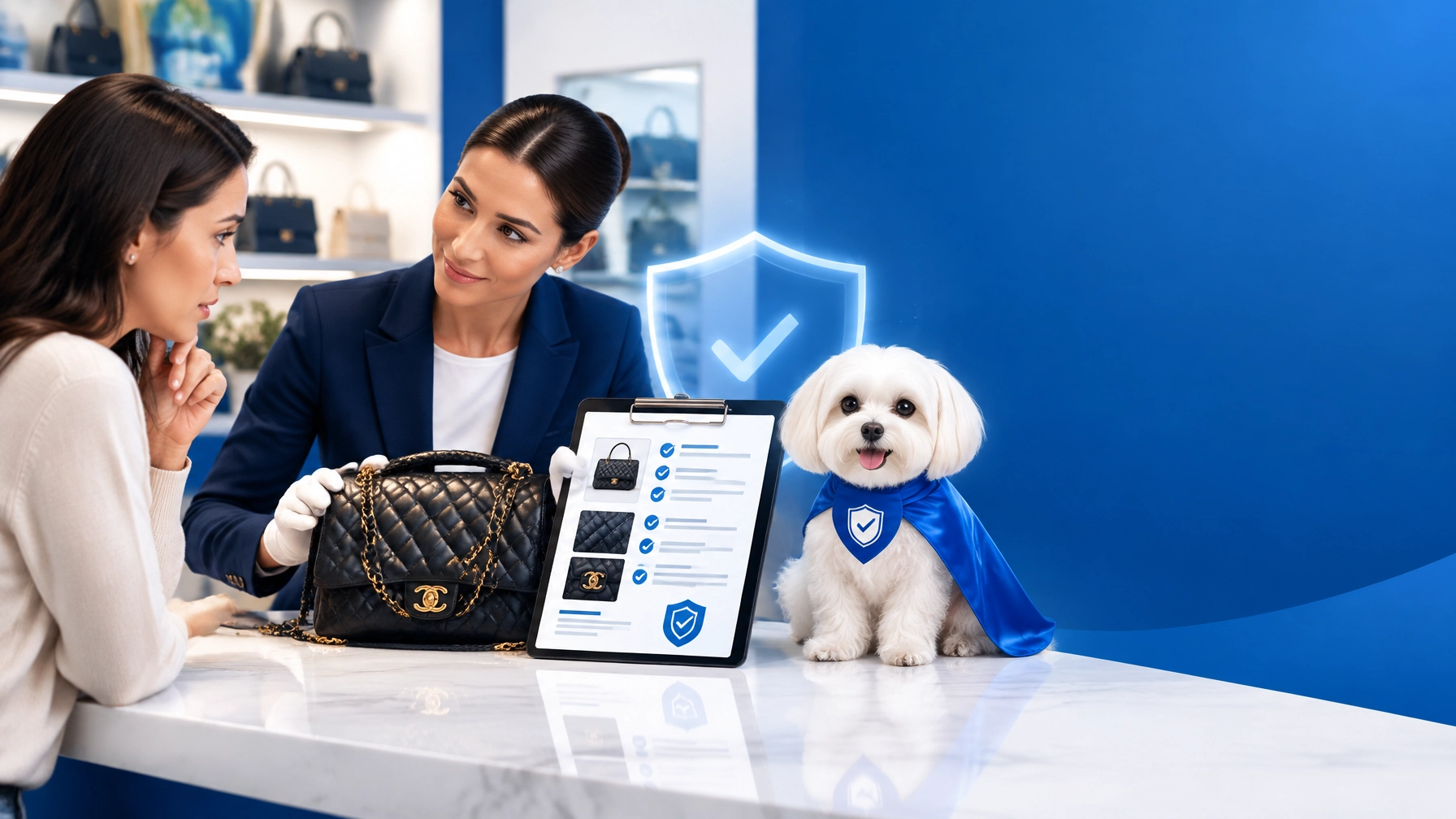
How many times a week does your customer ask, “Is this real?”
If you run a resale store, pawn shop, thrift shop, or online luxury business, you already know the answer: often.
Your response matters.
“We don’t sell fakes” sounds reassuring. It may even be true.
But it is not a counterfeit-control process.
It is a promise. And if a counterfeit slips through, that promise can become part of the problem.
Every secondhand luxury seller carries counterfeit risk
Counterfeits do not only appear in anonymous online listings or street markets. They can enter through:
- Consignment appointments
- Estate purchases
- Trade-ins
- Wholesale lots
- Online sellers
- Customer returns
- Private marketplace transactions
- Inherited collections
Luxury counterfeits are also getting harder to identify by sight alone. Packaging, serial numbers, stitching, hardware, materials, and date codes can all be copied or manipulated.
The International Trademark Association explains that counterfeit goods can appear in legitimate-looking stores, online marketplaces, social media listings, and other retail channels.
That means good intentions are not enough.
If your business sells an item as authentic and the item turns out to be fake, you may face financial, operational, legal, and reputational consequences.
What happens when a fake slips through?
One counterfeit item can create more damage than the profit from the sale.
1. The customer requests a refund
The customer paid for a genuine luxury item. If the item is determined to be counterfeit, the expected outcome is usually a refund, replacement, or other resolution.
That means you may lose:
- The sale
- The inventory cost
- Shipping expenses
- Staff time
- Inspection fees
- Future customer trust
If the item was sold as “authenticated” or “guaranteed authentic,” the dispute can become more serious because the customer relied on that representation.
2. The customer files a chargeback
A counterfeit or materially misrepresented item can lead to a payment dispute.
The customer may claim:
- Goods not as described
- Fraudulent or unauthorized representation
- Item not authentic
- Service not delivered as promised
A chargeback is not just a lost transaction. Repeated disputes can create additional pressure from payment processors, especially when authenticity complaints become a pattern.
Your business may also need to provide:
- Photos of the item
- Listing screenshots
- Purchase records
- Refund communications
- Authentication documentation
- Notes showing how the item was reviewed
If you have no records, your position is weaker.
3. A brand sends a legal letter
Luxury brands actively protect their trademarks and reputation.
A brand may send a cease-and-desist letter or other legal communication if it believes your store is selling counterfeit goods or making unsupported authenticity claims.
You may be asked to:
- Remove listings
- Stop selling specific items
- Preserve evidence
- Identify suppliers or consignors
- Provide transaction records
- Explain your authentication process
- Respond within a short deadline
A documented third-party authentication procedure does not make a business immune from legal claims. It does, however, show that your company took counterfeit prevention seriously and followed a defined process.
4. Your reputation takes the hit
Customers rarely judge a counterfeit incident in isolation.
One bad purchase can lead to:
- Negative reviews
- Social media complaints
- Lost repeat business
- Fewer consignments
- Lower customer confidence
- Damage to relationships with brand-conscious buyers
The customer may not say, “This one item was a problem.”
They may say, “That store sells fakes.”
That is the reputation problem.

Why staff eyeballing items is not a real control
Training your staff is important. It is not enough by itself.
An experienced employee may recognize common counterfeit indicators. But visual inspection has limits:
- Staff may specialize in different brands.
- New counterfeit techniques appear constantly.
- Employees can be rushed during busy intake periods.
- A familiar item can create overconfidence.
- Different employees may reach different conclusions.
- There may be no written record of what was reviewed.
- The person making the decision may not be qualified for that brand.
“Someone looked at it” is not the same as a defensible authentication workflow.
A control should be repeatable. It should identify who reviewed the item, what information was considered, what conclusion was reached, and when the decision was made.
Your team’s experience is valuable.
It should be the first layer, not the only layer.
A promise becomes a process when you document it
A stronger counterfeit-control program creates a clear path for every item.
A practical workflow can include:
-
Capture clear photos
Photograph the exterior, interior, hardware, labels, serial information, stitching, logos, and any relevant accessories. -
Submit the item online
Use a consistent authentication intake process instead of relying on informal messages or memory. -
Route the item to human experts
Authentications should escalate to qualified human experts for review. The objective is not an AI-only guess. Human experts should examine the item and the available evidence. -
Record the conclusion
Save the result, report, item number, photos, date, and reviewer information. -
Connect the report to the item
A unique identifier, report number, or item-control method can help reduce confusion and support later verification. -
Quarantine disputed items
Do not return a questionable item to inventory while the dispute is still being reviewed. -
Follow a written resolution policy
Define what happens when an item is determined to be counterfeit, including refunds, consignor communication, inventory removal, and internal escalation.
Authenticate Pro describes an online workflow that includes picture submission, pre-authentication, expert review, community input, and an administrative conclusion. The company also reports authentication conclusions at approximately 99% accuracy, based on its published authentication data.
That escalation matters.
The value is not simply speed. It is the combination of online access, specialist review, and documentation.
Human experts create confidence customers can understand
Customers do not want a vague promise.
They want evidence that someone qualified reviewed the item.
A documented authentication report gives your team something concrete to explain:
- Who reviewed the item
- What information was examined
- When the review occurred
- What the conclusion was
- How the report connects to the merchandise
- What your store’s policy is if a dispute arises
That information can also help your employees speak with confidence.
Instead of saying:
“We think it is real.”
Your staff can say:
“This item was submitted through our authentication process and reviewed by human experts. The report is connected to the item, and we can explain the next steps if you have questions.”
That is a much stronger customer experience.
ACE: Authentication · Community · Experts
Authenticate Pro’s ACE framework stands for:
Authentication · Community · Experts
This is more than a slogan.
It describes a layered approach to reducing counterfeit risk:
- Authentication: A structured process for reviewing merchandise.
- Community: Additional insight and shared knowledge that can support the review.
- Experts: Human specialists who evaluate the item and help reach the final conclusion.
The patented ACE process is designed to connect sellers, buyers, technology, and human expertise in one workflow.
That distinction matters because authentication should not be presented as an unsupported badge. It should be tied to an actual process.

Documentation becomes your legal and marketing shield
Think of authentication records as serving two purposes.
Operational protection
Documentation helps your team:
- Track high-value inventory
- Reduce internal mistakes
- Identify repeat counterfeit sources
- Handle customer disputes
- Manage returns
- Train new staff
- Apply the same standard across locations
Customer-facing value
Authentication also becomes a selling point.
You can promote:
- Third-party authentication
- Human expert review
- Report access
- Item-level tracking
- Clear dispute procedures
- Customer confidence at checkout
Clothes Mentor Reno described Authenticate Pro as a value-added service that gives customers confidence when buying high-dollar authentic goods and helps the store stand apart from competitors.
That is the marketing advantage.
You are not only trying to avoid a loss. You are showing customers why they can trust your inventory.
What your store should do next
Start with the items that create the most exposure:
- High-value handbags
- Watches
- Jewelry
- Designer footwear
- Luxury accessories
- Frequently counterfeited brands
- Items from unknown or high-risk sources
Then create a simple written policy:
- Which items require authentication?
- Who performs the initial intake?
- When is third-party review mandatory?
- How are questionable items quarantined?
- Where are reports stored?
- Who handles customer disputes?
- What is the refund process?
- How are repeat consignors reviewed?
You do not need a complicated system to begin.
You need a consistent one.
Authenticate Pro’s resale store membership program is designed for businesses that want a structured authentication process, expert review, customer-facing confidence, and documentation. You can also review available service levels and authentication options on the Authenticate Pro pricing page.
“We don’t sell fakes” is not enough
Every resale business wants to sell authentic merchandise.
The question is whether your store can demonstrate how it works to prevent counterfeits.
A promise does not identify the person who reviewed an item. It does not create a report. It does not help answer a chargeback. It does not show a brand that your team followed a repeatable process.
A documented authentication workflow does.
Do not wait for the first counterfeit dispute to build your process.
Use online authentication. Escalate items to human experts. Keep clear records. Give customers a reason to trust your inventory.
Because “we don’t sell fakes” is a statement.
A documented third-party authentication process is a strategy.
For more information, contact Authenticate Pro or review the options available for resale businesses.


Leave a Reply