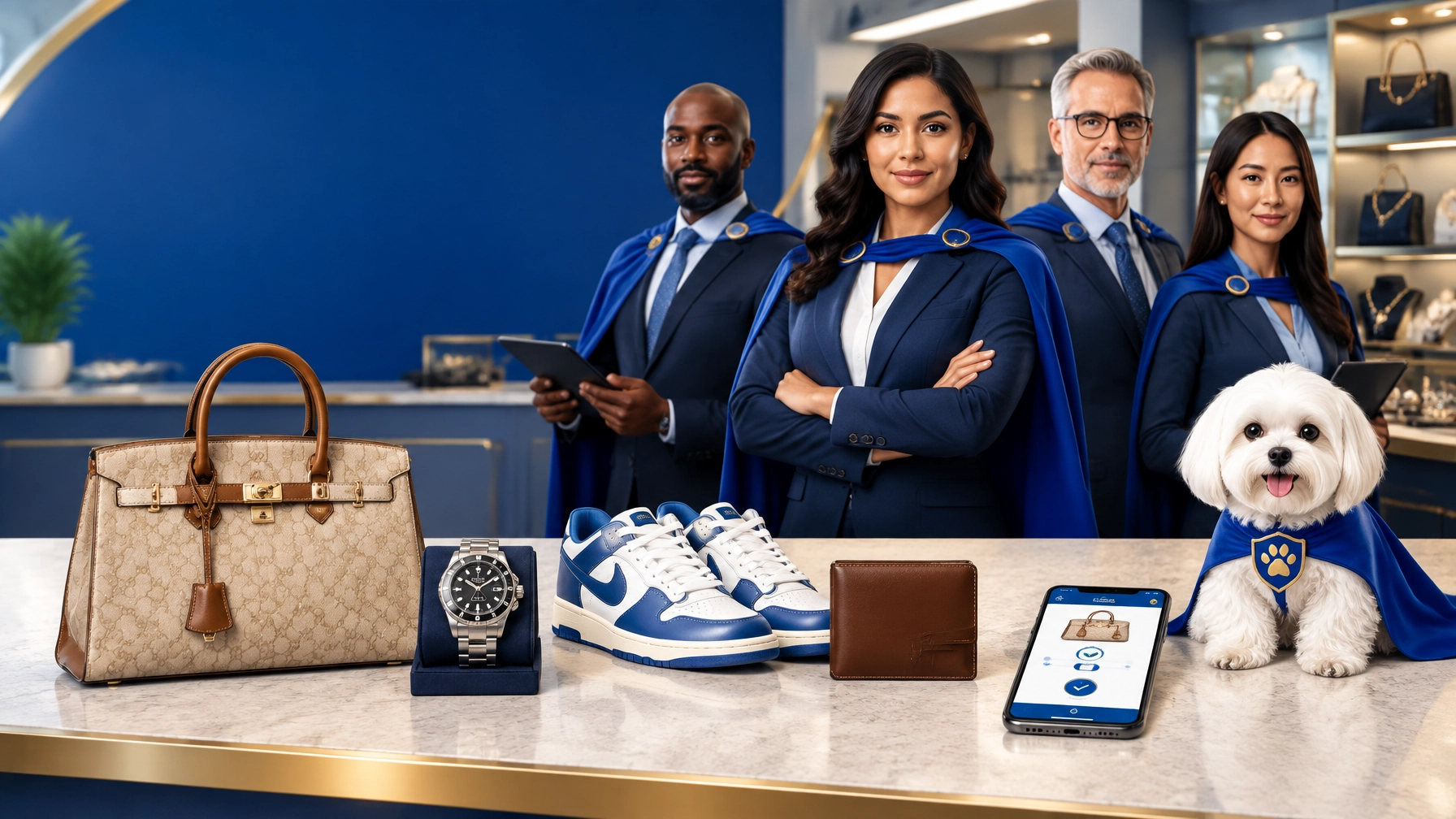
How many times a week does a customer ask, “Is this real?”
For pawn shops and resale stores, the answer can affect more than one transaction. A counterfeit purchase can mean:
- Lost cash
- Refund disputes
- Unsellable inventory
- Reputation damage
- Staff time spent investigating the problem
- A customer who no longer trusts your store
The risk is highest when buying secondhand luxury items over the counter. Counterfeiters target products that are easy to move, expensive to replace, and difficult to authenticate from one detail alone.
The most common high-risk categories include designer handbags, luxury watches, sneakers, and small leather goods.
Here is what to check at intake, and when to stop relying on a quick visual inspection.
Start With a Basic Intake Filter
Before examining the item, evaluate the transaction.
Check the three P’s
Price: Is the offer far below the expected resale value?
Packaging: Are the box, dust bag, papers, tags, or accessories inconsistent with the item?
Place: Where does the customer say they bought it? Is the story specific and plausible?
A low price does not prove an item is fake. Missing packaging does not prove it is fake. But several risk factors together should change your process.
For every high-risk item:
- Verify the seller’s identification according to your store policy.
- Ask when, where, and how the item was acquired.
- Photograph the item from multiple angles.
- Record serial numbers, date codes, model numbers, and hallmarks.
- Separate the item from regular inventory until the review is complete.
- Escalate when the value or risk justifies it.
1. Designer Handbags: Louis Vuitton, Gucci, and Chanel
Designer handbags are among the most frequently counterfeited items brought to resale counters. They also create a serious financial risk because a convincing fake can look profitable until it reaches a knowledgeable buyer.
What to check
Construction and materials
Examine the bag’s structure, texture, and overall feel.
- Does the bag hold its expected shape?
- Does the canvas, leather, or fabric match the model?
- Is there a strong chemical or plastic odor?
- Are the edges cleanly finished?
- Is the lining consistent with the brand and model?
Genuine luxury construction is usually deliberate and consistent. Fakes often reveal shortcuts in edge paint, lining, interior pockets, or structural support.
Stitching
Look closely at the stitching.
- Are stitch lengths consistent?
- Do seams run straight?
- Are corners clean?
- Are loose threads or messy back-stitches visible?
Stitching must be evaluated against the specific model and production period. Still, uneven or careless construction is a meaningful warning sign.
Logos and patterns
Inspect logos, monograms, and pattern alignment.
- Are printed patterns aligned at seams?
- Is the logo centered and correctly proportioned?
- Are fonts and spacing consistent?
- Do hardware engravings look crisp?
- Does the plating color match across the bag?
For Louis Vuitton, Gucci, Chanel, and other major brands, logo placement and pattern behavior can vary by collection and year. Do not use one online photo as the only reference.
Codes and date information
Check serial numbers, date codes, authenticity tags, and “Made in” stamps. The format and placement must make sense for the item’s brand, model, and era.
A code by itself is not proof of authenticity. Counterfeiters can copy real numbers. The code must match the bag’s construction, materials, hardware, and production details.
Intake decision
Do not fund based on a code alone. If several details conflict, hold the item for professional authentication before committing cash.

2. Luxury Watches: Rolex and Omega
Luxury watches are attractive to counterfeiters because a single transaction can represent significant value. They are also difficult to authenticate without understanding movements, references, production changes, and replacement parts.
What to check
Weight and finishing
Hold the watch. Assess its balance and feel.
- Does it feel unusually light?
- Are the bracelet and clasp solid?
- Are polished and brushed surfaces cleanly executed?
- Are the case edges sharp and consistent?
- Does the bracelet flex as expected?
Weight is only a screening tool. Some genuine models use different materials, and aftermarket parts can change the feel.
Dial and printing
Use magnification where possible.
Look for:
- Fuzzy or uneven text
- Misaligned hour markers
- Inconsistent spacing
- Incorrect logo proportions
- Poorly finished hands
- A date window that does not sit correctly
On models with a date magnifier, inspect alignment and magnification. Do not treat one feature as conclusive. Counterfeit watches can imitate individual details while failing elsewhere.
Reference and serial numbers
Check whether the reference number matches the watch’s:
- Case
- Dial
- Bezel
- Bracelet
- Movement
- Production period
A real serial number placed on the wrong watch is still a major concern. Be cautious with unusual casebacks, display backs, engravings, or combinations the brand did not use for that model.
Functions and movement
Test basic functions without forcing anything.
- Does the crown wind smoothly?
- Does the date change correctly?
- Do the hands move as expected?
- Does the clasp operate cleanly?
- Does the chronograph, if present, function properly?
A high-value watch with unclear provenance, inconsistent parts, or questionable movement behavior should not be treated as a quick buy.
3. Sneakers: Nike Air Jordan and Yeezy
Sneakers move quickly through pawn shops and resale stores. That speed creates pressure to buy before another buyer does. It also creates an opportunity for counterfeit pairs to pass through intake.
What to check
Box and label
Start with the packaging.
- Does the box match the model?
- Is the label printed correctly?
- Do the size, style code, and colorway match?
- Is the barcode consistent with the pair?
- Are the box materials and printing quality credible?
A correct box does not prove the shoes are genuine. Boxes can be swapped or purchased separately.
Shape and materials
Compare the pair with reliable references for the exact release.
Check:
- Toe-box shape
- Collar height
- Panel placement
- Leather, mesh, knit, or suede texture
- Midsole shape
- Heel structure
- Overall symmetry
Common red flags include excessive glue, uneven stitching, incorrect proportions, and materials that feel noticeably different from the expected release.
Branding and interior details
Inspect the swoosh, Jumpman, trefoil, tongue tags, heel branding, insoles, and printed fonts.
Small details matter. Look for:
- Incorrect logo shape
- Poor logo placement
- Uneven embroidery
- Wrong font weight
- Inconsistent spacing
- Misaligned tags
For used sneakers, compare the wear pattern with the seller’s story. A supposedly unworn pair with heavy sole wear, or a heavily worn pair with a suspiciously clean insole, deserves more review.
4. Small Leather Goods
Wallets, cardholders, belts, pouches, and cases are easy to overlook. They are also frequently copied because they use less material and can be sold at lower prices.
Brands such as Louis Vuitton, Gucci, Chanel, Coach, Prada, and other luxury labels appear often in this category.
What to check
Edges and finish
Examine:
- Edge paint
- Corner finishing
- Folded leather
- Card-slot alignment
- Snap and zipper quality
- Interior stitching
Counterfeit small leather goods often show rough edge paint, uneven card slots, weak snaps, or interior branding that is too shallow or poorly aligned.
Hardware and stamping
Check whether the hardware feels substantial and whether engravings are clean. Examine logo stamps for:
- Correct font
- Even spacing
- Proper depth
- Centered placement
- Consistent alignment
As with handbags, branding must match the specific model and age. A detail that is correct for one collection may be wrong for another.
Wear and provenance
Look at where the item shows wear. Genuine use usually produces a believable pattern across high-contact areas. A strange combination of heavy surface wear, perfect edges, and new hardware can indicate replacement parts or a replica.
The Safest Way to Handle a Borderline Item
A quick visual inspection is useful. It is not always enough.
That is why Authenticate Pro uses a Patented ACE workflow: Authentication · Community · Experts.
The process combines:
- Authentication: Clear photos and item details are submitted for review.
- Community: Additional qualified participants can contribute to the review process.
- Experts: Authentications escalate to human brand experts for a professional conclusion.
Daisy AI can provide a preliminary, AI-assisted finding. But high-value or questionable items should move to human review. The human expert escalation is a core part of the workflow and supports approximately 99% accuracy, based on Authenticate Pro’s reported authentication results.

This matters at intake. Your team does not need to pretend every decision can be made in seconds. A repeatable escalation process is more valuable than false confidence.
A Practical “Do Not Buy Yet” Rule
Pause the transaction when any of the following applies:
- The item is high value and the seller has no credible provenance.
- Multiple construction details conflict with the claimed brand or model.
- The serial number or date code is missing, invalid, or inconsistent.
- The packaging looks correct, but the item itself does not.
- The staff member is uncertain after inspection.
- The potential loss is greater than the cost of authentication.
Uncertainty is not a reason to guess. It is a reason to escalate.
A short authentication delay is usually less expensive than buying a counterfeit, listing it, refunding a customer, and damaging your store’s reputation.
Build Confidence Into Your Intake Process
Pawn shops and resale stores earn trust one item at a time. Customers want to know that the luxury goods on your shelves are genuine. Your employees want a clear process when a difficult item comes across the counter.
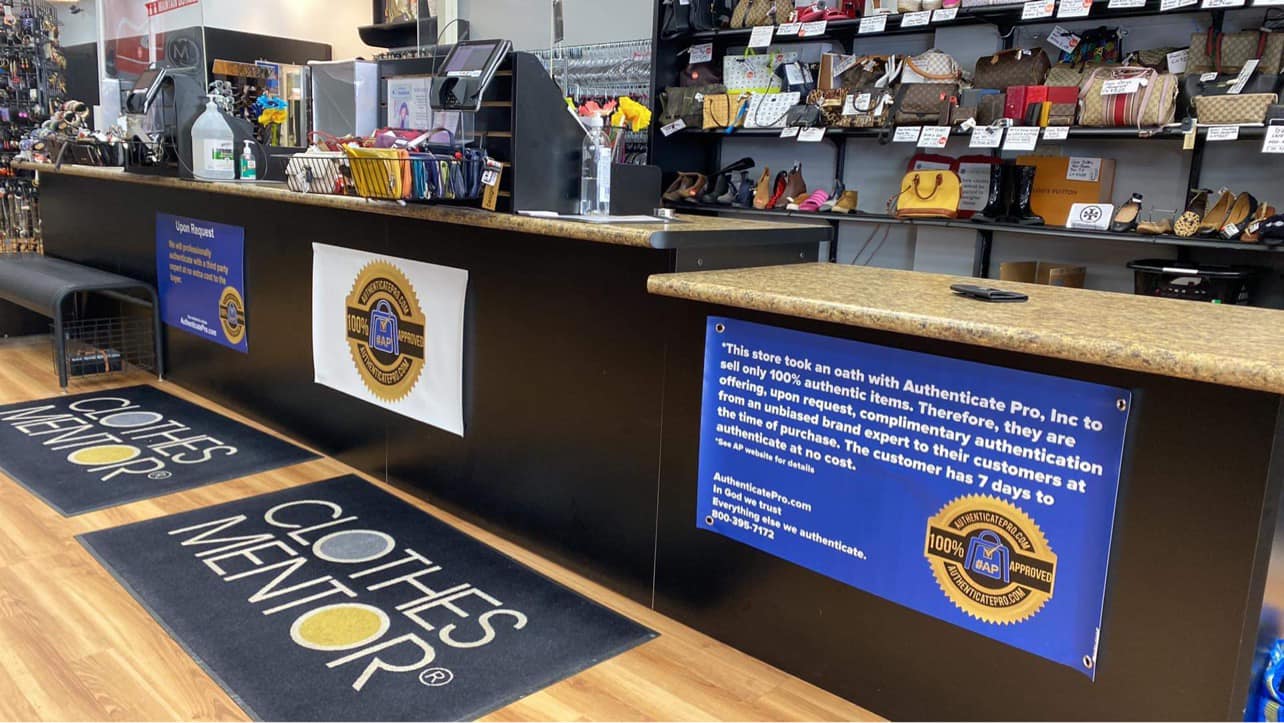
Authenticate Pro supports resale businesses with authentication services, reports, and workflow options for items including handbags, sneakers, watches, and other luxury goods. Learn more through the Authenticate Pro membership program, review available pricing options, or contact Authenticate Pro to discuss your store’s needs.
The goal is simple:
- Catch more counterfeits before you buy
- Protect your cash and inventory
- Give customers peace of mind
- Create a defensible, repeatable intake process
When the item is valuable and the answer is unclear, do not rely on a hunch. Use the checklist. Document the details. Escalate to human experts.
That is how you protect the transaction, and your reputation.
Leave a Reply