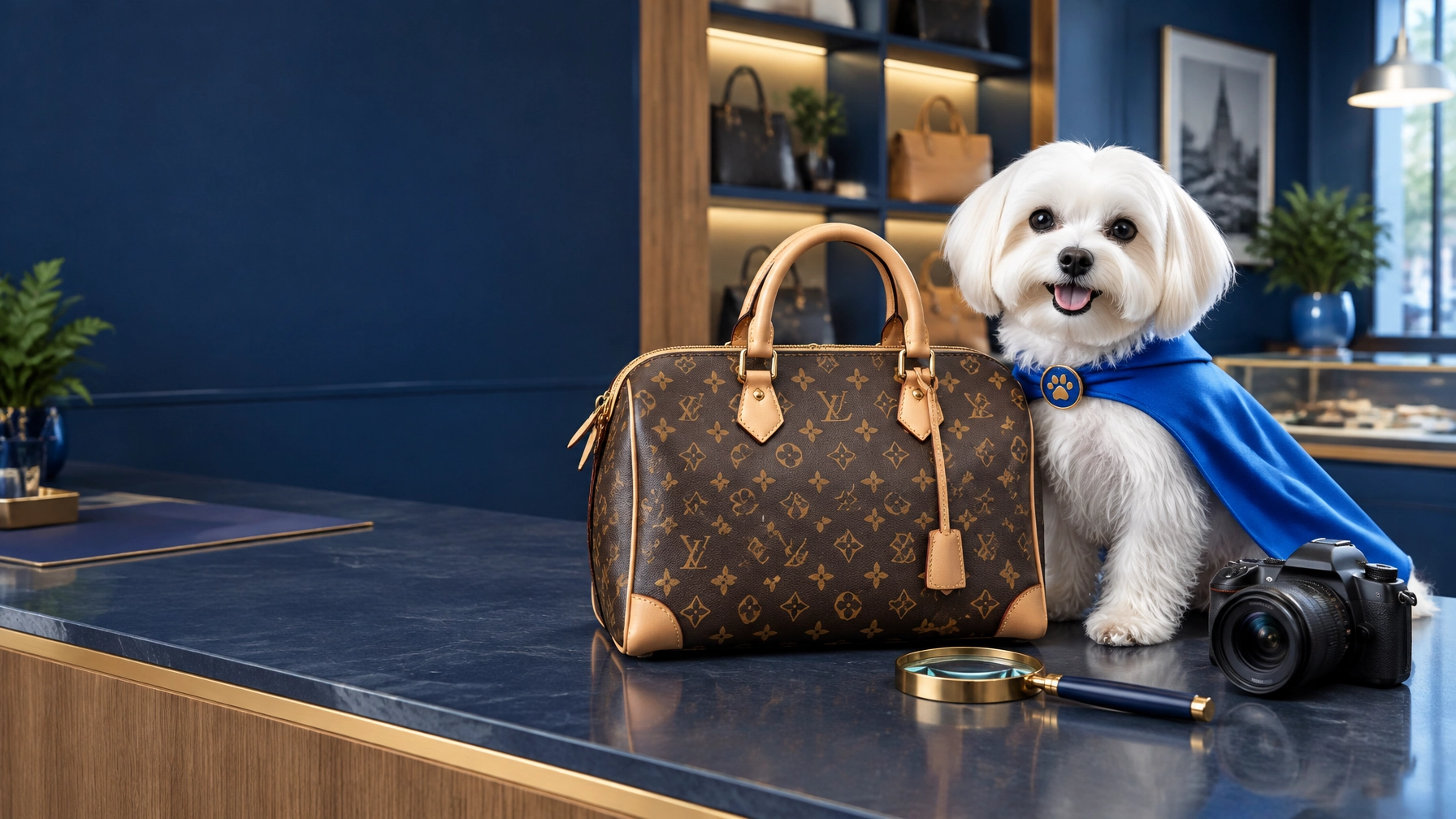
A Louis Vuitton bag can represent a strong loan or resale opportunity.
It can also represent a counterfeit liability problem.
For pawn shops, the risk is higher because inventory often comes from individual walk-ins. Staff may need to evaluate an item quickly, with limited provenance and no original receipt. That makes a consistent pawn shop authentication process essential.
The goal is not to make every employee a luxury authenticator.
The goal is to:
- Catch obvious red flags.
- Avoid making decisions based on one detail.
- Document the item properly.
- Escalate high-value or questionable pieces.
- Protect your revenue and reputation.
Why Louis Vuitton authentication matters in a pawn shop
Counterfeiters have improved. Some fakes are easy to identify. Others are superfakes designed to pass a quick visual inspection.
A counterfeit Louis Vuitton can create several problems:
- The loan or purchase may be based on inflated value.
- The item may be seized or become difficult to sell.
- A buyer may demand a refund or file a complaint.
- Your staff may lose time handling disputes.
- Your store’s reputation may suffer.
U.S. Customs and Border Protection warns that counterfeit goods can create financial, legal, and safety risks. Knowingly trafficking counterfeit goods can also carry serious federal penalties. State laws and business obligations vary, so consult qualified legal counsel for advice specific to your location.
Your best defense is a written intake policy backed by consistent documentation.
The 60-second Louis Vuitton screening
Start with a fast visual and physical review. This is a triage step, not a final authentication.
1. Check the overall feel
Authentic coated canvas typically feels structured and durable. It should not feel like thin plastic or overly glossy synthetic material.
Pay attention to the smell.
A strong chemical or plastic odor is a warning sign. It is not conclusive by itself, but it should increase scrutiny.
Also examine:
- The bag’s shape.
- The weight of the hardware.
- The flexibility of the canvas.
- The quality of the lining.
- Whether the construction matches the claimed model.
2. Inspect monogram alignment
The monogram pattern should look deliberate and balanced.
Look for:
- Consistent spacing.
- Symmetrical placement.
- Pattern alignment across seams.
- Correct orientation for the model.
- Logos that are not awkwardly cut off.
A cut-off pattern is not automatically proof of a counterfeit. Bag construction varies by style. However, repeated misalignment, reversed motifs, or visibly careless placement should stop the intake process.

3. Review stitching and edge finishing
Authentic construction is usually clean and consistent.
Check for:
- Straight stitch lines.
- Even stitch length.
- Secure thread ends.
- Consistent thread color.
- Matching construction on both sides of the bag.
- Clean edge glazing.
On many Louis Vuitton canvas pieces, stitching is commonly a muted mustard-yellow rather than a bright neon orange.
Superfakes may copy the general appearance but miss small details such as stitch count, angle, spacing, or symmetry. These details matter most around handles, tabs, corners, and high-stress points.
4. Examine the leather and patina
Many Louis Vuitton bags use untreated vachetta leather. New vachetta may appear pale beige. Over time, it typically develops a warmer honey or tan patina.
Be cautious with leather that appears:
- Glossy or plastic-like.
- Artificially darkened.
- Unevenly stained.
- Mismatched across handles and trim.
- Finished with sloppy or overly bright edge paint.
Condition can vary. Replaced handles, repairs, water damage, and heavy use are possible on authentic bags. Treat leather as one part of the overall review, not a stand-alone test.
5. Inspect hardware and engravings
Hardware should feel substantial and finished.
Look closely at:
- Zipper pulls.
- Rings and clips.
- Snap buttons.
- Buckles.
- Engraved logos.
- Color consistency.
Blurry engraving, lightweight metal, rough edges, or hardware that does not match the known model are red flags.
Do not assume that every piece of hardware must look brand new. Pre-owned luxury items can show wear. The question is whether the wear is consistent with authentic construction and the item’s condition.
6. Check the interior heat stamp
The interior heat stamp can reveal problems quickly.
Look for:
- Crisp, thin lettering.
- Clean spacing.
- Correct spelling.
- A round “O” shape.
- Consistent alignment.
- A country-of-origin marking appropriate for the item.
A thick, blurry, crooked, or incorrectly spaced stamp deserves escalation.
A heat stamp is not proof of authenticity. Counterfeiters copy stamps. Use it alongside materials, construction, hardware, pattern placement, and model-specific references.
7. Treat date codes and chips carefully
Older Louis Vuitton items may have a visible date code. Newer pieces generally transitioned to embedded NFC/RFID technology around 2021.
That means:
- A newer bag may not have a visible date code.
- A missing date code is not automatically a counterfeit.
- A date code by itself does not prove authenticity.
- A chip, if detected, is supporting information, not a complete authentication.
Counterfeiters can copy codes and add unauthorized tags. Always compare the item’s code or chip information with the claimed model, production era, materials, and construction.
For additional background, review this Louis Vuitton date-code and chip overview. It should be treated as reference material, not a substitute for professional review.
Common red flags that should pause the deal
Train staff to stop and escalate when they see several of these indicators together:
- Strong chemical smell.
- Plastic-feeling canvas.
- Crooked or inconsistent monogram placement.
- Loose threads or uneven stitching.
- Bright, incorrect-looking thread color.
- Cheap or unusually light hardware.
- Blurry interior lettering.
- Incorrect model construction.
- Nonsensical date code.
- Visible date code that conflicts with the claimed production era.
- Accessories or dust bags with poor printing.
- A price or story that seems too good to be true.
- Pressure from the customer to decide immediately.
One red flag may have an explanation. Multiple unrelated red flags are different.
Superfakes require a deeper review
A quick visual check may catch low-quality counterfeits. It may not catch a superfake.
For higher-value Louis Vuitton pieces, compare the item with a verified reference for the same or similar model and era.
Review:
- Pocket shape and placement.
- Lining color and material.
- Handle construction.
- Hardware shape.
- Zipper style.
- Stitch count at key areas.
- Heat-stamp font and spacing.
- Canvas pattern placement.
- Edge glazing.
- Country-of-origin details.
Take close-up photos before handling the item further. Photograph the front, back, bottom, interior, heat stamp, hardware, handles, date-code area, and any visible chip-related area.
Do not cut, puncture, remove, or alter the item to search for a chip.
A practical pawn shop authentication workflow
Use the same process for every luxury item.
Step 1: Document intake
Record:
- Customer identification required by your local rules.
- Claimed brand and model.
- Condition.
- Customer-provided provenance.
- Asking loan or purchase amount.
- Photos of all key details.
Step 2: Complete the basic screen
Use a written checklist covering:
- Materials.
- Pattern alignment.
- Stitching.
- Leather and patina.
- Hardware.
- Heat stamp.
- Date code or chip information.
- Overall model construction.
Step 3: Hold questionable items
Do not fund or list an item while staff are still uncertain.
Create a clear status such as:
- Approved for next step
- Pending expert review
- Declined due to counterfeit concerns
Keep the item and its documentation together.
Step 4: Escalate high-value items
This is where technology and human expertise should work together.
Authenticate Pro’s patented ACE Standards: Authentication · Community · Experts, are built around a human-centered authentication workflow. AI can support intake and routing, but authentications move to human experts for review to achieve approximately 99% accuracy based on the company’s reported authentication performance.
That escalation matters. A human expert can evaluate context, compare model-specific details, and recognize unusual construction that a simple checklist may miss.

Reduce pawn shop counterfeit liability
Authentication is only one part of risk management.
Your store should also maintain:
- A written counterfeit policy.
- Staff training records.
- Minimum review requirements for luxury brands.
- A defined value threshold for escalation.
- Photo documentation standards.
- A process for handling suspected counterfeits.
- Clear customer-facing terms.
- A process for refunds, returns, or item holds that complies with local law.
Do not rely on an “as-is” statement as your only protection. Legal outcomes depend on the facts, your representations, applicable law, and how your business handled the item.
Documented due diligence is stronger than verbal assurances.
What to tell your staff
Give employees a simple rule:
If the item fails several checks, do not take the risk. If the item passes the basic screen but carries high value, escalate it.
Your team does not need to memorize every Louis Vuitton model. They do need to know when a decision is outside their training.
That is especially important when a customer asks, “Is this real?” A confident answer based on weak evidence can become an expensive mistake.
Build a safer luxury intake process
Pawn shop authentication should be fast, repeatable, and documented.
Use the checklist for the first review. Use reference comparisons for superfakes. Use professional human experts when the value or uncertainty justifies it.
Authenticate Pro supports resale businesses with authentication services, price checks, reports, and workflow options. Review the membership program or compare current options on the pricing page.
For pawn shops, the benefit is straightforward:
- Fewer counterfeit items entering inventory.
- Better decisions on loans and purchases.
- Stronger customer confidence.
- A documented process for your staff.
- More peace of mind when Louis Vuitton walks in.

Sources and further reading
- Authenticate Pro Membership
- Authenticate Pro Pricing
- TrueFacet: How to Spot a Genuine Louis Vuitton Bag
- U.S. Customs and Border Protection: Fake Goods, Real Dangers
- USPTO: Counterfeit Goods
- Entrupy: State of the Fake Report 2024
This article provides general education and operational guidance. It is not legal advice and does not replace professional authentication or advice from a qualified attorney.
Frequently asked questions
Can a pawn shop authenticate a Louis Vuitton bag from the date code alone?
No. Date codes can be copied, and newer bags may use embedded chips instead of visible codes. Review the complete item and escalate when necessary.
Is a Louis Vuitton bag without a visible date code automatically fake?
No. Louis Vuitton began transitioning to embedded identification technology around 2021. The production era, model, construction, and other details must be considered together.
What should a pawn shop do when it is unsure?
Place the item on hold, document the details, and send it for professional review before issuing a loan, purchasing it, or listing it for sale.
Leave a Reply