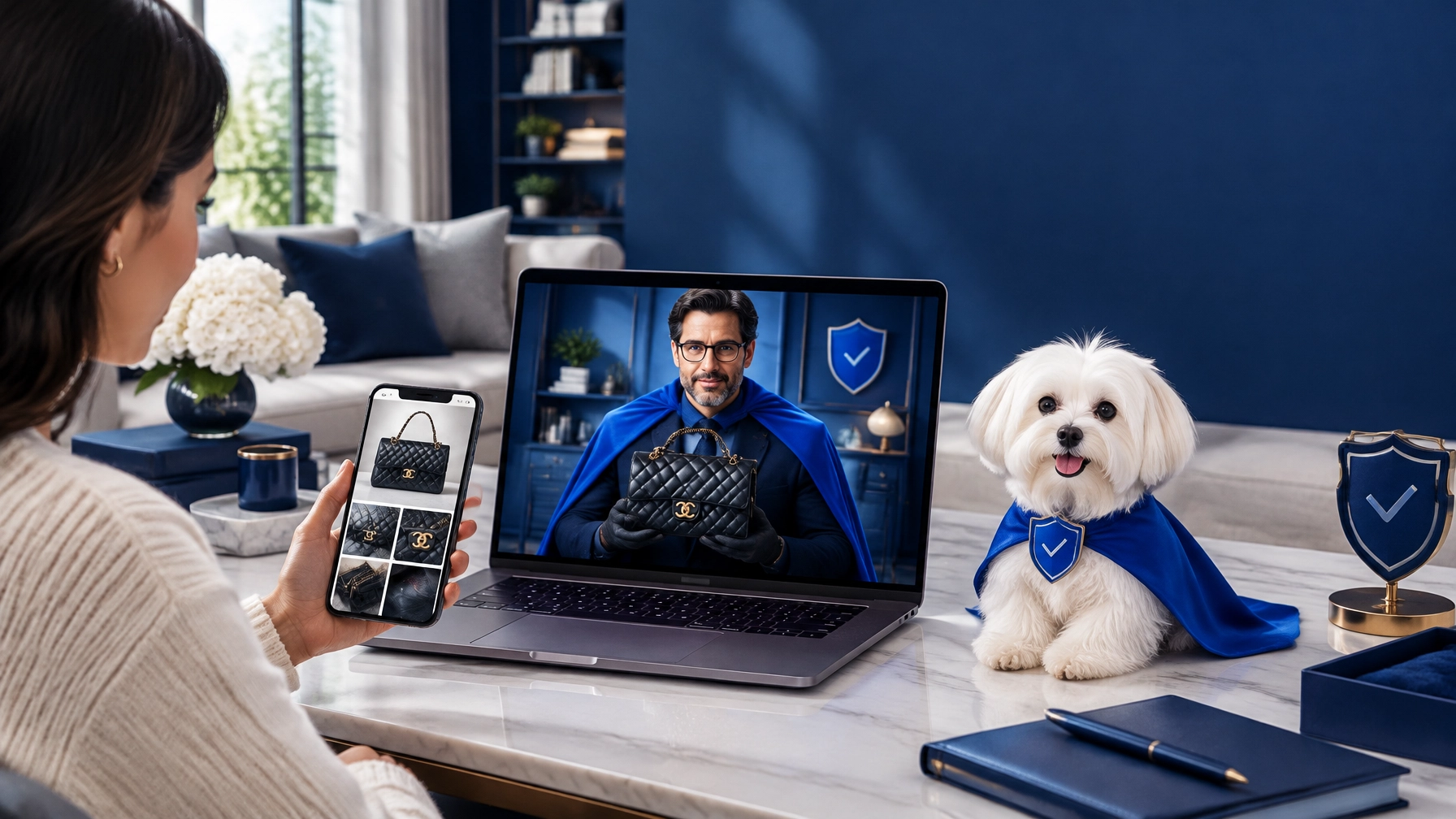
Buying luxury items online is convenient. It is also risky.

You may be bidding on a handbag, watch, pair of sneakers, or designer accessory without ever touching it. The listing may look convincing. The seller may have positive feedback. The price may seem like a great opportunity.
Then the item arrives.
The leather feels wrong. The hardware looks different. The stitching does not match. You are left with a counterfeit item, a difficult return, and money tied up in merchandise you cannot confidently resell.
For online thrifters and e-commerce resellers, virtual authentication is the practical fix. You can perform useful checks from your phone, then send detailed photos to professional authenticators before committing to a purchase or listing an item for sale.
Why “It Looks Good in Pictures” Is Not Enough
Counterfeiters understand online shopping.
They know how to use:
- Bright lighting
- Carefully chosen angles
- Stock images
- Filters and editing
- Genuine-looking packaging
- Copied serial numbers
- Photos of authentic items taken from other listings
A listing can look polished and still conceal important problems.
Photos also remove several physical checks that matter during authentication. You cannot reliably judge:
- Weight
- Smell
- Texture
- Leather quality
- Metal composition
- Internal construction
- Watch movement
- Stone quality in fine jewelry
That does not make remote authentication useless. It means you need a structured process and professional review for higher-value items.
Step 1: Check the Seller Before Studying the Item
Start with the transaction, not the logo.
Review the seller’s:
- Feedback history
- Account age
- Return policy
- Communication style
- Other listings
- Payment requests
Be cautious when you see:
- A price far below the normal resale range
- A new account selling many luxury items
- Multiple “brand-new” items at unusually low prices
- Vague descriptions
- Pressure to pay immediately
- Requests to move communication or payment off-platform
- Refusal to provide additional photos
- No returns or no buyer protection
A low price does not prove an item is fake. It does raise the level of due diligence required.
If the seller will not provide basic information, walk away. You should not have to chase someone for the images needed to evaluate an expensive item.
Step 2: Review the Listing Photos for Red Flags
Before asking for more photos, inspect what is already available.
Warning signs in listing images
Stock photos only
If the seller uses brand photos or images found elsewhere online, you may not be looking at the actual item.
One angle only
A single front-facing photo hides the interior, bottom, corners, hardware, and construction details.
Blurry close-ups
Blurred images can conceal poor stamping, incorrect fonts, messy stitching, or damaged hardware.
Heavy filters
Color filters may hide discoloration, edge wear, leather texture, or inconsistent materials.
Inconsistent backgrounds
Different lighting and backgrounds across listings may suggest recycled images or multiple sources.
Missing details
A luxury listing should normally show the areas buyers need to inspect. If the seller avoids logos, tags, codes, or hardware, treat that as meaningful.

Step 3: Ask the Seller for the Right Photos
Do not simply ask, “Is this authentic?”
Ask for specific images instead.
Request clear, unfiltered photos in natural light showing:
- Front, back, sides, and bottom
- Interior lining and pockets
- Brand logo and interior stamp
- Serial number, date code, or style code
- Hardware, zippers, clasps, and engravings
- Stitching at handles, corners, and stress points
- Seams, edge paint, and lining
- Included cards, dust bags, boxes, or receipts
- A short video rotating the item, when possible
For a bag, ask the seller to photograph the inside base, pockets, handle attachments, corners, and date-code area.
For shoes, request the size tag, insole, outsole, stitching, box label, and both shoes together.
For watches, ask for the dial, caseback, clasp, serial area, movement documentation, and any service records. Remember that a photo cannot confirm movement condition or metal composition.
For jewelry, request close-ups of hallmarks, settings, clasps, stamps, stones, and any paperwork. A professional may still need an in-hand inspection.
Step 4: Compare Multiple Details: Not Just One Code
Counterfeiters can copy individual features.
A serial number can look correct and still appear on a counterfeit item. Packaging can be genuine but paired with a fake product. A receipt can be altered or belong to another item.
Look for consistency across several details:
- Logo shape and spacing
- Font and stamp depth
- Stitching pattern
- Hardware shape and finish
- Pattern alignment
- Edge paint
- Material texture
- Code format and placement
- Manufacturing details for the model and production period
One minor flaw may reflect age or wear. Several unrelated inconsistencies are more concerning.
When researching a model, compare the listing against official brand references and trusted resale examples. Confirm the correct dimensions, materials, hardware, lining, and model details before making an offer.
The Limits of DIY Remote Authentication
Self-checks are valuable. They help you reject obvious risks and ask better questions.
They do not turn you into a brand expert.
Luxury brands change materials, hardware, fonts, tags, and production details over time. Vintage pieces may have legitimate differences from newer versions. Regional variations and repairs can also affect an item’s appearance.
DIY research can miss:
- High-quality counterfeit construction
- Replaced or mixed components
- Correct codes placed on the wrong item
- Subtle differences in leather or canvas
- Internal construction problems
- Category-specific issues with watches and jewelry
The goal is not to force every listing into a “real” or “fake” conclusion from a phone screen. The goal is to identify risk and escalate uncertain items before money or reputation is on the line.
How Professional Photo Authentication Works
A professional remote authentication service reviews the evidence systematically.
The typical process looks like this:
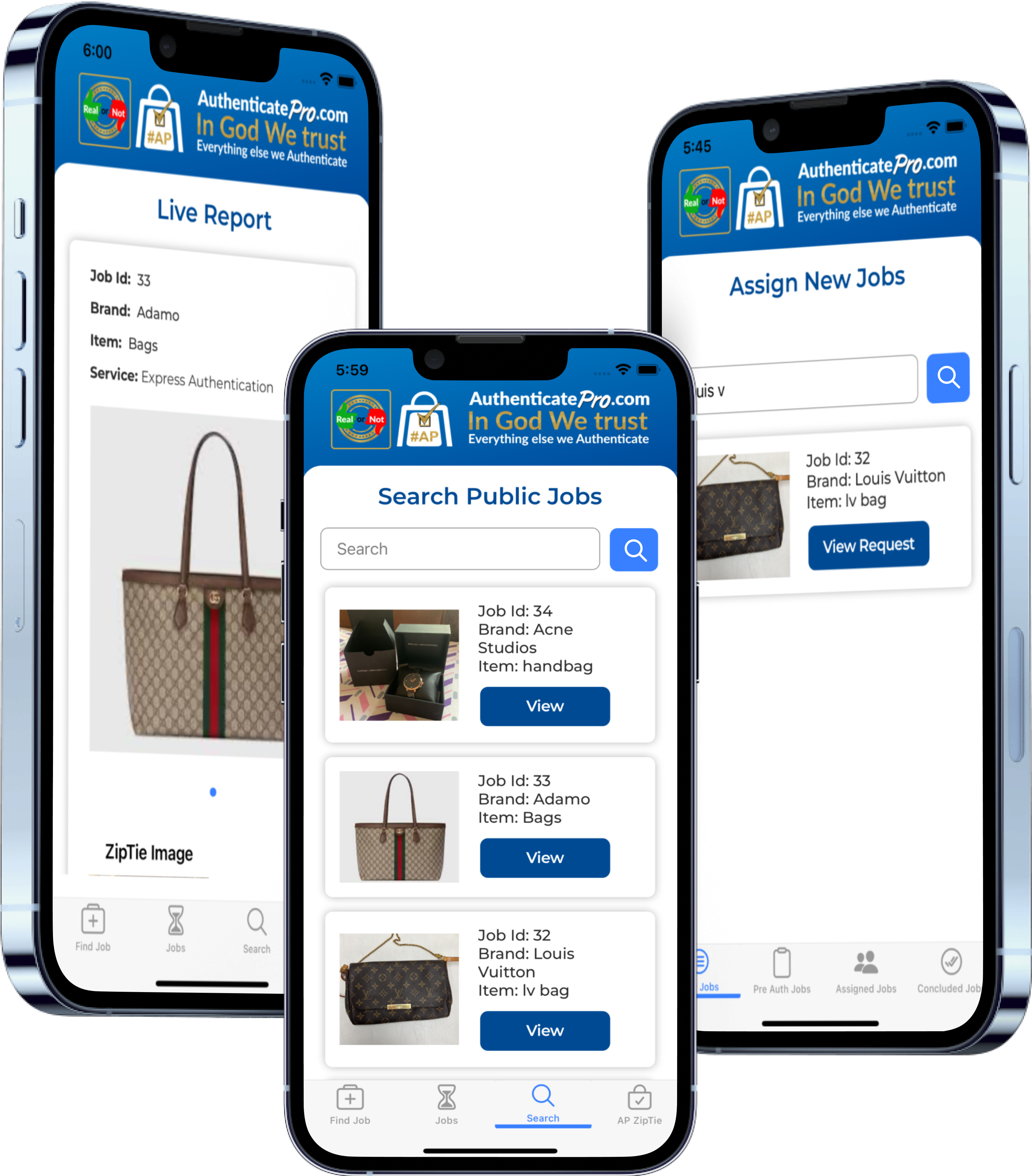
- Upload clear photos through the service or app.
- Provide item details, including brand, category, model, purchase source, and price.
- Add requested close-ups if the initial images do not show enough detail.
- Receive a preliminary review or authentication result.
- Escalate the authentication to human experts for a deeper evaluation when required.
- Review the final conclusion or report before buying, listing, or selling.
Authenticate Pro’s process combines technology, community input, and trained reviewers. The service is built around ACE: Authentication · Community · Experts.
That means technology can help organize information and support an initial review. Authentications escalate to human experts to achieve approximately 99% accuracy. This human escalation is critical when the item has a high value or the evidence is mixed.

Authenticate Pro describes its authentication process as a patented process that connects buyers, sellers, advanced systems, and human expertise. You can learn more about the workflow on the Authenticate Pro home page.
When Should You Use Virtual Authentication?
Use professional authentication when:
- The item is expensive
- You are buying before seeing it in person
- The seller cannot answer detailed questions
- Photos show conflicting information
- The listing price is unusually low
- You are reselling the item
- Your customer expects proof of authenticity
- A counterfeit could damage your store’s reputation
For everyday lower-value items, you may start with your own screening process. For luxury pieces, professional review is often less expensive than one bad purchase.
Authenticate Pro offers several service options. Depending on the service, current turnaround times range from approximately 15 minutes to 48 hours. Review the latest options and pricing on the Authenticate Pro pricing page.
A Practical Remote Authentication Checklist
Before you buy or list a luxury item, ask:
Seller
- Does the seller have a credible history?
- Is the payment protected?
- Are returns clearly explained?
- Will the seller provide extra photos?
Listing
- Are the photos of the actual item?
- Is the price realistic?
- Are the description and images consistent?
- Are important areas missing or obscured?
Item
- Do the logo, stitching, hardware, and materials match?
- Does the code format fit the brand and production period?
- Do the included documents match the item?
- Are there multiple warning signs?
Professional review
- Is the item valuable enough to justify authentication?
- Can you upload detailed photos?
- Does the service use brand-specific experts?
- Does the process escalate to human experts?
- Will you receive a report or documented conclusion?
If you cannot answer these questions confidently, pause the transaction.
The Best Protection for Online Resellers
Remote authentication is not about slowing down your business. It is about making better decisions before a counterfeit creates a bigger problem.
A professional result can help you:
- Avoid purchasing fake inventory
- Price authentic items more confidently
- Give buyers greater peace of mind
- Reduce authenticity disputes
- Protect your store’s reputation
- Create a more consistent sourcing process
Authenticate Pro’s reseller membership program is designed for resale businesses that need repeatable authentication support. The company works with resale stores and online sellers that want to know what they are buying, what they can sell it for, and how to answer the question customers ask most:
“Is this real?”
Authenticate Before You Commit
You do not need to leave your living room to perform a strong first review of a luxury item.
Start with the seller. Inspect the listing. Request the right photos. Compare multiple construction details. Then send the item to professional authenticators when the value or risk justifies it.
The most reliable approach combines your judgment with technology, community insight, and human expertise.
That is the purpose of ACE: Authentication · Community · Experts.
When the item matters, do not rely on “it looks good in pictures.” Get the evidence reviewed before you buy, sell, or promise authenticity to your customer.
For questions about remote authentication, contact Authenticate Pro at 800-395-7172 or visit authenticatepro.app.
Leave a Reply