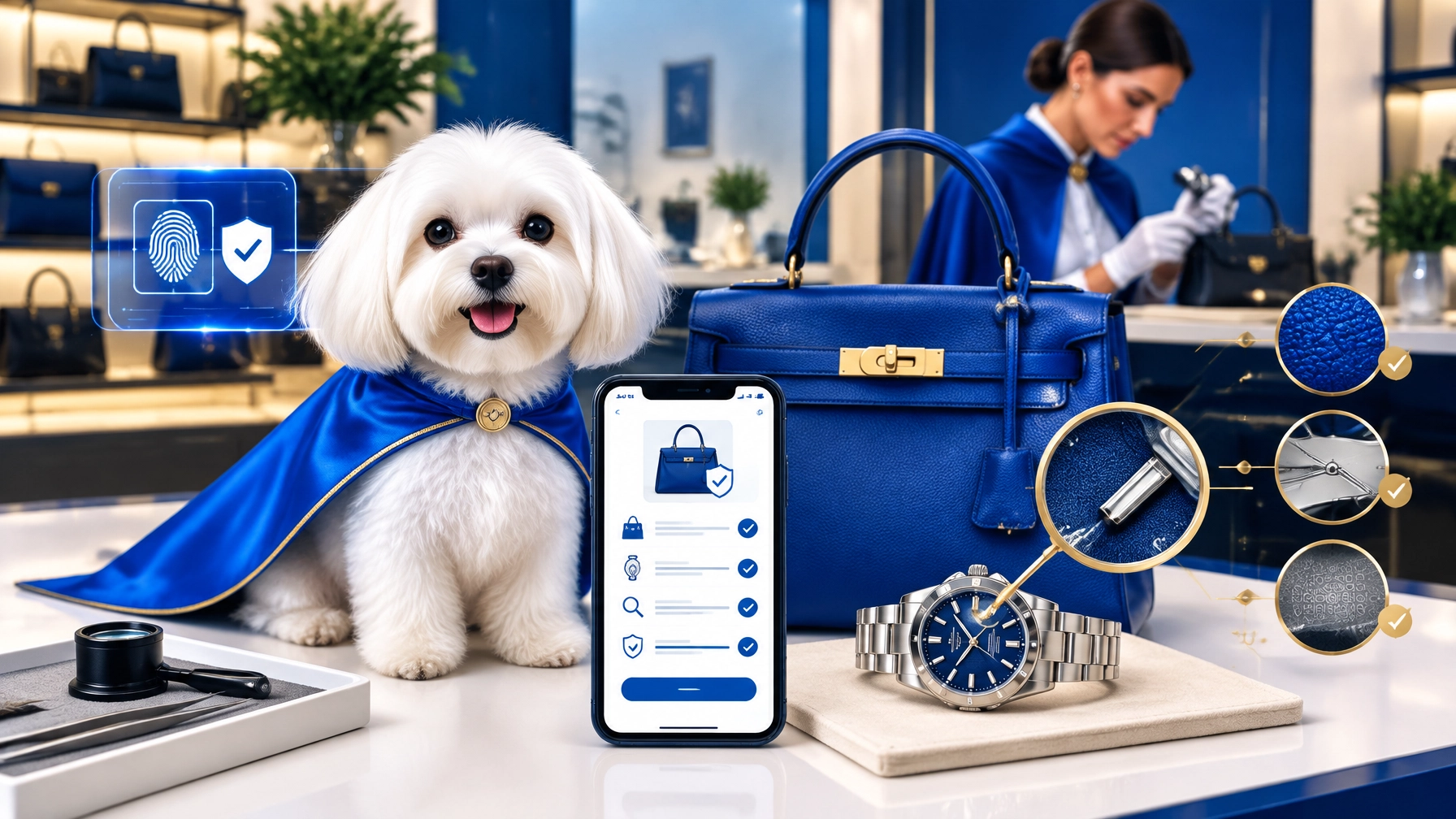
How many times a week does a customer ask, “Is this real?”
For resale stores, pawn shops, and online sellers, that question is not going away. It is getting harder to answer with confidence.
Counterfeiters now produce superfakes that copy more than logos. They imitate materials, stitching, hardware, packaging, serial formats, and even digital features. A quick visual inspection is no longer enough.
The solution is a stronger process:
- Use technology for speed.
- Review the item carefully.
- Escalate suspicious or unclear items to human experts.
- Document the result before the item reaches a customer.
That is the foundation of reliable counterfeit detection in 2026.
Why superfakes are a serious resale problem
Superfakes are high-grade counterfeits designed to look and feel close to authentic luxury goods. Some are difficult to separate from genuine items without detailed brand knowledge, strong reference data, and careful inspection.
The financial risk is obvious.
The OECD and EUIPO estimated that counterfeit and pirated goods represented approximately $467 billion, or 2.3% of global trade, based on 2021 customs data published in 2025. Luxury handbags, footwear, watches, jewelry, and apparel remain major targets.
The resale market is especially exposed because inventory often comes from:
- Private sellers
- Estate purchases
- Trade-ins
- Online marketplaces
- Auctions
- Consignment arrangements
- International suppliers
The seller may not know an item is fake. Your business is still the one facing the customer, the refund request, and the reputation damage.
Entrupy’s 2026 State of the Fake report, covering 2025 activity, reported that approximately 8.1% of luxury items analyzed were classified as unidentified or potentially counterfeit. That is roughly 1 in 12 items entering a professional authentication pipeline.
The message is simple:
If you sell luxury goods, you need a repeatable authentication process.

Why the old “eye test” is not enough
A trained employee can catch obvious warning signs. That is useful. It is not a complete counterfeit detection system.
Superfakes may have:
- Consistent-looking stitching
- Correct-looking logos
- High-quality leather or synthetic materials
- Realistic packaging
- Plausible date codes or serial information
- Hardware that appears correct
- Replicated NFC or authenticity features
- Professionally edited receipts or purchase records
A single detail rarely proves an item is authentic.
A receipt can be fake. A serial number can be copied. An authenticity chip can be present in a counterfeit item. Even a good-looking logo is only one part of the review.
That is why professional authentication must examine the item as a whole.
What a reliable authentication workflow looks like
A strong workflow should be easy for staff to follow and clear enough for customers to understand.
1. Capture complete item photos
Start with clear, well-lit photos.
Depending on the category, the request may need:
- Front and rear views
- Interior lining
- Brand stamp
- Hardware
- Stitching
- Date code or serial area
- Zippers and closures
- Bottom and corners
- Labels and tags
- Packaging and accessories
- Signs of wear or repair
Poor photos create uncertainty. Good photos give the reviewer useful evidence.
2. Use AI as an assisting layer
AI can help organize submissions and identify visual patterns quickly. It can support a preliminary finding and make the process more efficient.
But AI should not be treated as the only decision-maker for a high-value item.
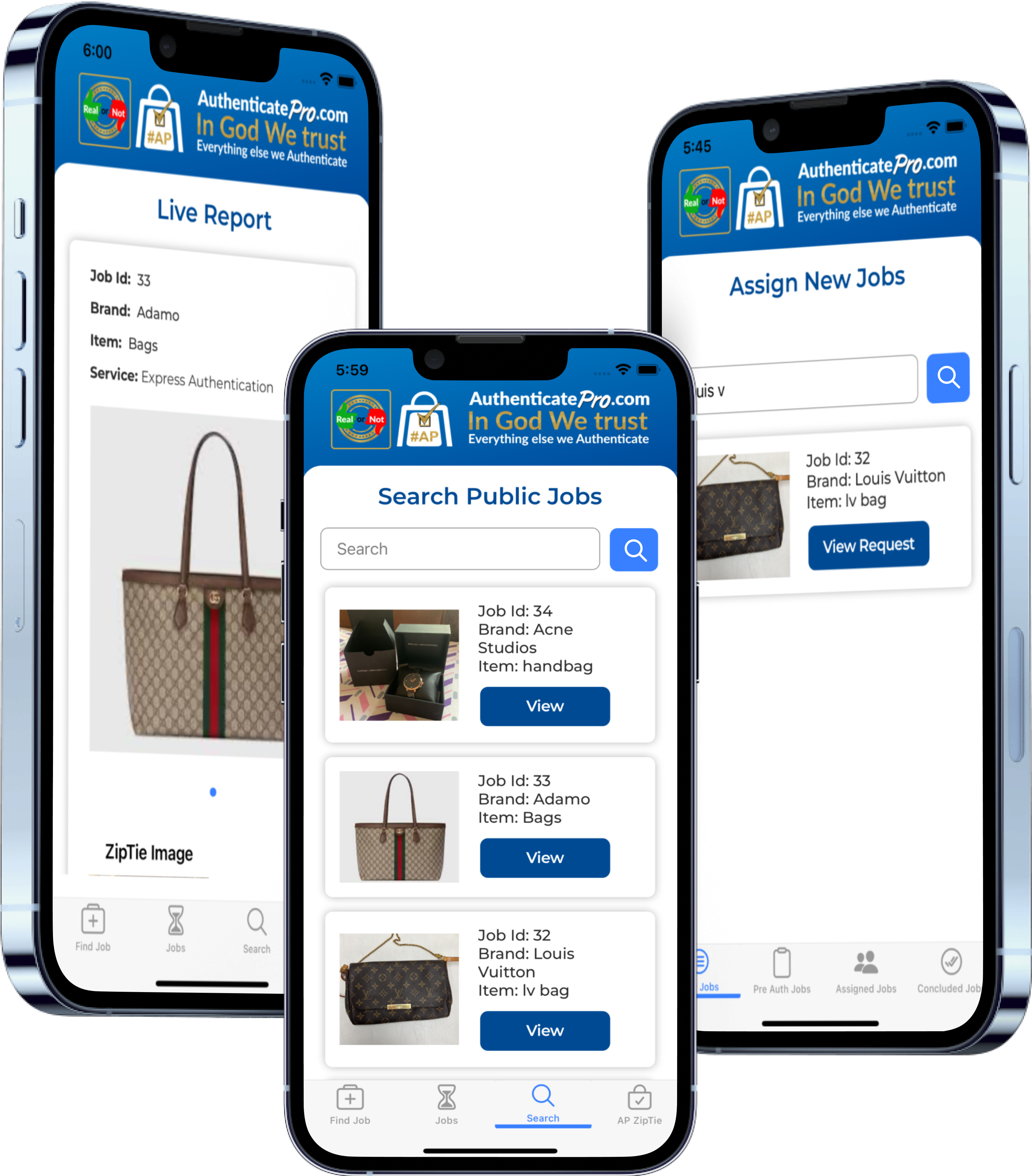
Daisy AI can assist with preliminary findings. When an item looks suspicious, unusual, or difficult to determine, it should move to the next level of review.
3. Escalate suspicious items to human experts
This is the step that matters most.
Suspicious, high-value, or ambiguous items should escalate to human experts. Expert review adds brand-specific knowledge, judgment, and context that a single image model may not capture.
Authenticate Pro’s published materials report approximately 99% accuracy based on its last 2,000 authentication conclusions. The key is not just the number. It is the workflow behind it:
- Technology helps process requests.
- Brand experts review the item.
- Unclear cases receive additional attention.
- The conclusion is documented.
This human escalation helps protect businesses from relying on an automated “yes” when the correct answer should be “needs expert review.”
Five warning signs that should trigger a closer review
These signs do not automatically prove an item is fake. They do justify additional review.
1. The price is unusually low
A below-market price can be legitimate. It can also be a warning.
Ask:
- Does the price make sense for the condition?
- Is the seller offering a believable explanation?
- Does the item match current and historical market pricing?
- Is there pressure to complete the transaction quickly?
2. The provenance is vague
“Bought from a friend” is not proof of authenticity.
Look for consistent details about:
- Original purchase location
- Previous ownership
- Receipts
- Storage history
- Repairs
- Alterations
- Included accessories
Provenance supports an authentication decision. It does not replace one.
3. Multiple small details feel wrong
Superfakes are built to pass a casual inspection. Small inconsistencies may be the only warning.
Review:
- Font spacing
- Logo placement
- Stitch density
- Edge paint
- Engraving depth
- Hardware color
- Interior construction
- Material texture
- Alignment of patterns
One issue may be a manufacturing variation. Several issues together deserve escalation.
4. The item has unusual packaging or tags
Packaging is often copied. Tags can be replaced. Dust bags can be purchased separately.
Do not authenticate an item based on its box, card, or dust bag alone.
The item itself must support the conclusion.
5. The seller resists inspection
A legitimate seller may have questions. That is normal.
A serious warning sign is pressure to skip photos, avoid a review, remove a security tag, or list the item immediately.
Do not let urgency replace process.
What resale stores and pawn shops should do differently
Your goal is not to inspect every employee the same way. Your goal is to build a system that works even on a busy day.
Create a simple intake policy:
- No high-value luxury item is listed before authentication.
- No employee makes a final decision from one clue.
- Unclear items move to human expert review.
- The item, photos, report, and transaction details stay connected.
- Customers receive clear information about the authentication process.
For physical stores, a controlled identifier such as an AP ZipTie can help connect the item to its report and reduce return fraud. For online stores, photograph the identifier before listing and keep it intact through fulfillment.
Authenticate Pro offers several service levels, including Mini Check, Quick Check, Express Authentication, and Level 2 Authentication. Review the current pricing and service options before choosing a workflow for your inventory.
How to build customer confidence without overpromising
Customers do not need a complicated explanation. They need a clear answer and a process they can trust.
Use direct language:
“This item was professionally reviewed before listing.”
If the result is unclear, do not force a yes or no. The correct business decision may be to hold the item, request more information, or decline the purchase.
That protects:
- Your customer
- Your inventory budget
- Your chargeback position
- Your online reviews
- Your store reputation
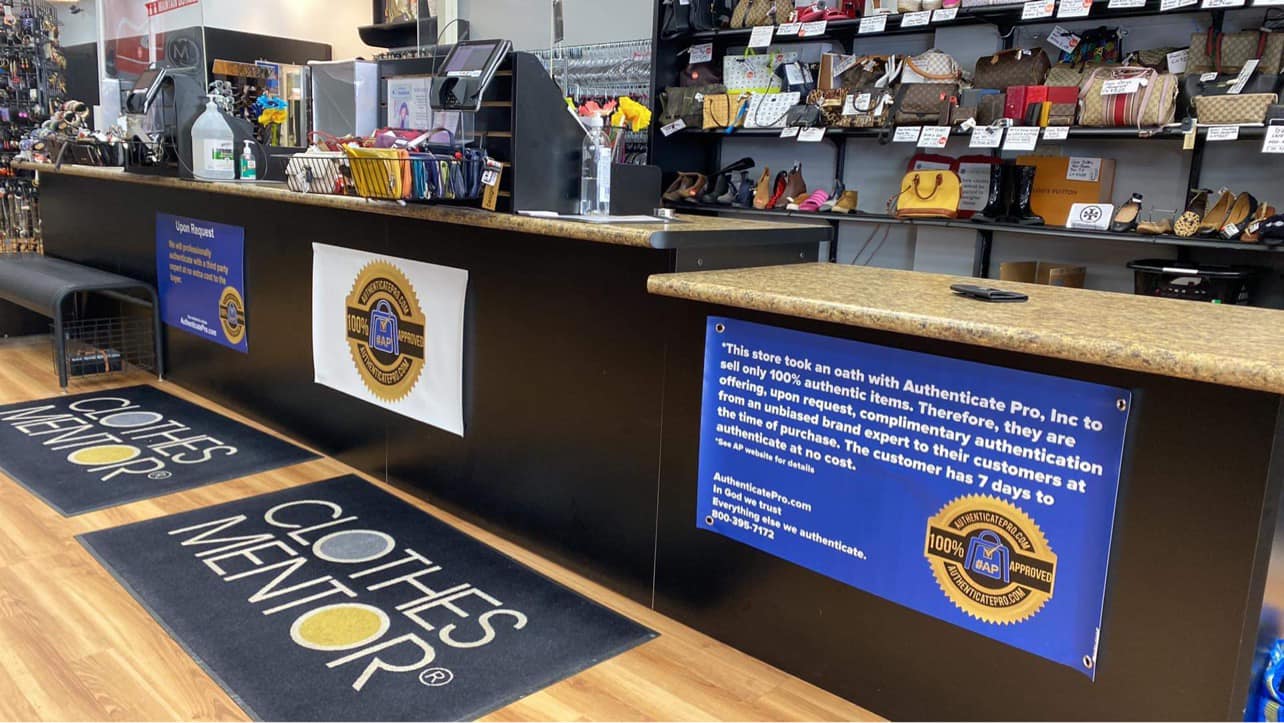
Clothes Mentor has described Authenticate Pro as a value-added service that gives customers confidence when purchasing high-dollar brand-name goods and helps differentiate the store from competitors.
That is the practical benefit of professional authentication. It is not only about rejecting fakes. It is about making legitimate inventory easier to sell.
The 2026 standard: layered review, not guesswork
The counterfeit market will keep changing. New materials, better replicas, and more convincing digital documentation will make casual inspection less reliable.
Your process needs to change with it.
Use this simple model:
- ✅ Screen quickly with guided photos and technology
- ✅ Review brand-specific details
- ✅ Escalate suspicious items to human experts
- ✅ Keep a report tied to the item
- ✅ Use identifiers when available
- ✅ Train staff to pause when something does not add up
- ❌ Do not rely on price, packaging, or one serial number
- ❌ Do not list high-value items based on a quick glance
- ❌ Do not let customer pressure override your process
Authenticate Pro’s patented authentication process connects sellers and buyers with technology and human expertise. The company supports authentication for resale stores, pawn shops, and online sellers through its membership program.
Stay ahead before the next questionable item arrives
Superfakes are getting better. Your process must get stronger.
If you sell luxury goods, the question is not whether counterfeit inventory can reach you. It is whether your team can identify the risk before the item reaches your customer.
Start with three actions:
- Create a written intake and authentication policy.
- Require professional authentication for suspicious and high-value items.
- Escalate uncertain cases to human experts for approximately 99% accuracy in the Authenticate Pro workflow.
That is how you protect revenue, reduce avoidable returns, and give customers a reason to buy with confidence.
Visit Authenticate Pro to learn more about professional authentication for your business.
Frequently asked questions
What are superfakes?
Superfakes are high-quality counterfeit luxury items designed to closely imitate authentic products, including materials, construction, hardware, packaging, and digital features.
Can AI detect every counterfeit?
No. AI can assist with preliminary findings and identify patterns quickly. Suspicious or unclear items should escalate to trained human experts for a final professional review.
Why is human expert escalation important?
Human experts add brand-specific knowledge and judgment. They can review context and inconsistencies that may not be clear from automated image analysis alone.
Is a receipt proof that a luxury item is authentic?
No. Receipts, packaging, tags, serial numbers, and authenticity chips can be copied or transferred. They should be reviewed as supporting evidence, not as standalone proof.
How can a resale store start using professional authentication?
Begin by identifying the brands and categories that create the highest financial risk. Then establish a repeatable photo process, choose an authentication service, and train staff to escalate uncertain items before listing or purchasing them.
Sources
- OECD–EUIPO: Mapping Global Trade in Fakes 2025
- Entrupy: State of the Fake Report 2026
- BCG: How Luxury Brands Can Counter the Rise of Superfakes

Leave a Reply