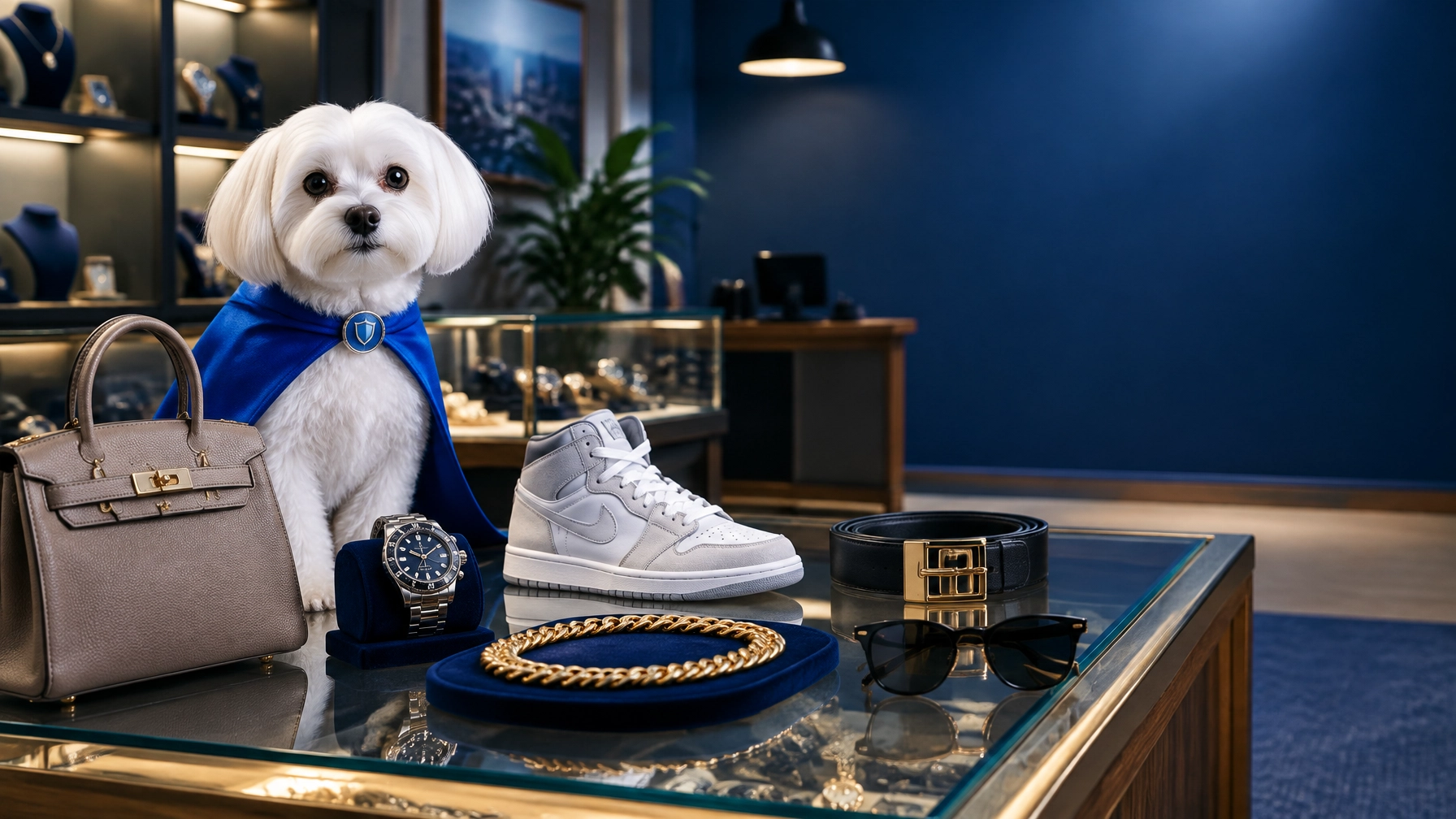
How many times a week does a customer ask, “Is this real?”
For pawn shops, the question is more than a sales objection. A counterfeit item can mean:
- Lost inventory dollars
- Refunds and chargebacks
- Damaged customer trust
- A damaged local reputation
- Legal exposure from selling counterfeit goods
Counterfeiters are also getting better. Today’s superfakes can copy logos, packaging, serial numbers, and construction details well enough to fool an experienced buyer during a quick inspection.
That is why pawn shop authentication needs a repeatable process. Use fast screening at intake. Escalate uncertain or high-value items to professional authentication before you buy, loan against, or list them.
The Most Commonly Faked Items in Pawn Shops
1. Designer Handbags and Leather Goods
Designer handbags are among the highest-risk items for pawn shops. Common targets include luxury handbags, wallets, backpacks, and small leather goods.
A bag can look excellent at first glance and still be counterfeit.
Red flags to check quickly
- Misaligned monograms or patterns
- Incorrect logo spacing or font
- Uneven stitching or loose threads
- Rough, bubbling, or cracked edge paint
- Lightweight or poorly finished hardware
- Generic zippers or weak zipper pulls
- Incorrect interior tags or date-code formats
- Materials that feel plasticky, overly stiff, or inconsistent
- Receipts, dust bags, or packaging that do not match the item
A serial number or date code is not proof of authenticity by itself. Counterfeiters often copy real numbers from authentic products.
The better approach is to compare the complete item against known authentic references. Inspect the logo, materials, construction, hardware, interior, and provenance together.

2. Luxury Watches
Luxury watches are valuable, compact, and easy to resell. That makes them a common target for counterfeiters.
A fake watch may imitate the exterior well while using the wrong movement, materials, or internal components.
Fast watch authentication checks
- Compare the reference and serial numbers
- Inspect engraving depth, font, and placement
- Check the dial printing under magnification
- Look for misaligned markers or date windows
- Test the hands, crown, and complications
- Evaluate the bracelet, links, clasp, and finishing
- Compare the weight to a verified example
- Review warranty cards, service records, and receipts
For many high-value watches, movement inspection is critical. A watch may have a convincing case and dial but contain a generic or incorrectly configured movement.
Do not rely on a box and papers, either. Counterfeit packaging and documentation can be purchased separately and paired with fake watches.
When the item is expensive or the details do not line up, pause the transaction. A professional watch specialist can inspect details that a general intake employee may not recognize.
3. Sneakers and Limited-Release Footwear
Sneaker counterfeits are no longer limited to obvious, low-quality replicas. Superfakes can closely match authentic releases in color, shape, and packaging.
High-demand sneakers are especially vulnerable because buyers may be willing to pay hundreds or thousands of dollars for a limited release.
Check these details first
- Box label, style code, size, and colorway
- Barcode or UPC consistency
- Toe-box height and overall shape
- Heel curve and collar construction
- Stitching density and panel alignment
- Glue marks or excess adhesive
- Insole printing and placement
- Outsole pattern and logo details
- Material texture and chemical odor
A box can be authentic while the shoes inside are not. Always match the box details to the actual pair.
Also remember that authentication apps, barcode scans, and visual searches are screening tools. They can help identify obvious issues, but they should not replace a qualified review for a high-value transaction.
4. Jewelry, Gold, and Gemstones
Gold and jewelry are core pawn-shop inventory. They are also frequent targets for plating, substitution, and misrepresentation.
A piece marked “14K” or “18K” is not automatically genuine. Hallmarks can be copied, altered, or applied to the wrong metal.
Counterfeit detection checks
- Inspect karat stamps and maker’s marks
- Weigh the item and consider its expected density
- Use a magnet as an initial screen
- Perform appropriate acid or electronic testing
- Use XRF analysis when available
- Inspect stones under magnification
- Check prongs, settings, and finishing
- Review documentation for high-value diamonds or gemstones
A magnet test alone is not enough. Some fake or low-value alloys are not magnetic. Likewise, a gold-plated item may pass a surface test if the testing method is incomplete.
Use multiple methods. For diamonds and other gemstones, combine visual inspection with appropriate gem-testing equipment and expert review.
If the claimed value is high but the seller has no credible documentation, treat that as a reason for more testing: not an automatic rejection or acceptance.
5. Designer Sunglasses
Designer sunglasses are easy to overlook because they are smaller and often lower-priced than handbags or watches. However, they are still commonly counterfeited.
Look for:
- Incorrect logo placement or font
- Fuzzy or uneven printing
- Model numbers that do not match the frame
- Loose, gritty, or poorly aligned hinges
- Cheap-feeling frame materials
- Lens distortion or inconsistent tint
- Missing or incorrect manufacturer markings
Compare the model code on the inside arm with reliable product information. Be cautious when the code, color, frame shape, and packaging do not match.
6. Designer Belts and Accessories
Belts are another common counterfeit category. They can look convincing on a sales floor, especially when the buckle is displayed prominently and the leather is not closely examined.
Inspect the following:
- Buckle weight and finishing
- Logo alignment and engraving quality
- Edge paint and cut edges
- Stitching and thread tension
- Leather texture and flexibility
- Interior stamps and serial markings
- Packaging and included accessories
Cheap glue residue, rough edges, uneven stitching, or a buckle that feels too light are quick warning signs.
Why Quick Visual Inspection Is Not Enough
Experienced pawn professionals can catch many obvious counterfeits. But no one can know every brand, model, production year, factory detail, and counterfeit variation.
The risk increases when:
- The item is a high-value brand
- The seller is pressuring you to decide quickly
- The price is unusually low
- Documentation is missing or inconsistent
- The item has been altered, repaired, or customized
- Multiple small details feel “off”
- Your staff lacks category-specific expertise
The right response is not always “reject it.” Sometimes the best response is escalate it.
A professional pawn shop authentication workflow should combine:
- Seller identification and transaction records
- Clear photographs of the item and markings
- Physical inspection and relevant testing
- Serial, model, and documentation checks
- Expert review for uncertain or high-value items
- A written result that can be connected to the item

How Professional Authentication Catches Superfakes
Professional authentication adds another layer between intake and resale.
At Authenticate Pro, the process combines technology with human expertise. Images and item details are submitted for an initial review. When needed, the authentication moves to qualified human experts for a deeper assessment.
That escalation matters.
Human experts review the details that automated screening may miss, including:
- Brand-specific construction
- Production-era differences
- Hardware and stitching patterns
- Materials and finishing
- Model-specific inconsistencies
- Serial and date-code placement
- Signs of modification or replacement parts
Authenticate Pro reports approximately 99% conclusion accuracy based on its recent authentication history. The company also provides authentication options for resale businesses, including Mini Check, Quick Check, Express Authentication, and Level 2 Authentication.
Turnaround depends on the service selected. Current service information lists options ranging from approximately 15 minutes to 48 hours.
Learn more about the Authenticate Pro membership program or review current authentication pricing.
A Practical Intake Checklist for Pawn Shops
Use this checklist before accepting a high-risk luxury item.
At intake
- ✅ Verify the seller’s identification
- ✅ Record serial numbers, model numbers, and unique markings
- ✅ Photograph the item from multiple angles
- ✅ Photograph tags, stamps, hardware, soles, interiors, and packaging
- ✅ Ask for receipts, service records, and purchase history
- ✅ Compare weight, materials, construction, and proportions
- ✅ Check for obvious logo, font, stitching, and packaging issues
Before listing or reselling
- ✅ Escalate expensive or uncertain items
- ✅ Use appropriate metal, gemstone, or electronic testing
- ✅ Confirm that the documentation matches the actual item
- ✅ Keep the authentication result with the inventory record
- ✅ Quarantine items that fail review
- ❌ Do not list an item simply because it “looks right”
- ❌ Do not rely only on a receipt, box, QR code, or serial number
- ❌ Do not let customer pressure replace due diligence
If an item is suspected to be counterfeit, do not return it to active inventory until your team has reviewed the situation and followed applicable local policies.
Protect Your Store Before the Counterfeit Reaches the Showroom
A counterfeit does not need to be obvious to create a problem. The most expensive mistakes often involve items that look nearly authentic during a rushed transaction.
Build a clear policy:
- What categories require expert review?
- What dollar amount triggers escalation?
- Which staff members can approve luxury inventory?
- How are suspected counterfeits quarantined?
- What records must be saved with each item?
Professional pawn shop authentication gives your team a practical second opinion before a questionable item becomes a customer complaint.
If your shop needs help to authenticate luxury items, Authenticate Pro offers a straightforward human-expert authentication service for resale businesses and pawn shops. Review the available services or contact the team to discuss a workflow that fits your store.

Leave a Reply