A counterfeit walking through your door costs more than the purchase price.
It can lead to:
- Lost inventory value
- Refunds and chargebacks
- Customer complaints
- Reputation damage
- Legal and compliance problems
- Staff time spent resolving a preventable mistake
How many times a week does a customer ask, “Is this real?”
Your answer needs to be backed by a process. Not a guess. Not a quick glance. Not a serial number copied from a search engine.
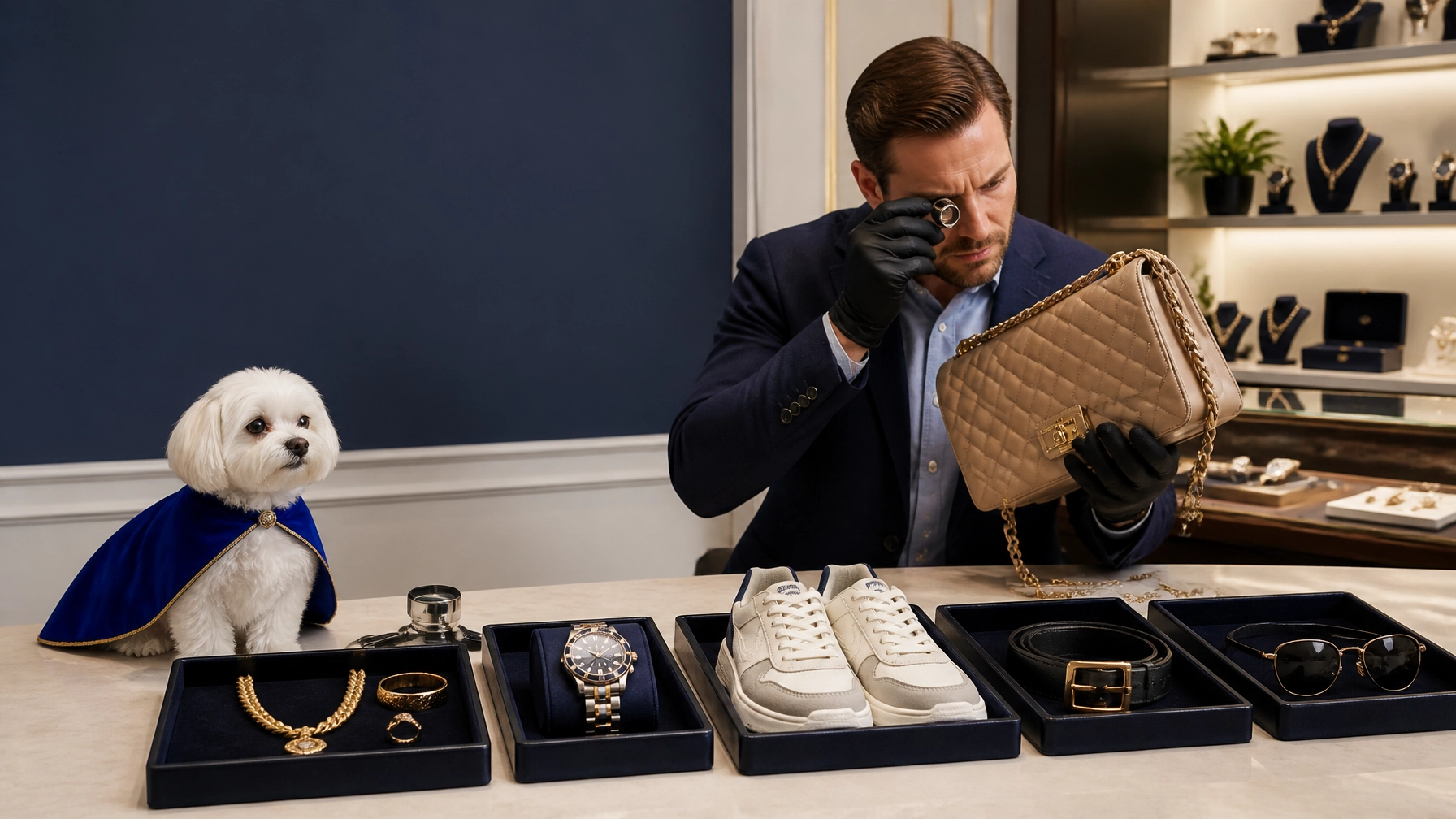
Pawn shops regularly see counterfeit designer handbags, luxury watches, sneakers, jewelry, gold, belts, and sunglasses. Some are obvious. Others are superfakes built to pass a casual inspection.
The solution is simple: identify the high-risk categories, train staff on the common red flags, and use professional authentication when the stakes are high.
The 3-question counterfeit check
Before reviewing any specific category, apply these three questions to every high-value item:
-
Does the price make sense?
A bargain is not proof of authenticity. A price far below market value is a reason to slow down. -
Does the item match its claimed brand and model?
Check construction, materials, markings, packaging, and model-specific details. -
Can the item be professionally authenticated?
If the answer is no, do not price or sell it as authentic.
The Las Vegas Review-Journal’s report on commonly pawned merchandise highlights how frequently pawn shops handle gold jewelry, handbags, shoes, and luxury watches. These are not niche risks. They are everyday intake risks.

1. Designer handbags: Louis Vuitton, Chanel, and Gucci
Designer handbags are among the most common counterfeit items presented at pawn shops.
The most frequent names include:
- Louis Vuitton
- Chanel
- Gucci
- Hermès
- Prada
- Dior
A bag can look convincing from several feet away and still fail inspection under magnification.
Common red flags
Look closely at:
- Stitching: Uneven stitches, loose threads, inconsistent spacing, or poor seam alignment.
- Logo placement: Crooked monograms, incorrect spacing, or a logo pattern that does not align across seams.
- Hardware: Lightweight zippers, thin plating, rough edges, or incorrect engravings.
- Materials: Plastic-like leather, unusual odor, inconsistent grain, or poor structure.
- Interior details: Wrong font, incorrect label placement, or an interior that does not match the claimed model.
- Date codes and serial details: Missing, incorrectly formatted, or inconsistent with the bag’s production period.
- Packaging: Blurry printing, incorrect fonts, typos, or accessories that do not match the item.
How to catch a fake handbag
Do not authenticate the brand in general. Authenticate the specific model.
Use this process:
- Identify the exact style, size, colorway, and production period.
- Compare construction details against verified reference examples.
- Inspect the logo, stitching, hardware, lining, and date or serial details.
- Photograph the bag in good lighting.
- Escalate when any major detail does not match.
A receipt or dust bag helps establish provenance. It does not prove authenticity. Counterfeiters can produce convincing boxes, cards, receipts, and packaging.
2. Luxury watches: especially Rolex
Luxury watches carry high resale values. That makes them attractive targets for counterfeiters.
Rolex is one of the most frequently imitated brands. Counterfeit watches range from crude replicas to sophisticated superfakes with convincing dials, bracelets, and markings.
Common red flags
Check:
- Weight: A watch that feels noticeably too light deserves further review.
- Case and bracelet finishing: Rough edges, uneven brushing, or poor polishing are warning signs.
- Dial printing: Incorrect spacing, inconsistent lettering, or imperfect alignment.
- Crown and clasp: Compare engravings, construction, and movement against the exact model.
- Serial and reference numbers: Confirm formatting, placement, engraving quality, and consistency.
- Movement: When appropriate, have a qualified professional inspect the movement. Do not open a high-value watch without the right tools and expertise.
- Model details: Bezel, hands, date window, caseback, and bracelet should match the claimed reference.
How to catch a fake Rolex
Start with the exterior. Then verify the details as a complete system.
A serial number by itself is not enough. Counterfeiters may copy a real serial number from another watch. A genuine-looking number attached to the wrong case, dial, or movement is still a problem.
For valuable watches:
- Record the serial and reference numbers.
- Photograph the watch from multiple angles.
- Compare the components to verified examples.
- Ask for purchase records and service history.
- Use a professional watch specialist when the value justifies it.
Do not rely on one test. Use several independent checks.
3. Sneakers: Air Jordan and Yeezy
Sneakers are easy to transport, highly liquid, and popular with resellers. That combination makes them a frequent counterfeit target.
Fake Air Jordan and Yeezy sneakers are especially common. Industry research has identified footwear as the largest counterfeit product segment, representing about 22% of reported counterfeit goods in one widely cited analysis. See Briffa’s overview of popular counterfeit categories for additional context.
Common red flags
Inspect:
- Box label: The style code, size, color, and product description should match the shoes.
- Size tag: Look for incorrect fonts, spacing, country information, or production details.
- Style code: Verify it against the claimed model and colorway.
- Stitching: Uneven stitching or inconsistent patterns are common warning signs.
- Glue: Excess glue, sloppy bonding, or visible separation should trigger a closer review.
- Shape: Compare toe box, heel structure, sole profile, and panel proportions.
- Logo details: Small changes in placement, size, or shape can expose a fake.
- Accessories: Incorrect tissue paper, laces, tags, or packaging can support: not prove: a counterfeit finding.
How to catch fake sneakers
Do not authenticate from a single photograph of the outside.
Request clear images of:
- Both sides
- The outsole
- The tongue and size tag
- The insoles
- The box label
- Any included accessories
Then compare the complete set. A box may be real while the shoes are fake. The shoes may also be authentic while the box is from another pair.

4. Jewelry and gold
Jewelry is a core pawn category. It is also a category where counterfeiters can create serious losses.
A piece may carry a convincing 10K, 14K, 18K, or 24K stamp and still not contain the claimed metal content. Fake pieces may also carry manufacturer names, gemstone claims, or high-quality hallmarks.
Common red flags
Watch for:
- Price that does not match the claimed metal weight
- Discoloration, peeling, or flaking
- Hallmarks that are blurry, oddly placed, or inconsistent
- Mismatched markings between connected components
- Hollow construction represented as solid
- Stones that do not match the claimed size, quality, or setting
- Unusual magnet response, where relevant
- Incorrect density or weight for the item
A hallmark is evidence to investigate. It is not final proof.
How to catch counterfeit gold and jewelry
Use the appropriate testing method for the item and your shop’s policy.
Possible checks include:
- Accurate weight measurement
- Density testing
- Acid testing
- X-ray fluorescence testing
- Loupe inspection
- Review by a qualified jeweler or professional authenticator
Some fake precious-metal pieces can require destructive testing to identify the interior composition. Do not perform a cut or deep test casually. Explain the process, document the item’s condition, and follow your shop’s procedures.
If the item is high value or the result is uncertain, escalate it before making an offer.
5. Accessories: belts and sunglasses
Belts and sunglasses may carry lower average values than handbags or watches. That does not make them low risk.
They are easy to counterfeit, easy to ship, and easy to present with copied logos and packaging.
Designer belts
Inspect:
- Leather thickness and texture
- Edge finishing
- Stitching
- Buckle weight and plating
- Logo spacing and alignment
- Engraving quality
- Size markings
- Packaging and included accessories
A buckle that feels too light or has rough, shallow engraving should receive additional scrutiny.
Designer sunglasses
Check:
- Frame quality and flexibility
- Hinge construction
- Lens clarity
- Logo placement
- Temple markings
- Case and cloth quality
- Model or product numbers
- Alignment of both lenses and arms
A flimsy frame does not automatically mean counterfeit. It does mean you should compare the item with verified examples of the exact model.
Why superfakes require a stronger process
Older counterfeit goods often failed basic checks. Modern superfakes may copy:
- Serial numbers
- Packaging
- Receipts
- Dust bags
- Brand fonts
- Hardware
- Stitching patterns
- Product labels
That is why staff experience matters: but experience alone is not always enough.
A strong pawn shop authentication workflow should include:
- Intake documentation
- Detailed photographs
- Brand and model identification
- Physical inspection
- Serial, code, and hallmark review
- Professional escalation for uncertain or high-value items
- A documented accept, reject, or hold decision
Do not let a busy counter force a rushed decision. If an item cannot be authenticated confidently, pause the transaction.
A pawn shop guide to commonly rejected items also notes that counterfeit handbags, watches, and replica jewelry are commonly rejected because the legal and financial risks are too high.

When to use professional authentication
Use professional authentication when:
- The item is high value.
- The item is from a heavily counterfeited brand.
- Staff disagree about the result.
- Provenance is weak or missing.
- The item contains multiple inconsistent details.
- The shop plans to advertise it as authentic.
- A customer is asking for documentation before purchase.
Authenticate Pro provides authentication support for luxury items. Authentications move to human experts for approximately 99% accuracy, giving pawn shops an additional layer of review beyond a quick in-store inspection.
That matters when a counterfeit could affect your cash position, inventory, and reputation.
Final checklist for pawn shop staff
Before accepting or selling a high-risk item, confirm:
- ✅ Brand and model identified
- ✅ Price aligns with condition and market
- ✅ Materials and construction reviewed
- ✅ Serial numbers, codes, or hallmarks checked
- ✅ Packaging treated as supporting evidence: not proof
- ✅ Detailed photos captured
- ✅ Red flags documented
- ✅ Human expert review requested when needed
- ❌ No item accepted solely because the customer has a receipt
- ❌ No item sold as authentic based on one matching detail
- ❌ No rushed decisions because the customer is applying pressure
A counterfeit can look profitable until it becomes your problem.
If your pawn shop needs a second opinion on a luxury handbag, Rolex, sneaker, jewelry piece, belt, or sunglasses, learn more about Authenticate Pro or review the membership options. Professional authentication is a practical way to protect your margin and your name.
The next item at your counter may be genuine. It may also be a superfake. Your process should be ready for both.
Leave a Reply