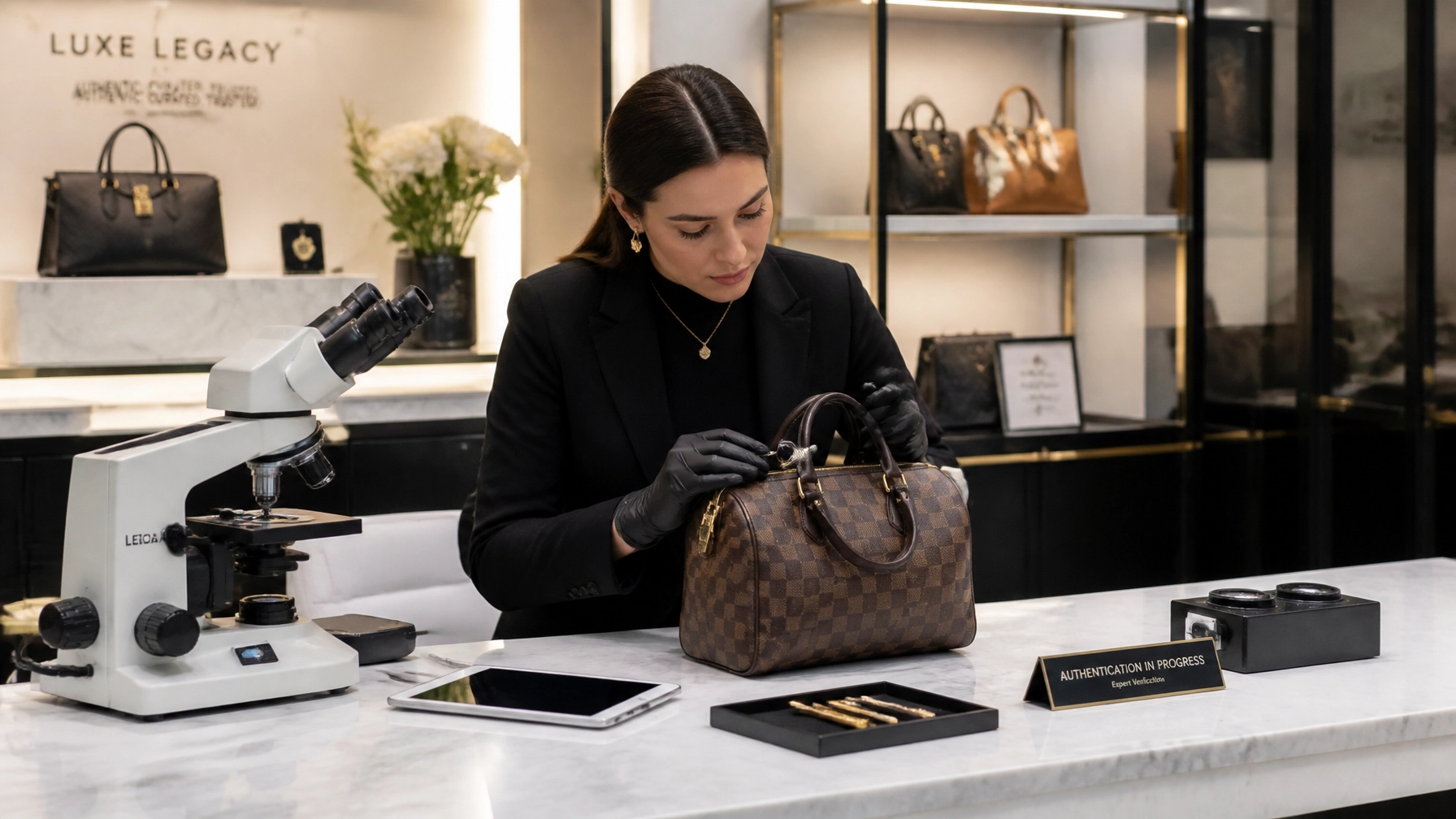
How many times a week do you get asked, "Is this real?" by a customer standing at your counter?
If you run a resale store, pawnshop, online thrift business, or boutique, you already know the stakes. In 2026, superfakes are no longer clumsy knock-offs bought on street corners. They are hyper-realistic, workshop-produced counterfeits that routinely fool casual buyers and outdated verification methods.
When a single fake luxury handbag or replica watch can cost your business thousands of dollars in lost revenue and shatter your store's hard-earned reputation, standard visual checks just don't cut it anymore. Let’s dive into what superfakes are today, why traditional counterfeit detection is failing, and how forward-thinking resale businesses are protecting their margins.
1. What Are “Superfakes” in 2026?
A superfake is an ultra-realistic counterfeit luxury item: typically spanning iconic handbags, high-end watches, premium sneakers, and fine jewelry: crafted using near-identical materials and construction methods to genuine pieces.
Market data shows that counterfeit luxury goods make up 60% to 70% of global seizures, with quality levels so advanced that roughly 30% of professional authenticators cannot initially distinguish top-tier fake handbags from originals based on surface appearance alone.
Produced in specialized overseas workshops: often by individuals with insider knowledge of luxury manufacturing: these items replicate:
- Exact leather grain, tanning smells, and weight distribution.
- Precise font stamping, hardware plating, and stitching tension.
- Even internal reinforcing structures and linings.
At a price point between $500 and $5,000, superfakes occupy the exact mid-to-high luxury band that flows through resale shops and pawn counters every single day.
2. Why Traditional Counterfeit Detection Is Broken
For decades, pawnshop owners and resale buyers relied on a quick checklist: inspecting the zipper pull, feeling the weight of a chain, or checking the dust bag. Today, those methods are obsolete.
The Myth of the "Loupe Test"
Standard magnifying glasses and visual inspections catch sloppy fakes, but they are powerless against modern super-clones. For instance, watch counterfeiters now use heavy tungsten internal rings to match the exact weight of solid-gold luxury timepieces.
Similarly, handbag hardware finishing and stitching alignment are replicated with computer-guided precision. If your authentication workflow stops at "it looks and feels right," your inventory is at high risk.
Featured Image Fallback (For Seamless Publishing)
To ensure your content displays flawlessly across all platforms and feeds, our primary featured graphic is also embedded below:

3. The Multi-Layer Defense: How to Authenticate Luxury Items Today
To stay ahead of counterfeiters, modern resale businesses require a multi-layered defense stack that goes beyond human eyes.

Step 1: AI & Microscopic Pre-Screening
Advanced verification starts with high-magnification optical scans that capture millions of data points on leather textures, micro-stitching, and hardware engraving. Artificial intelligence compares these microscopic images against massive digital databases to flag anomalies instantly.
Step 2: Escalation to Human Experts (~99% Accuracy)
AI is an incredible triage tool, but technology alone isn't foolproof. That is why every high-stakes evaluation must transition to human specialists.
When authentications move to human experts, businesses achieve ~99% accuracy. Combining rapid digital screening with veteran human eyes ensures that subtle, nuanced red flags never slip past your counter.
4. The Power of Patented Protection and Proven Standards
In the fight against counterfeiters, standardization matters. Retailers and pawnshops cannot rely on guesswork or inconsistent freelance opinions.
This is where proven, patented industry standards change the game. By leveraging Issued Patent methodologies, platforms establish rigorous, repeatable verification frameworks that stand up to legal and financial scrutiny.
When evaluating partners and software for your business, look for established frameworks rooted in Authentication · Community · Experts (ACE Standards). This triumvirate ensures that technical precision is backed by active peer communities and elite human specialists who understand evolving market threats.
5. Actionable Steps for Resale Stores, Pawnshops, and Thrifters
If you want to bulletproof your inventory pipeline in 2026, implement these rules immediately:
- Never rely on "Full Sets" alone: Counterfeiters now fabricate convincing boxes, dust bags, receipts, and even spoofed NFC warranty cards.
- Invest in systematic training: Ensure your floor buyers know which current-year models are heavily targeted by superfake syndicates.
- Partner with certified experts: Offload high-risk items to trusted authentication platforms that combine cutting-edge technology with human expertise.
- Protect your cash flow: A single missed superfake can wipe out a week's profit. Build verification costs directly into your intake margins.
To explore how professional tools and structured memberships can safeguard your storefront, visit Authenticate Pro and review our Pricing & Membership Plans.
Stay Ahead of the Curve
Counterfeiters will continue to adapt, but your business doesn't have to play catch-up. By moving away from casual visual inspections and embracing multi-layered authentication: powered by advanced tech and elite human reviewers: you can buy, sell, and lend with absolute confidence.
Ready to protect your reputation and secure your inventory? Discover how streamlined, patented authentication workflows can transform your daily operations today.

Leave a Reply